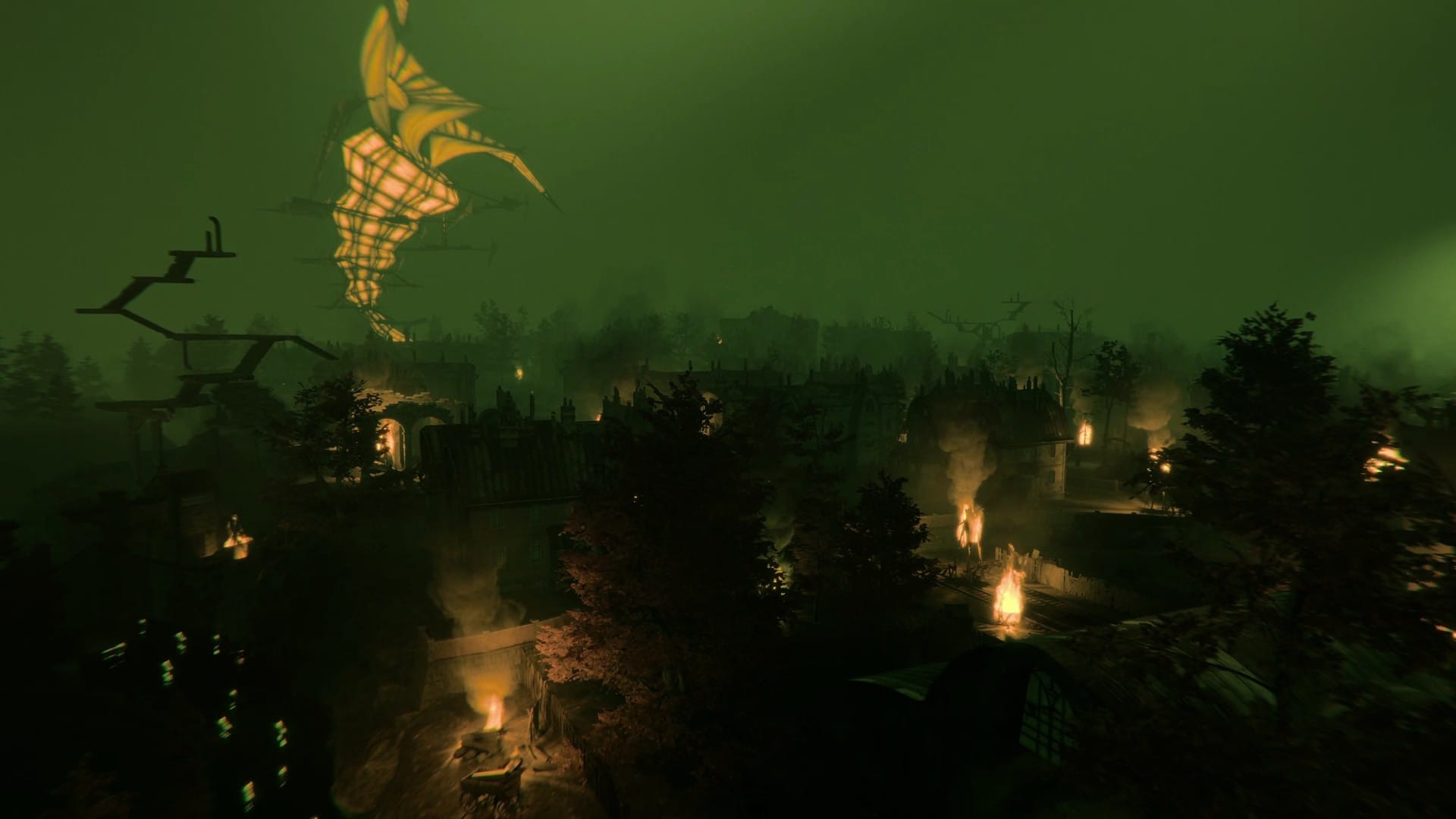
Many games can take a while before getting to release, but few have taken quite as long as ROUTINE. It was first announced at Gamescom slightly over 13 years ago in August 2012, at the time as an Unreal Engine 3 game (meaning Duke Nukem Forever’s 14 years of development is still slightly longer, as is the still unreleased Beyond Good & Evil 2), as the debut game from Lunar Software, a small independent UK studio. It has suffered a variety of issues during its protracted development hell, including significant financial constraints and the entire production essentially having been rebooted in 2020. Consequently, the final game is said to be predominantly work from the last 5 years, the entire game having been rebuilt in Unreal Engine 5.
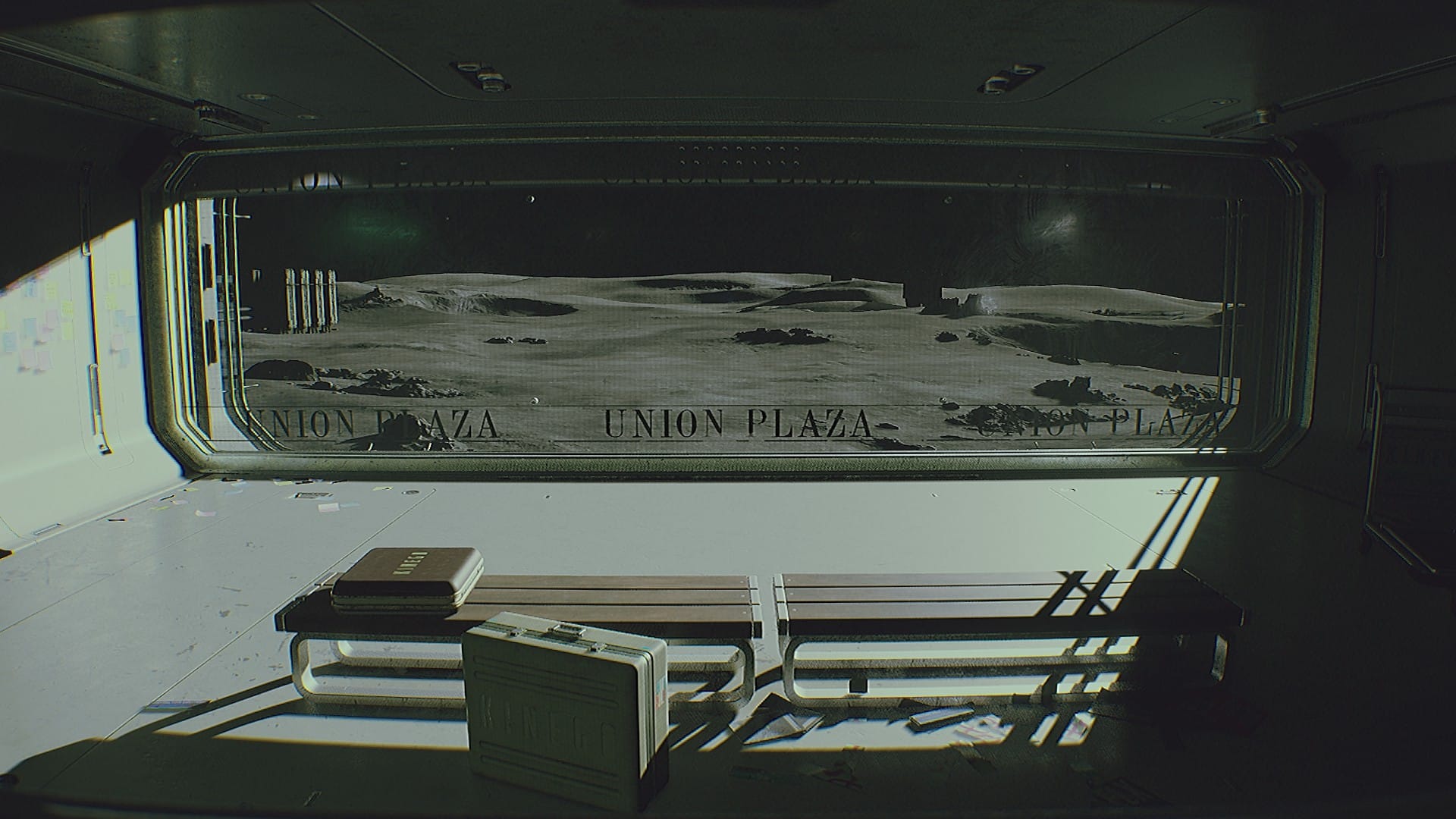
ROUTINE is set in an alternate 1990s inside the lunar base called Union Plaza. You awaken seemingly from cryosleep as an unnamed software engineer, emerging to find the base abandoned and malfunctioning. The Automated Security Network (ASN) of the base has gone haywire, with most of the robotic components transformed into homicidal killing machines. You must navigate around the labyrinthine interior of the base, solving puzzles and finding out what happened to the personnel along the way.
ROUTINE is 100% a survival horror game, meaning that the gameplay is broken up into sections where you must avoid enemies, while completing other tasks like reading computers, solving puzzles and finding the next path to progress the story. The levels aren’t strictly linear but they funnel you down a broad path, and you use a tram to travel between the different sectors of Union Plaza. The robots are muscular, hulking monstrosities who stomp very loudly down the corridors, their motors shrieking. While you can try to hide, they are smart enough to search behind desks, although if you’re able to get fully under something out of reach, they don’t have any ranged attacks.
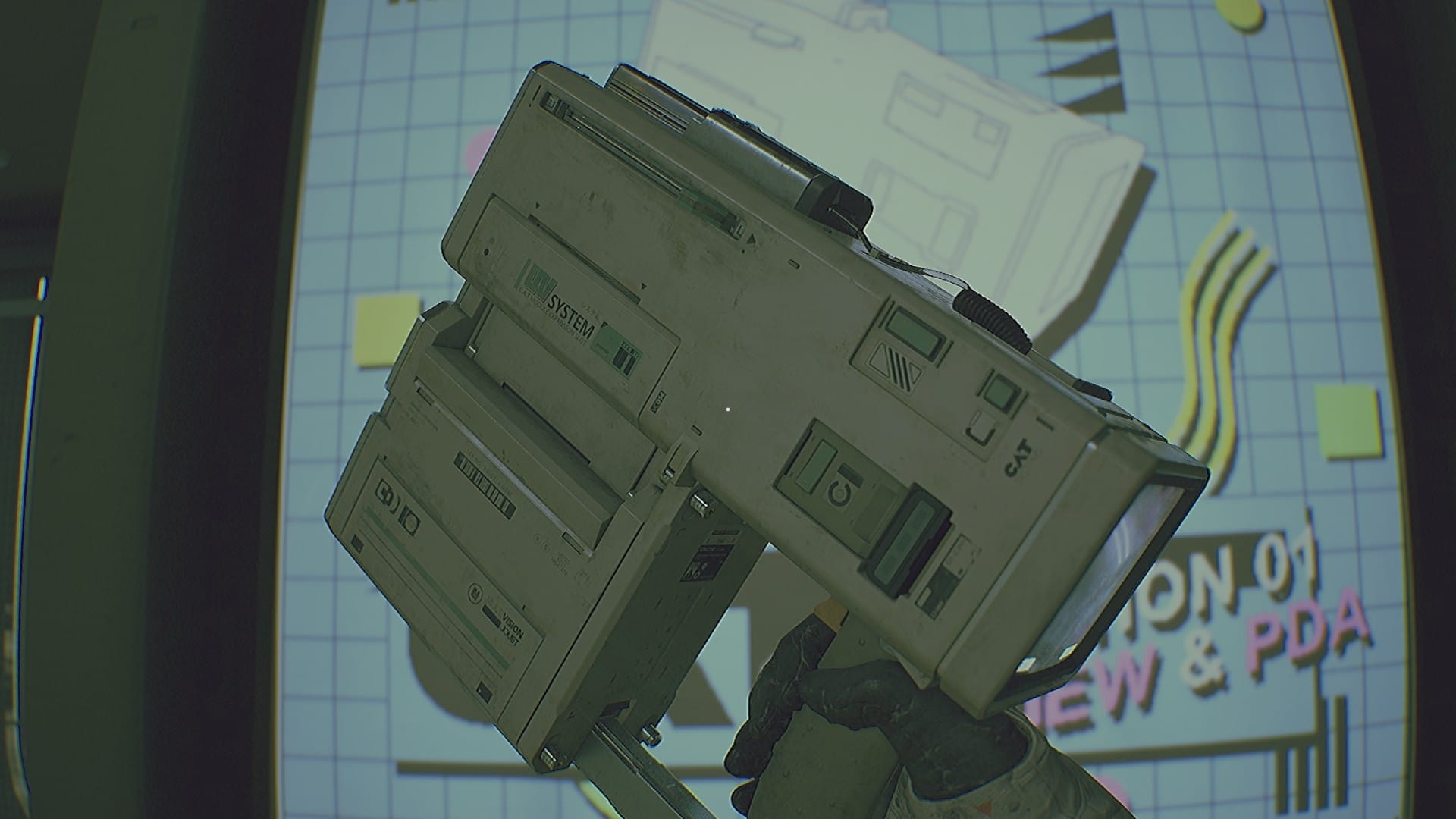
You’re equipped with the Cosmonaut Assistance Tool (CAT), a bulky item which is visually reminiscent of the motion tracker from the Alien film franchise. The CAT can be used to connect to computers, as well as shoot electrical charges at junction boxes to power doors. It can also temporarily disable the robots, but it should be considered a last resort. You can fire a maximum of 3 shots of electric charge per battery, but since you can’t hold multiple batteries at once, those 3 shots are all you’re going to get. Furthermore the robots are only ever temporarily stunned, meaning you want to swiftly move away before they reboot and start searching for you again.
The biggest problem with the gameplay is that the robots can see you extremely easily, even if you’re just peeking around a corner. Only one robot is active at any point, but the ASN can switch between powered-down robots at any moment, meaning you might be creeping along, thinking you’re a long way from an active robot, before one suddenly powers up in the room next door. Given they can only ever be temporarily stunned, fighting is never a viable strategy. While there is a crouch button, crouching essentially makes your character go prone, crawling along the ground on your stomach, rather than the traditional crouch-walk posture. This reduces your speed significantly but also seems to make a lot more noise than just walking normally.
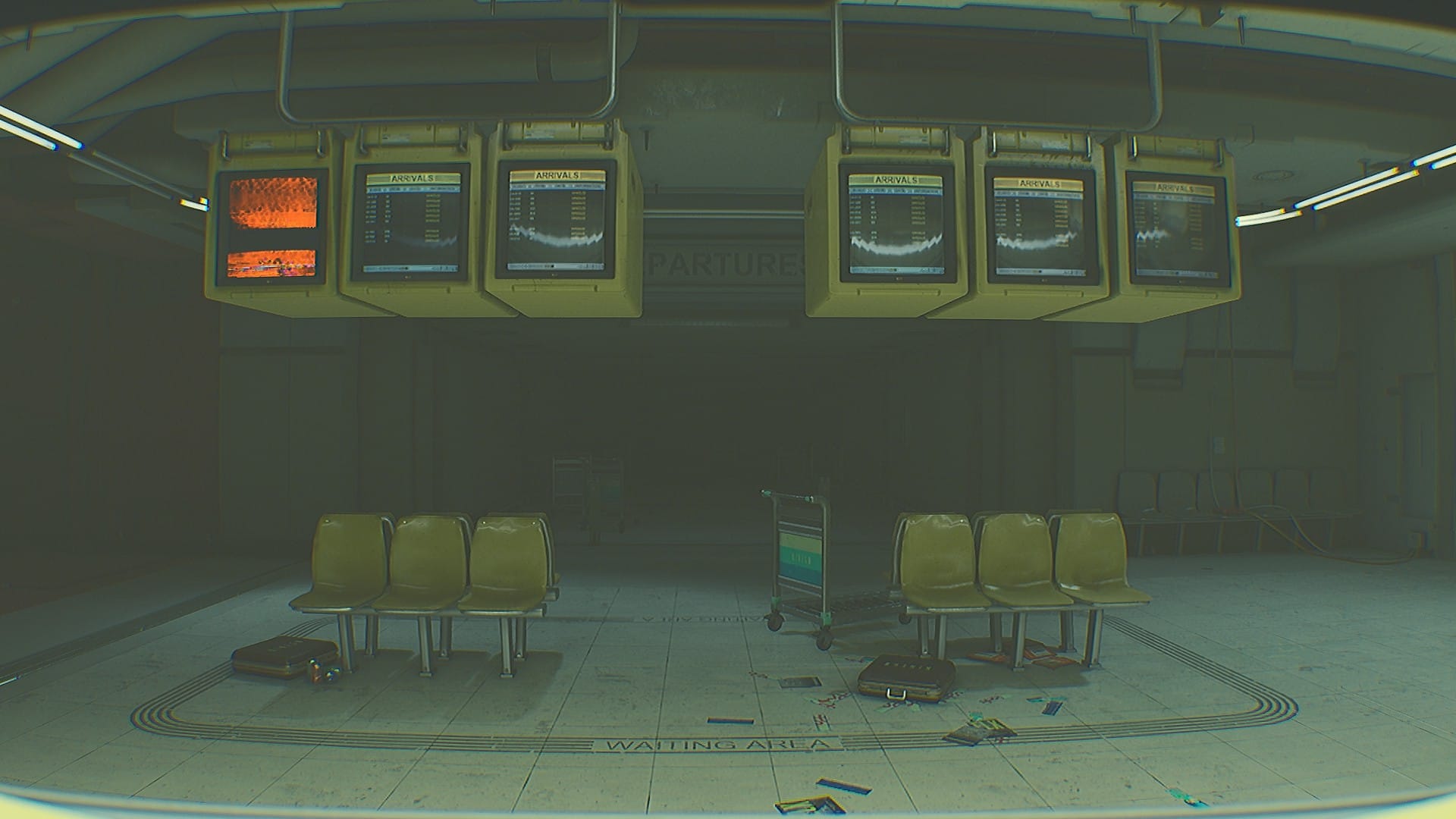
I felt like stealth was never particularly viable, but instead was incentivized to attempt to run past the robots, since their top speed of clomping around is slower than your sprint. You’ll typically encounter a barrier they can’t get past putting you into a safer zone, out of harm’s way at least for a while. I’m not sure if sprinting around, dodging and weaving between the robots was what was originally envisaged, but it seemed like the most effective way to handle them, particularly as they rarely pursued around more than a few corners.
The spirit of Alien: Isolation very much lives on through ROUTINE’s game design. Saving your game means having to find one of the remote projectors dotted around the base, connecting your CAT, and then hitting the save button. There’s no pausing, not even when you open the main menu. There’s also no HUD, no mini-map, no health display; everything is diegetic to the world itself, meaning you need to look at the side of the CAT to see how much power you have left, or look down at your body to see how injured you are. There are safe spaces that the robots can’t get you as well as sections where you’re not being pursued, but you’ll soon be forced to venture forth in order to solve puzzles and progress the story.
Aesthetically, the game is truly gorgeous and feels like it is set within the Alien universe, but where the technology has progressed a decade forward from retro-futuristic 1970s to retro-futuristic 1980s. There’s the neon glow in the Mall area, or the retro arcade (even with a few playable arcade machines), but also the CRT monitors and the plastic, industrial sheen to pretty much everything, no matter how scuffed or broken. Because you’re wearing a space helmet for the entire game, there’s also this slight fish-eye look applied to everything, which takes a bit of getting used to but adds to the ambience. The textures are extremely high resolution so you can read various notes and posters, also helping with worldbuilding.
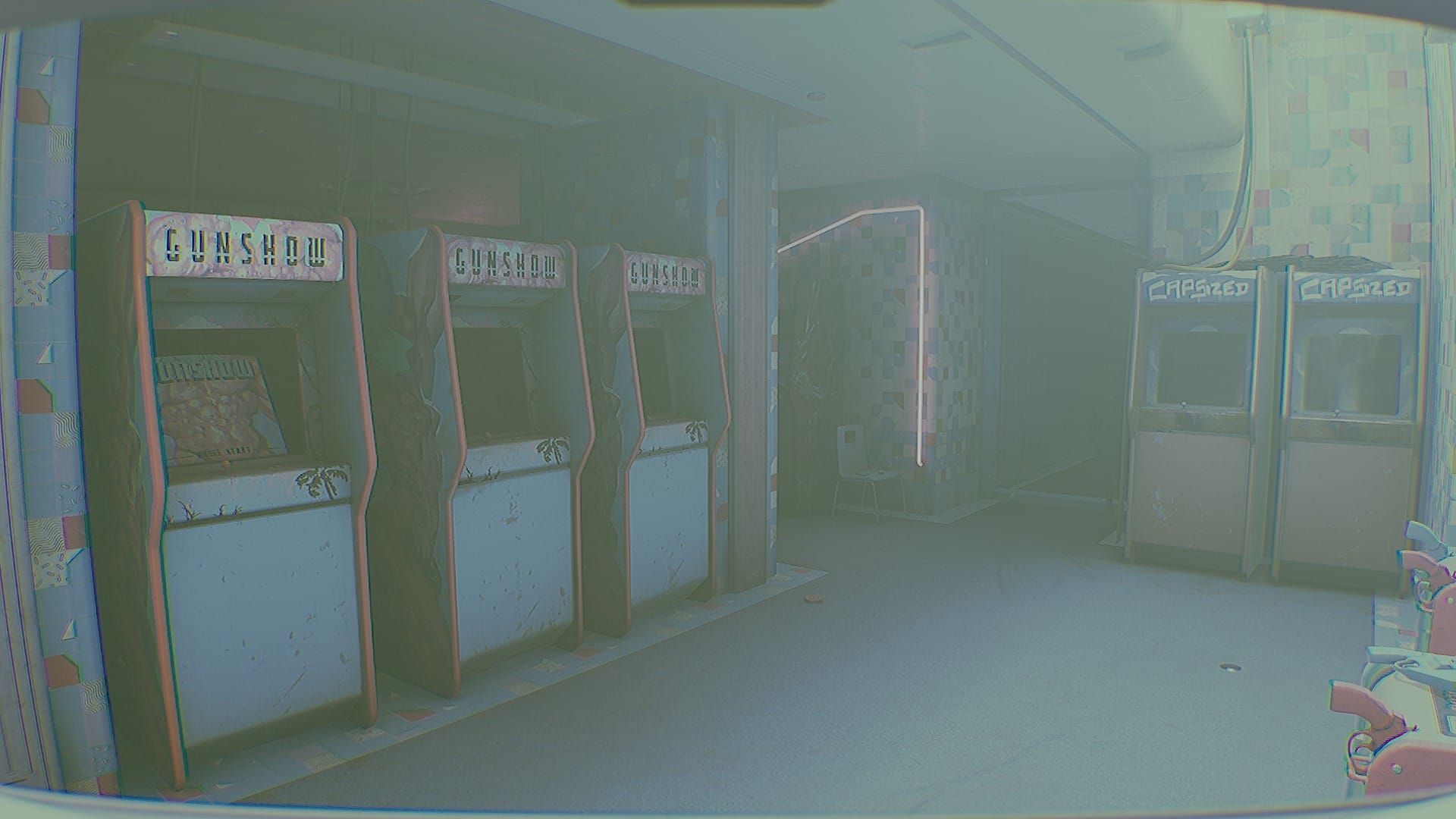
As a complete scaredy cat I’d appreciate it if a Safe Mode could be implemented in a future patch, similar to SOMA, just so that I could fully poke into all the environments I’m having to sprint past at the moment. ROUTINE is a game meant to be luxuriated in, played at a gentle pace so that you can fully absorb the amazing sound design of the creaking lunar base, combined with its low-fi early 1980s aesthetic. While its cat-and-mouse gameplay isn’t particularly satisfying, its universe is interesting to unearth, as is the wider mystery surrounding Union Plaza’s abandonment. There are touches of Tarkovsky in the atmosphere, which does make it feel less bombastic than the mammoth Alien: Isolation was. In the pantheon of sci-fi horror, ROUTINE is a noble effort.