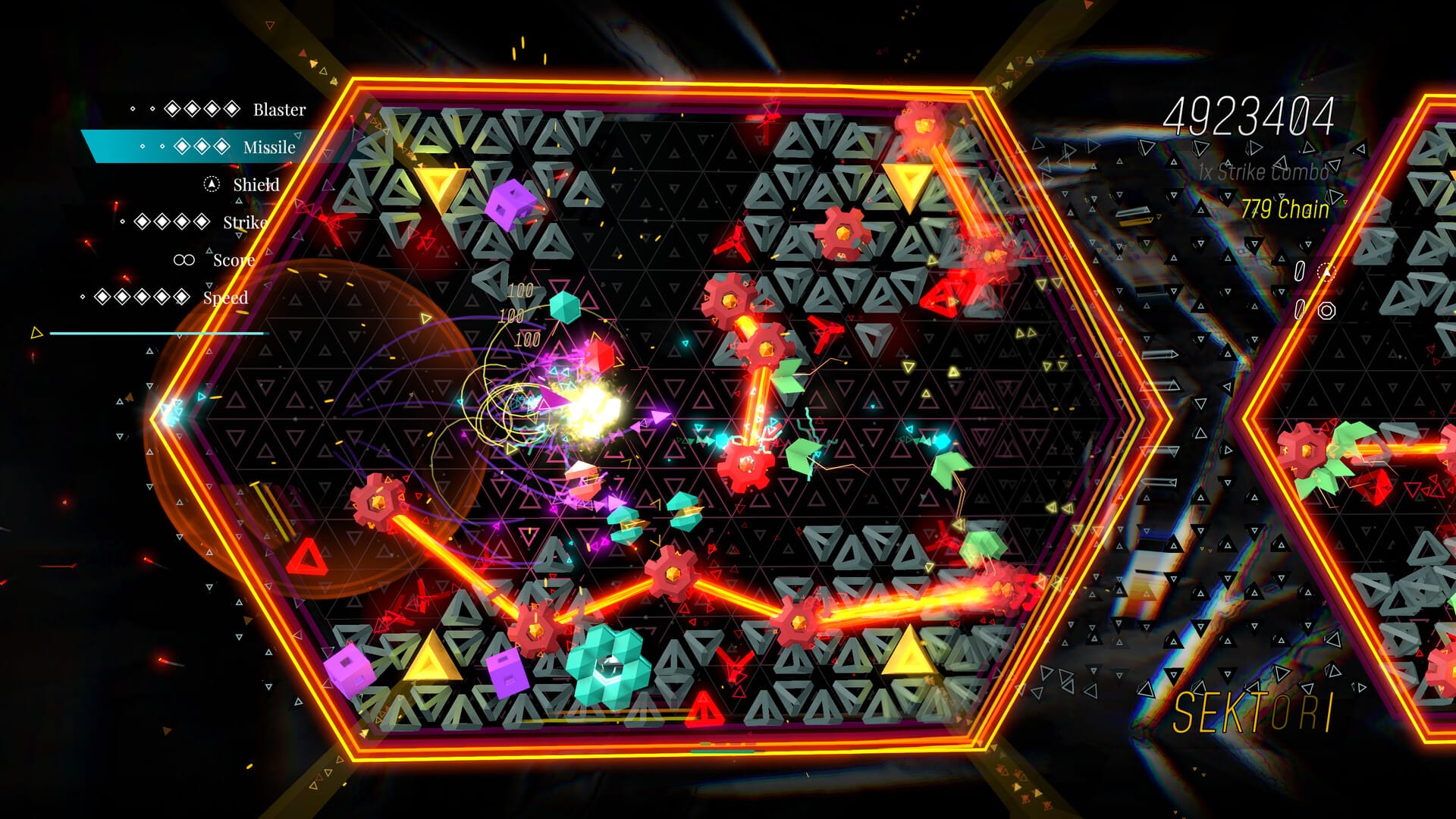
Playing Sektori is overwhelming. It’s a mess of neon lights and explosions going off at almost all times, foes of numerous shapes melding with the spread of particles and resulting explosions in a mesmerizing display of chaos. But somehow the visual noise feels navigable in the moment. It rarely gets to the point where I cannot see what’s happening. Sektori often teeters on that threshold, but even during the moments where there’s almost no spots on the field occupied by something, a path forward is visible.
Cutting through the mass of rotating shapes and seeing through your own waves of bullets and missiles, an ever expanding hose of death, is exhilarating. At the highest most intense moments, it’s like balancing on a knife’s edge as the enemy hordes continue to grow to match your increasing firepower, the fear of one little slip ending you’re run short growing with every second as you graze foes and projectiles alike, weighing the risk/reward of going for upgrade and score tokens and glimmer to spawn more of those tokens versus waiting and making sure you’re not going to get caught in the midst of an arena shift, let alone collide with a stray bullet or enemy because your focus drifted for a moment.
It is exhausting. Absolutely thrilling in the moment, but exhausting all the same.
None of this is new to anyone who’s played twin-stick shooters of any sort. This genre is one explicitly built around fighting ever-increasing odds and averting death at every turn. Sektori is simply of the type that leans on raw visual overload. It feels like a Housemarque game from back in their arcade-style game days (Super Stardust HD, Resogun, Nex Machina) with its love for maximum graphical flair, sparks flooding the screen in a dazzling shower of lights. Developer Kimmo Lathinen took a crack at this previously with their game Trigonarium back in 2015, of which Sektori is a spiritual successor to, and you can clearly see how Sektori happens from there since Trigonarium is the same game in almost every way (just without the fancy 3D graphics).
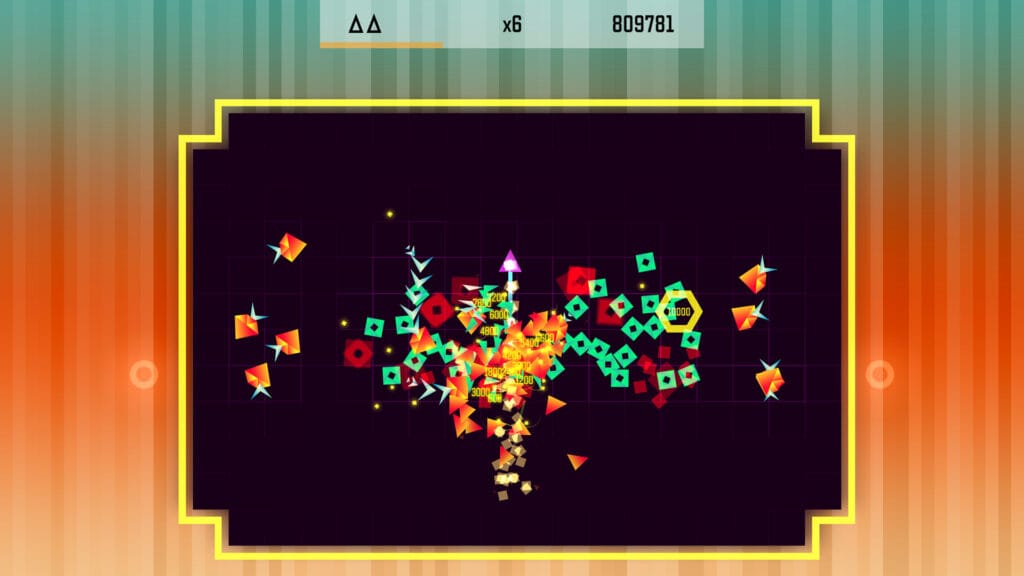
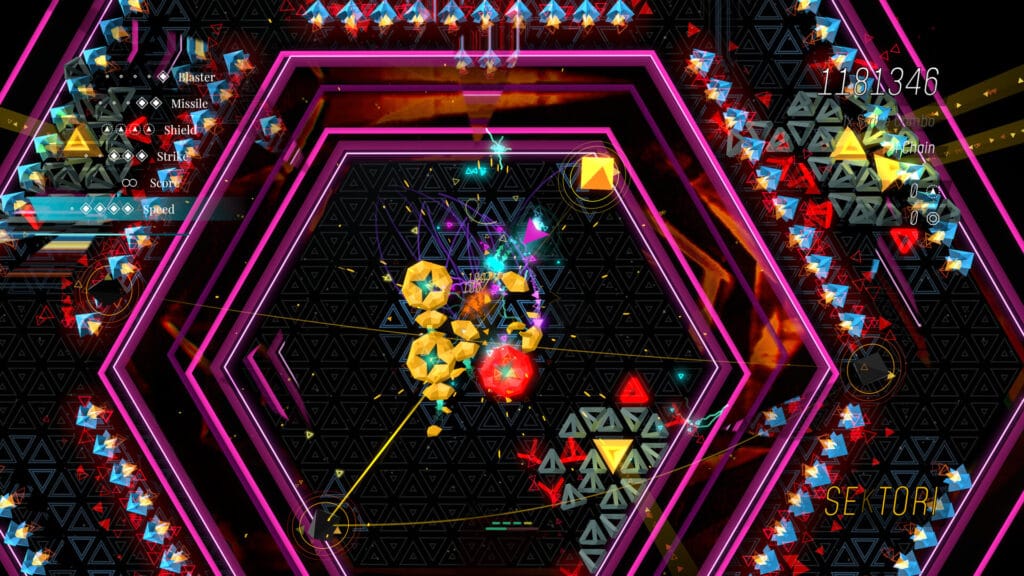
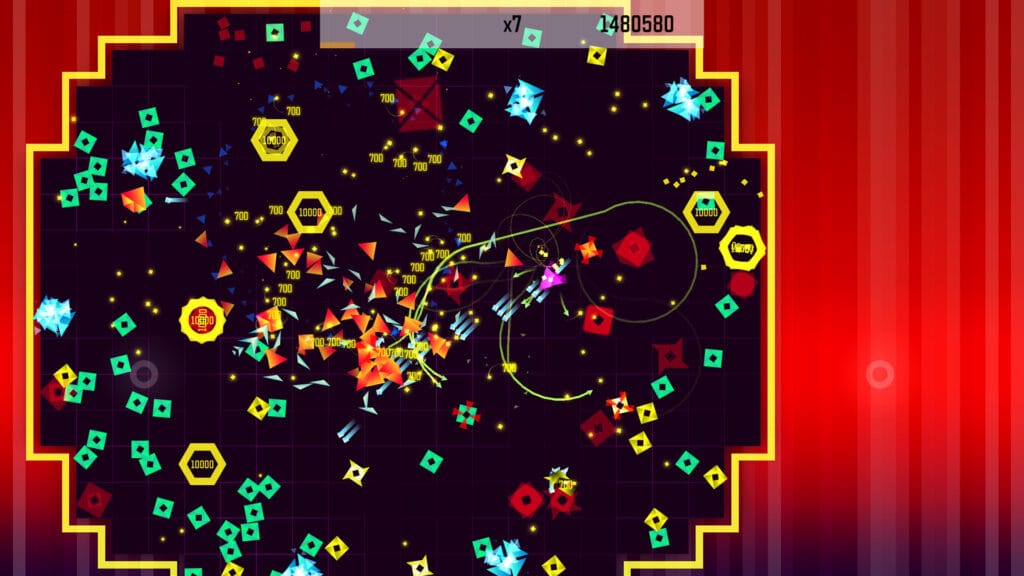
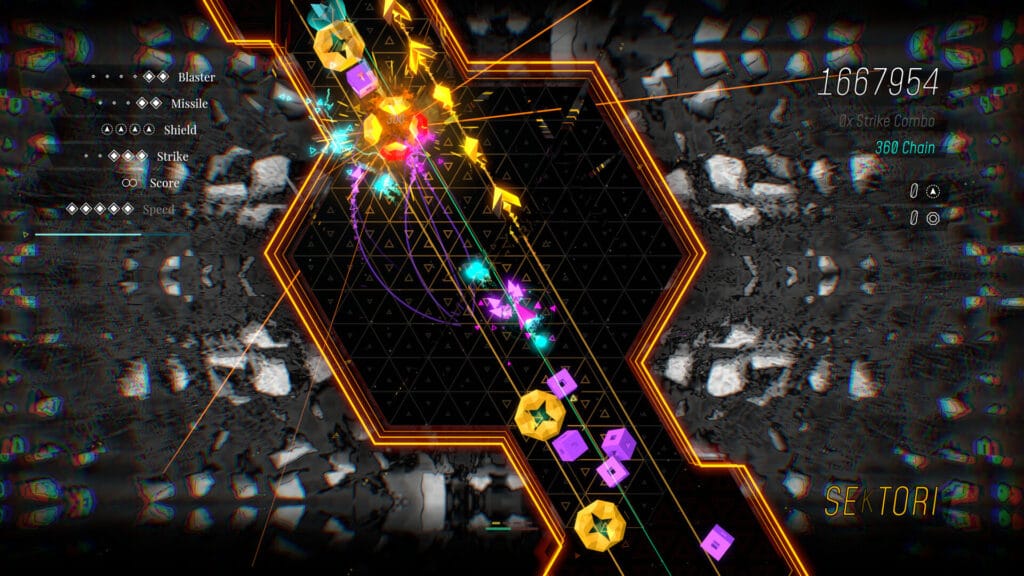
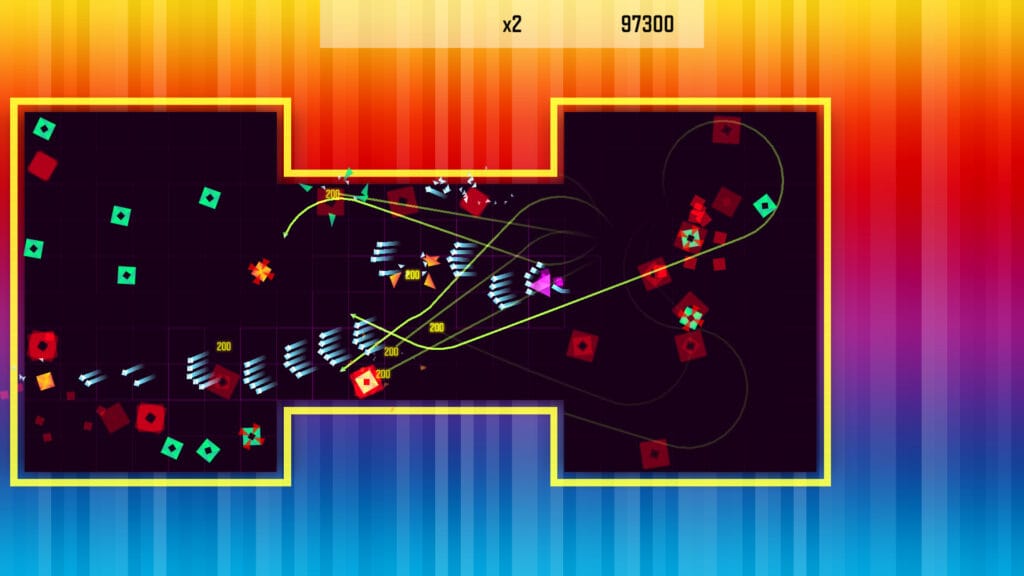
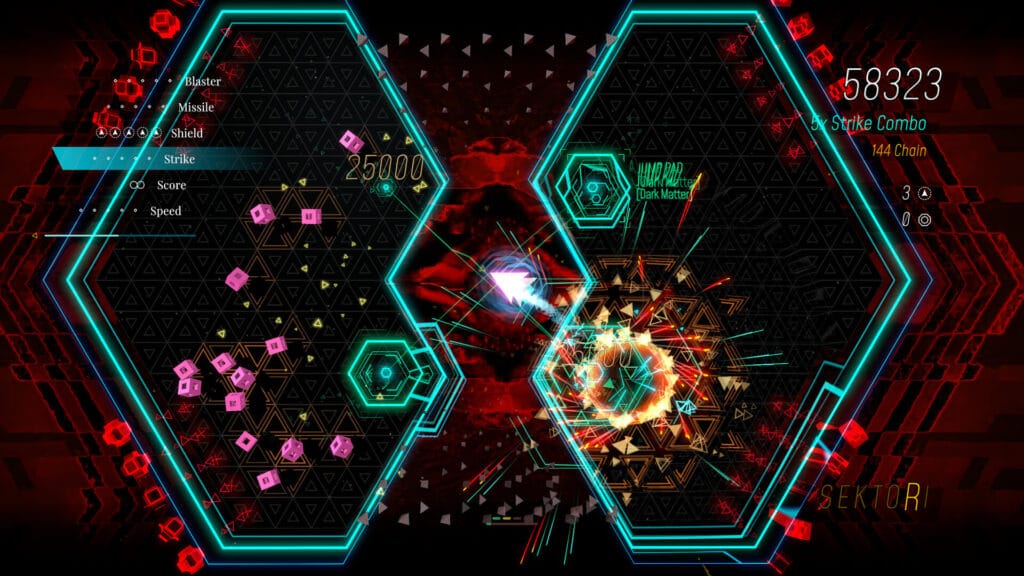
It’s a perfect case of seeing the iteration and evolution of a game. Trigonarium is less intense out the gate, but the core remains the same: enemy types and behavior, the point and upgrade tokens that spawn at regular intervals, levels that transform mid-play. It’s less mechanically dense, closer to a “classic” twin-stick shooter experience. The simpler 2D vector art is striking and vivid, equally pleasant to look at like its successor and, crucially, easier to parse at its most chaotic moments. The intensity of play remains, albeit at a different tempo than Sektori, but the lower volume of visual noise means it’s less overwhelming.
Playing them alongside one another you can see why Sektori makes the additions and tweaks it does. There’s more decision making moment-to-moment between which upgrades to apply when, more risks to take when collecting glimmer to ensure you get those upgrade tokens to appear. It is additive in careful ways that suit the game’s maximalist approach. Likewise, you can appreciate the ways Trigonarium works without them. It’s a less imposing game, slightly more relaxed in terms of pace while still bringing the same satisfying action. Strip away all the neon lights and reduce it to its barest essentials and it is still just as exciting to play. It’s also just fun to see where Sektori started, or vice versa, seeing the ways game design broadly has evolved in the decade between them.
Videogames often see the newest version of any thing as the superior option, one that effectively replaces the old and renders it obsolete. Sektori and Trigonarium make a fantastic example of the opposite: how two games in the same mold make perfect companions. To say one is better than the other is kinda moot. While Sektori does build on Trigonarium as any sequel would, the differences only highlight each one’s strengths rather than show their weaknesses. One doesn’t overwrite the other: they complement each other.
Callum Rakestraw (he/him) is the Reviews Editor at Entertainium. You can find him online at Bluesky, Mastodon, and his blog.