The Pathologic series has become renowned within video games for a variety of reasons. Primarily and initially for its difficulty, as the first game was an often brutally unforgiving survival sim where you had to balance your health, thirst and hunger against resource scarcity and a plague-ravaged in-game economy, making many basic items unaffordable. However, the series has also gained appreciation for its writing, themes and atmosphere, being one of the classic “slavjank” titles alongside STALKER: Shadow of Chernobyl. The original game from 2005 had three different storylines; the Bachelor, the Haruspex, and the Changeling, with you playing each character significantly differently. The sequel, Pathologic 2, was a remake of the Haruspex storyline, significantly expanded and reimagined. Originally the Bachelor storyline was going to be DLC for Pathologic 2, but Ice-Pick Lodge instead opted to spin it out into its own game, Pathologic 3.
You play as Daniil Dankovsky, Bachelor of Medicine, arriving in an unnamed town in the Eastern Steppe, far from the Capital. Daniil came to the town on the pretext of investigating Simon Kain, a town leader who is supposedly immortal. However, on the very day he arrives in town, Simon suddenly dies, and the town itself quickly becomes afflicted by a virulent plague which kills people within a matter of hours. Daniil must not only try to find a cure for the plague within 12 days, and mend the various mistakes he made and people he wronged, but also jump through time in order to do so.
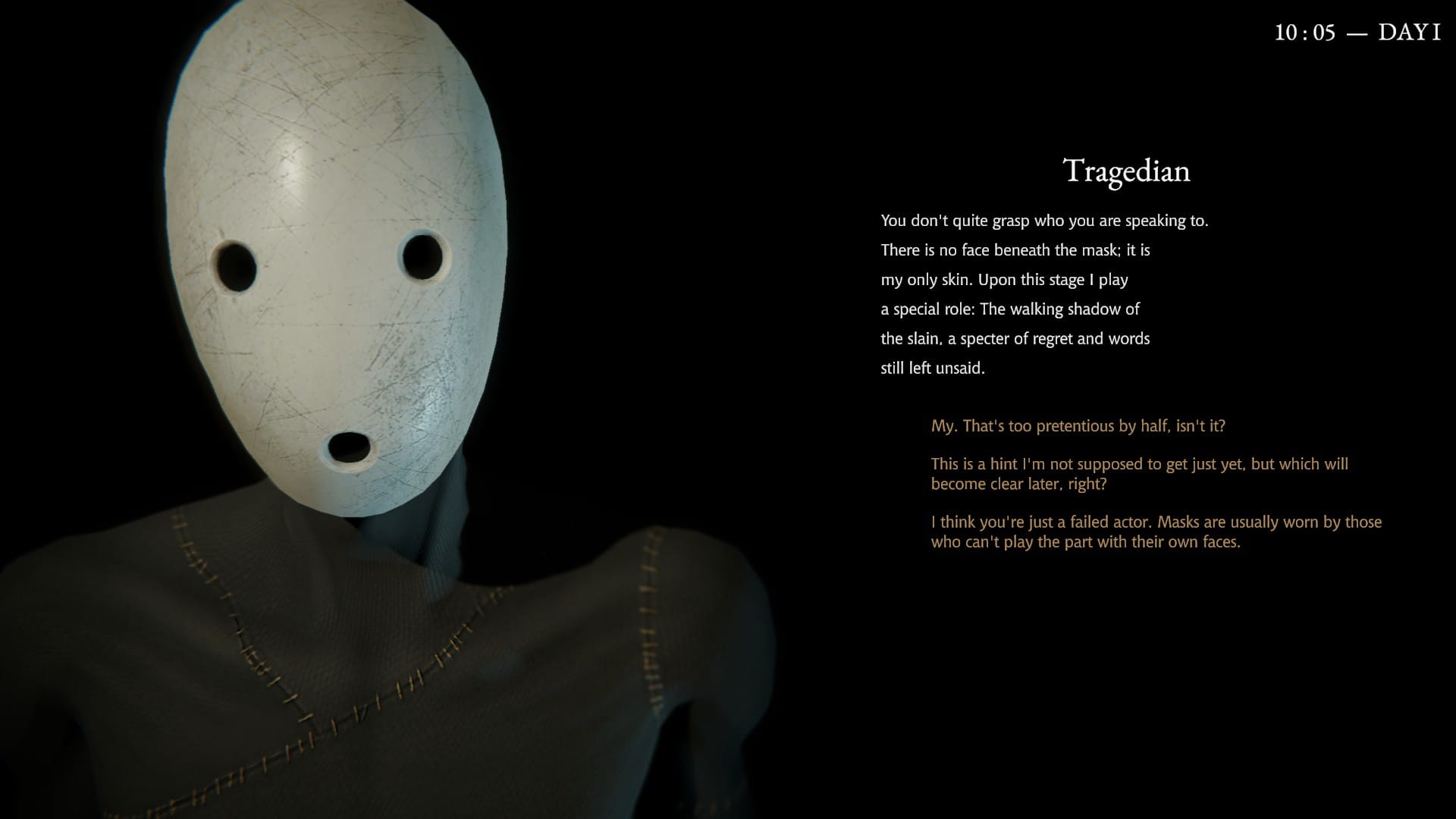
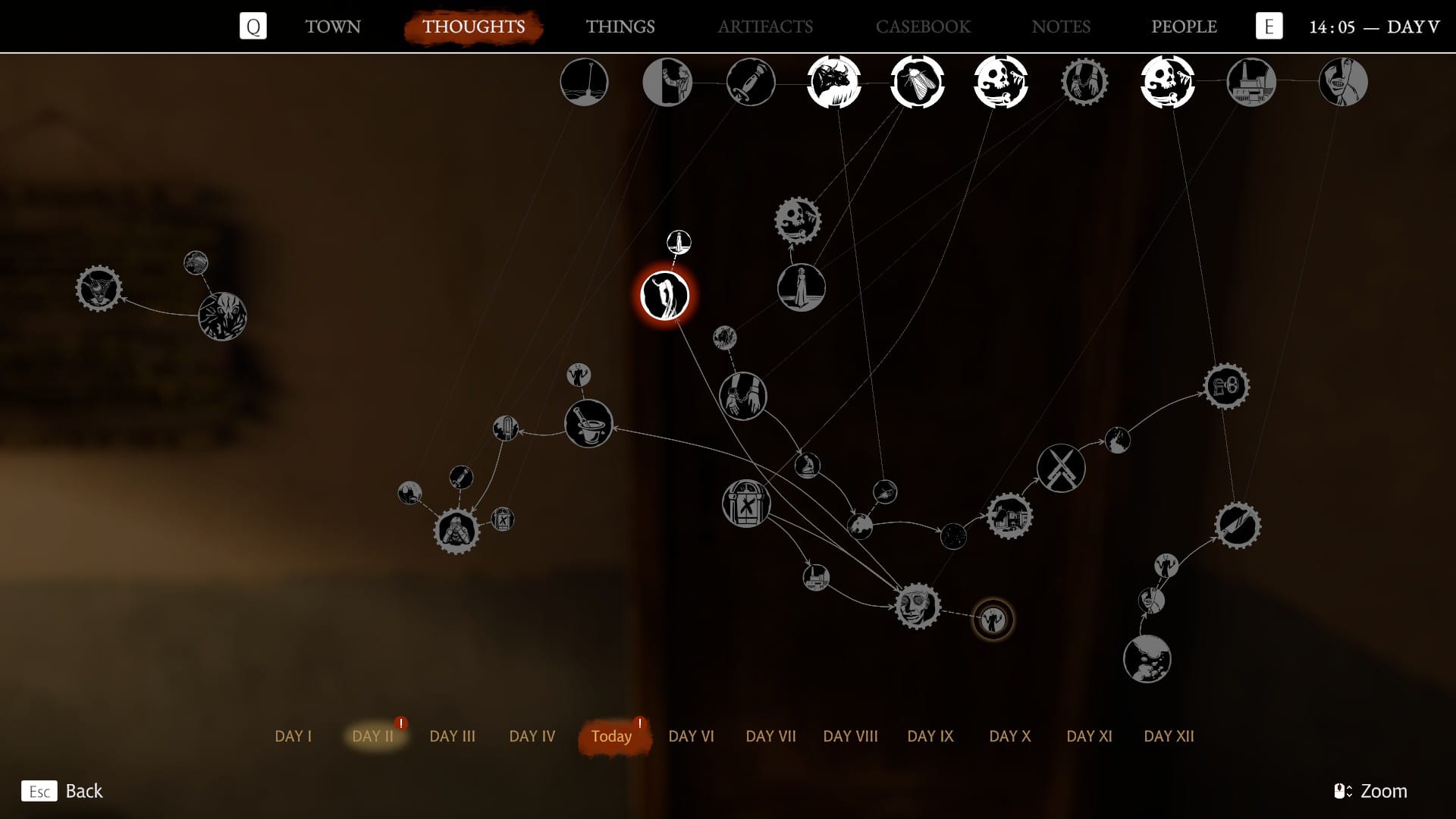
In the original game, it was deliberately impossible to save all of the townsfolk (those bound to a character) in a single playthrough, given various side quests often had overlapping time windows which would mean a character might die while you were off completing another task. In Pathologic 3, the tragedians (skeletally thin mimes in their black clothes and white, blank masks) grant Daniil the ability to jump backward and forward in time using various clocks dotted around the world, allowing you to redo various days in order to complete different quests or make different choices, as well as learn more information about the plague. You still can’t save everyone, but that doesn’t mean you won’t try. Unfortunately travelling in time is tied to finding amalgam by smashing mirrors in the world, meaning there’s a finite number of jumps you can make.
Daniil is a fascinating character, in that he’s also a bit hopeless. He’s selfish, prone to wild emotional swings, and frequently spouts random latin phrases when he feels his authority is challenged. He delights in being smarter than everyone else, being the sole doctor in town, but at the same time he frequently exposes how much of an idiot he is, as he knows next to nothing about the town’s inhabitants, their folklore, or the relationships between different people. He puts his faith in science but so much in the town appears to function on dream logic or superstition. At the beginning he’s also pretty heartless, caring more about his research than anything, and attempts to flee from the town when the plague begins.
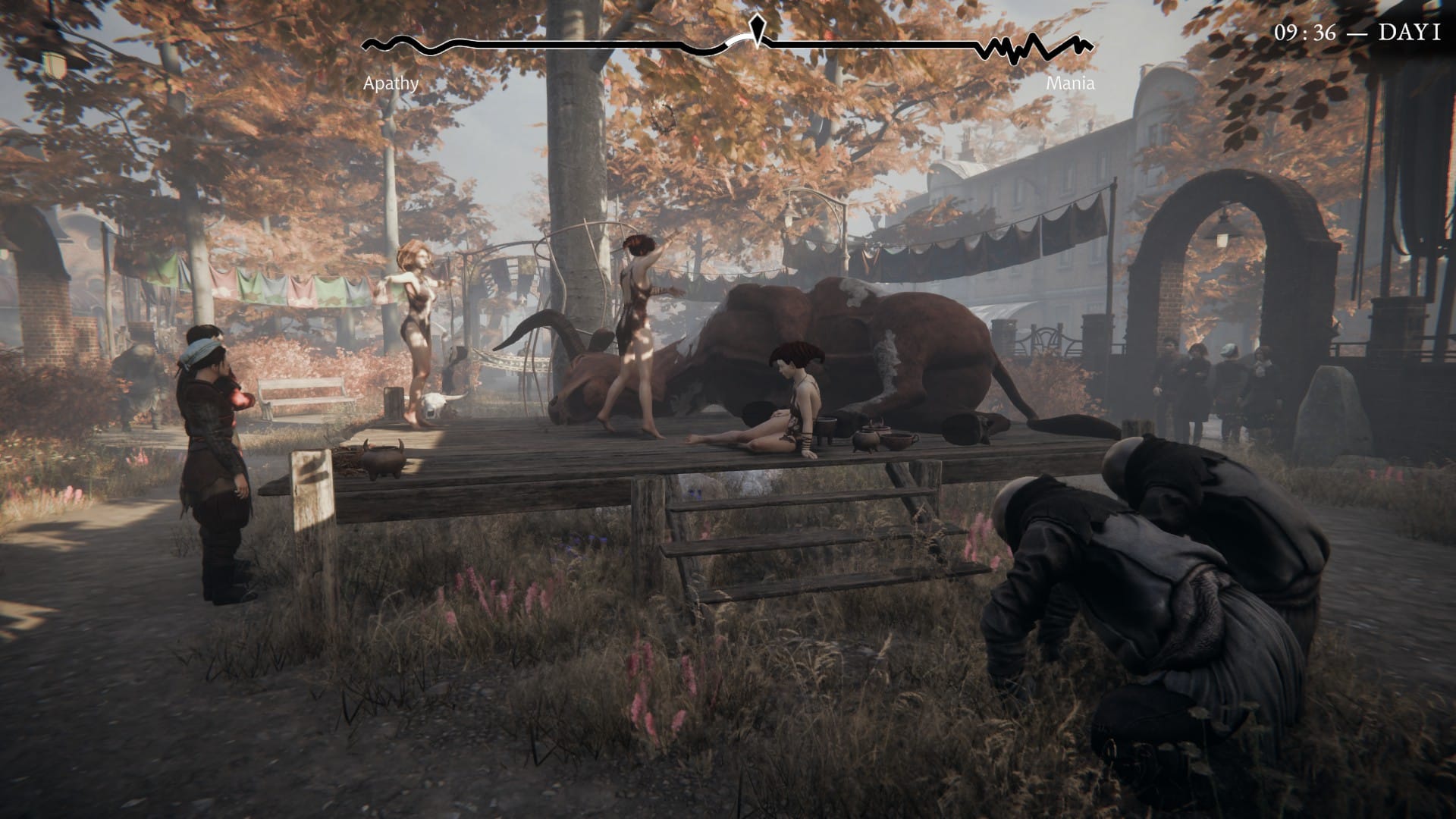
Rather than managing hunger, the main survival mechanic in Pathologic 3 is balancing Daniil’s fragile mental health. As you walk around town, you’ll gradually trend towards apathy, moving slower, and eventually if you become too apathetic and depressed, Daniil will shoot himself. On the other hand, if you allow yourself to become too manic, Daniil’s health will slowly deplete as his heart beats too fast to withstand it. However being in a manic state does allow you to move a lot faster, which also comes in handy when navigating around the various districts of the town. You can take various drugs and foods to boost your apathy or mania, with the ideal state probably being slightly manic, but not so much that it depletes your health.
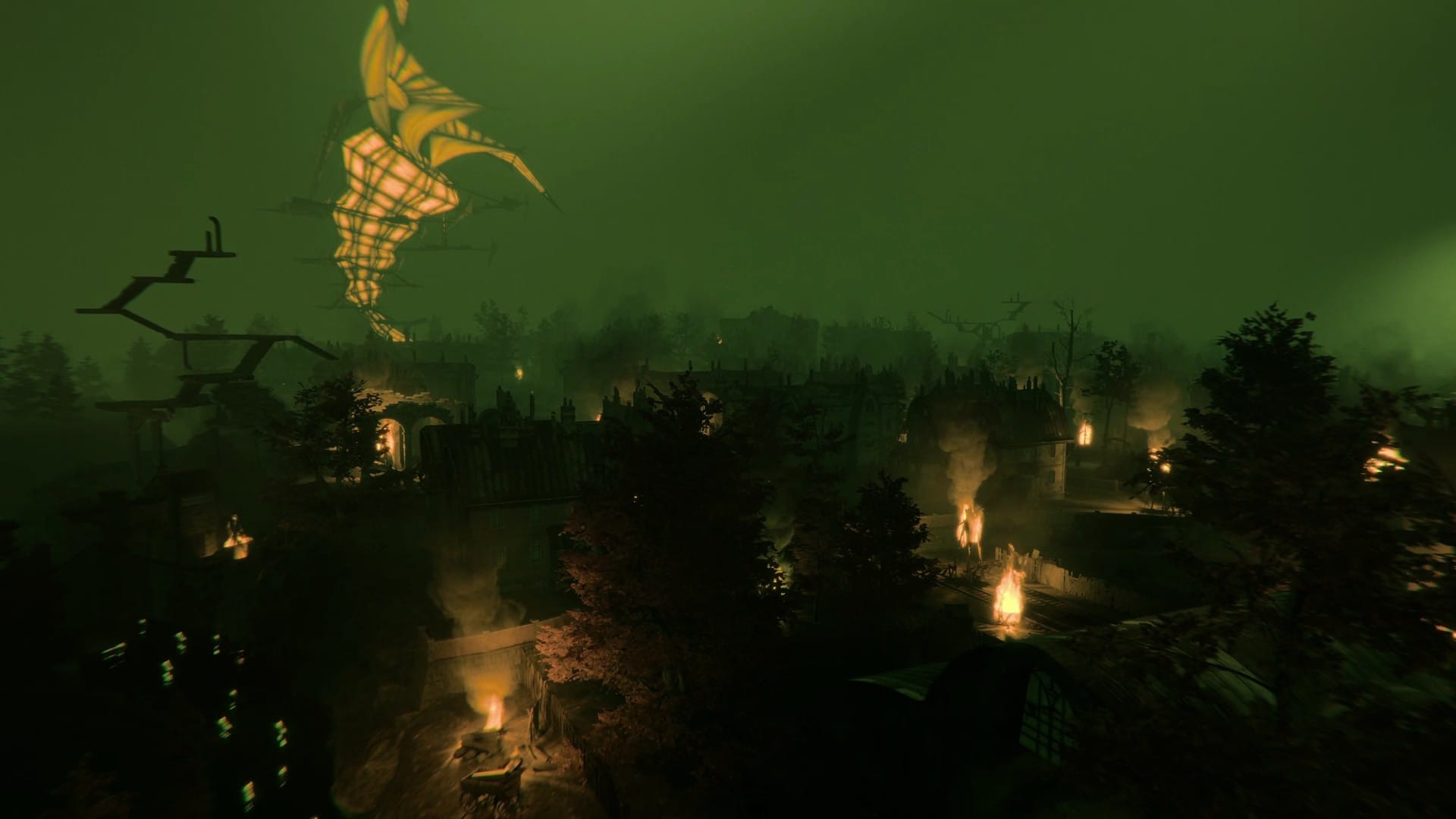
Getting around the town is an ordeal in itself. Some districts will be safe, but many will be infected with the plague, meaning you’ll need to use the miasma-clearing prototype device, which uses harmonics to disperse the poisonous clouds. Unfortunately this has only limited uses, and recharging it can be challenging. At the same time in infected districts you’ll be hunted by a physical manifestation of the plague, the Shabnak-Adyr. This introduces overt survival horror to proceedings, given the Shabnak-Adyr cannot be killed, only temporarily disabled. You can light bonfires to distract it, or use up one of your precious charges of the prototype to stun it. This is also when having high mania comes in handy, as you can attempt to sprint past it.
Unfortunately I did find the Shabnak sequences a bit frustrating as it can teleport around and doesn’t follow the same rules as the Alien from Alien: Isolation for example, but they’re a relatively minor part of the experience. Unlike the fully open world of Pathologic 2, the town is now divided into separate districts which you fast travel between, which does help with the performance. The map of the town is broadly identical to Pathologic 2, as is the overall graphical presentation. You’ll also need to barter with the children of the town, who in exchange for walnut husks or beetles can give you various useful items should you run low. The more of the same drug you take, the less effective it gets, so you must use it wisely.
The writing is consistently top-notch and although there’s limited voice acting, there’s enough to help establish each character. Given the myriad ways the plot can be altered by your actions, your medical investigative knowledge such as examining victims or passing public health decrees, Pathologic 3 gives true meaning to its time travel mechanics and storyline in a way not seen since The Forgotten City. The Pathologic series is unique for continually remaking itself, with both Pathologic 2 and 3 being part remakes of the original. I presume Pathologic 4 will hopefully remake The Changeling storyline, which was extremely different compared to the Bachelor and the Haruspex because she was unable to use most weaponry and had the ability to cure infected townsfolk. There’s still nothing else quite like Pathologic, and this latest instalment arguably offers the best entry point for newcomers.