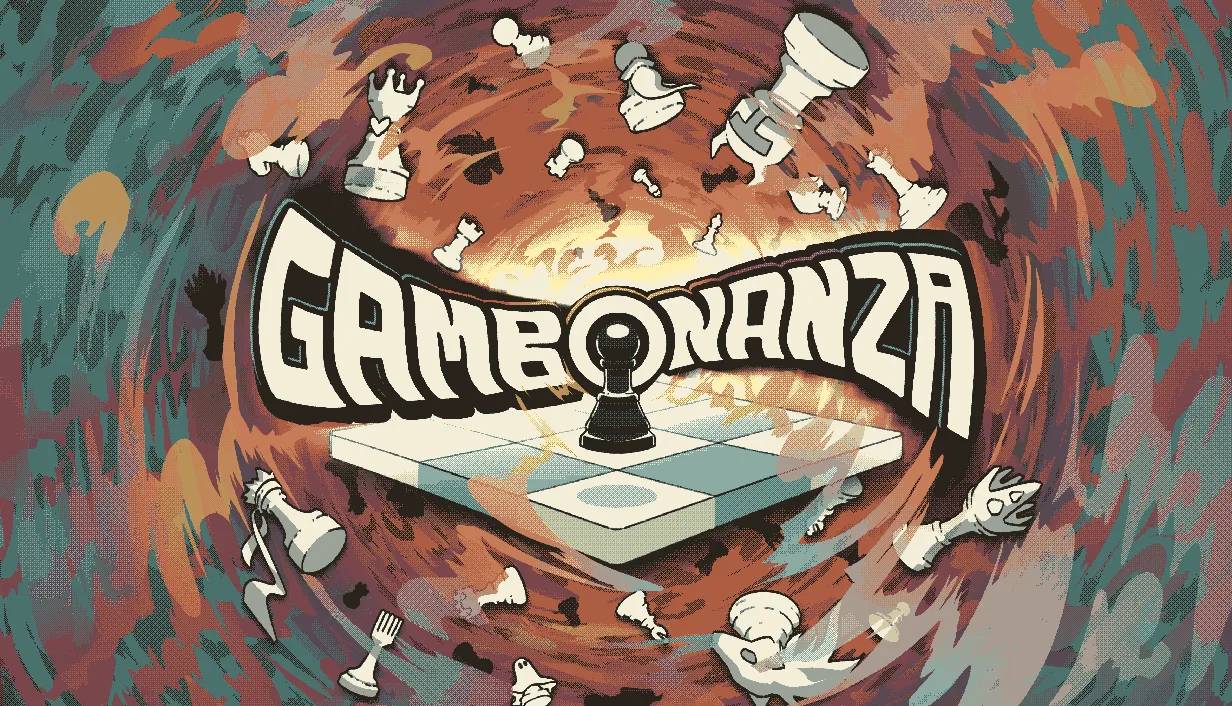
Since Balatro exploded into huge popularity in early 2024, there have been many pretenders vying for its crown. Its combination of being easy to pick up and play, but difficult to master as well as having that addictive nature of “just one more round” was a seductive formula and one many wished to emulate. Some stuck with a more card-based format, such as Replicat where you match cat cards, while others moved into different game styles. Gambonanza is not the first chess inspired Balatro-like; indeed others like Passant and Tabulo came earlier and were relatively successful in their own right. What it is though is the most polished and most satisfying iteration on the concept, taking the principles of chess but mixing them up in various fun and potentially game-breaking ways.
On the face of it, Gambonanza is not ashamed of wearing its influences on its sleeve. The main menu design, game interface and UI, indeed even the structure of the rounds and bosses is almost directly cribbed from Balatro. They say imitation is the sincerest form of flattery and Gambonanza gets a bit close to almost feeling copyright infringing in some respects, but it pulls itself back thanks to its creative boss designs and crucially, gameplay which is wholly different. The concept is playing micro games of chess on a much smaller board, with the objective of simply taking every piece. Throw the rule book out the window because you can have as many of the same piece as you like, so 4 knights and 3 rooks is very possible. You always play as white, so always move first.
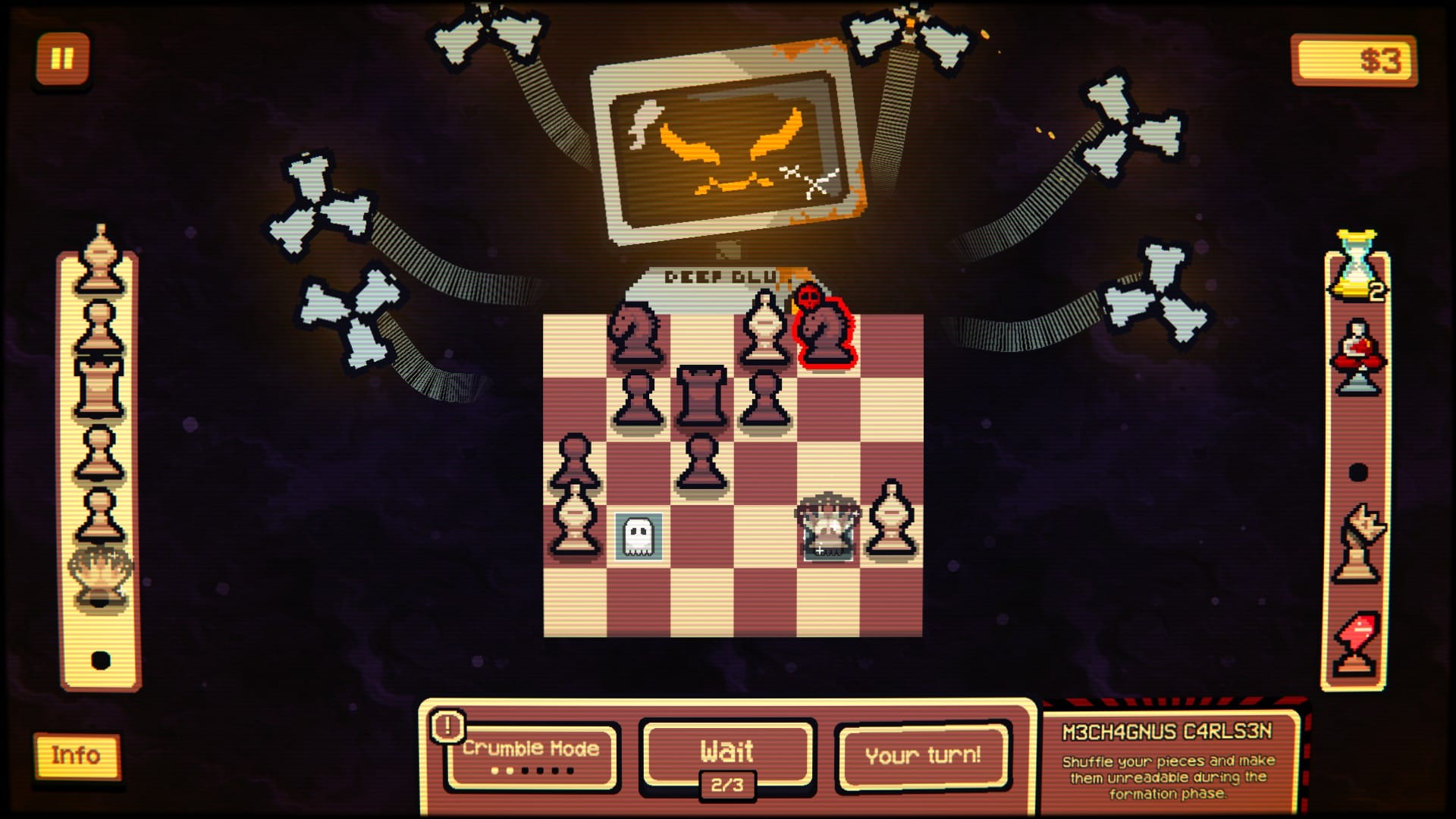
Like Balatro the game is run-based with roguelike elements. The first round is played on a 5×5 board, expanding later to 5×6, 5×7 and 5×8. At first you have only 3 pieces, but between each round you earn money to purchase new pieces, new board upgrades, and gambits. Gambits are Gambonanza’s version of Balatro’s Jokers; special rule adjustments or improvements. There are literally hundreds of these doing everything from awarding money or pieces if certain criteria are met, to even more powerful abilities. I got one which skipped the opponent’s turn every 5th move, which proved insanely powerful. An important thing to remember is that any piece which is lost during a game is lost permanently; you must always be continually buying more.
The AI isn’t a chess master at least on the initial difficulty; it will make some mistakes or unusual moves, although it also won’t pass up open opportunities. It can also be very easily baited into making certain moves by taking pieces which are then themselves open to being taken, so if you take the opponent’s bishop with a pawn, it might take the pawn with a queen, leaving the queen vulnerable. If you’re fairly familiar with chess you’ll probably want to move up a difficulty after you’ve won a run or two. There are a number of escalating tiers of difficulty which also make other modifiers more challenging at the same time.
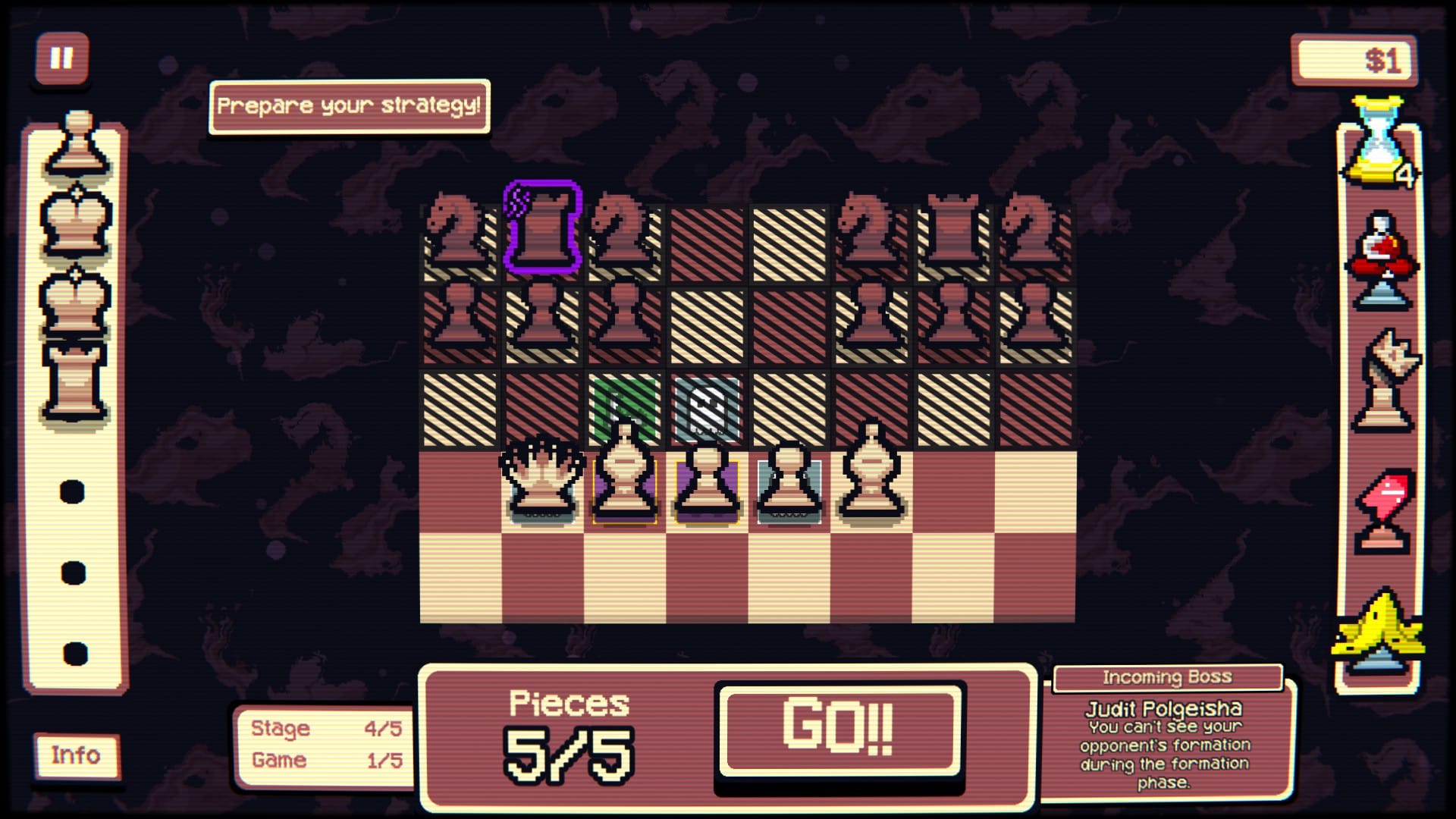
After 4 standard games you’ll face off against the round boss, who is an animated character possessing a unique special ability. Evil computer M3CH4GNU5 C4RLS3N (inspired by grandmaster Magnus Carlsen) can shuffle all of your pieces randomly, meaning you won’t know which piece is starting where. Tal the Cursed can place down cursed squares on the board, causing any piece landing on them to be downgraded to a pawn. Completing five rounds wins the run; there is no endless mode here, but you unlock plenty of new variables for winning a run which add more options for chaos.
Along with obtaining pieces, the shop also offers tile upgrades, which then stick around permanently for the rest of your run. Some of these can temporarily protect pieces, or generate phantom pieces which can be placed and operate the same as a real piece for the rest of the game. Unlike real chess you are allowed to place new pieces during a game (although this will count as your “action” and you can’t also move it the same turn), as well as wait without moving at all. There is a timer though to prevent games dragging on; each turn without a piece being taken increases the Crumble Mode timer, which upon being triggered causes squares to randomly be destroyed across the board (any piece on the tile also being destroyed).
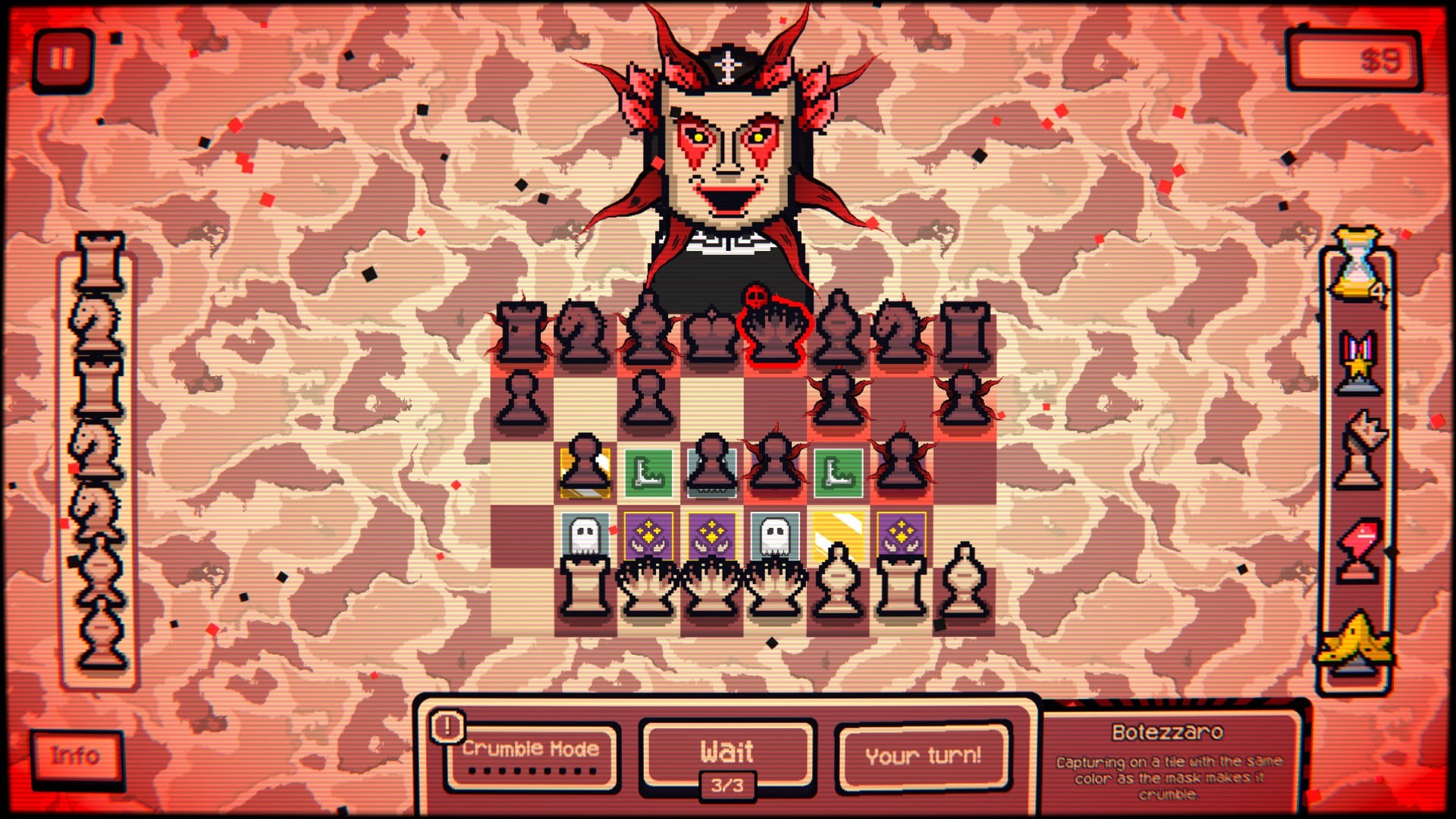
When you get into a groove and get a combination of Gambits which synergize really well together it can result in some extremely overpowered runs which feel tantamount to cheating, but that was also a lot of the fun of Balatro and it has been accurately replicated here. I had great fun using the Gambit which caused pawns to be promoted if you waited without moving, suddenly transforming one into a queen each turn. Alongside the nice visuals, the music is not as trippy and hypnotic as the soundtrack to Balatro, but thankfully it doesn’t get irritating and has some nice variations when facing off against bosses.
Gambonanza may have borrowed much of its homework from Balatro, but as a game it stands firmly apart thanks to its clever utilization of the fundamentals of chess, allowing you to pull off absolutely absurd combinations and moves which would never be permitted in a regulation game. It’s very satisfying to “break” chess, which while widely played can often feel like the preserve of a dedicated elite, with a very regimented ruleset which allows for zero deviations. If you like chess and enjoyed Balatro, Gambonanza will be a checkmate, game and match.