Auroch Digital are building quite a legacy with the Warhammer 40,000: Boltgun series. The original game was a highlight of 2023, and it was followed by the solid Forges of Corruption DLC and, more surprisingly, a free typing game. Warhammer 40,000: Boltgun 2 is a relatively conservative sequel, but it doubles down on everything that made the original such a thrill to play. Put simply, this is another stellar shooter, an essential experience for 40K and retro FPS fans alike.
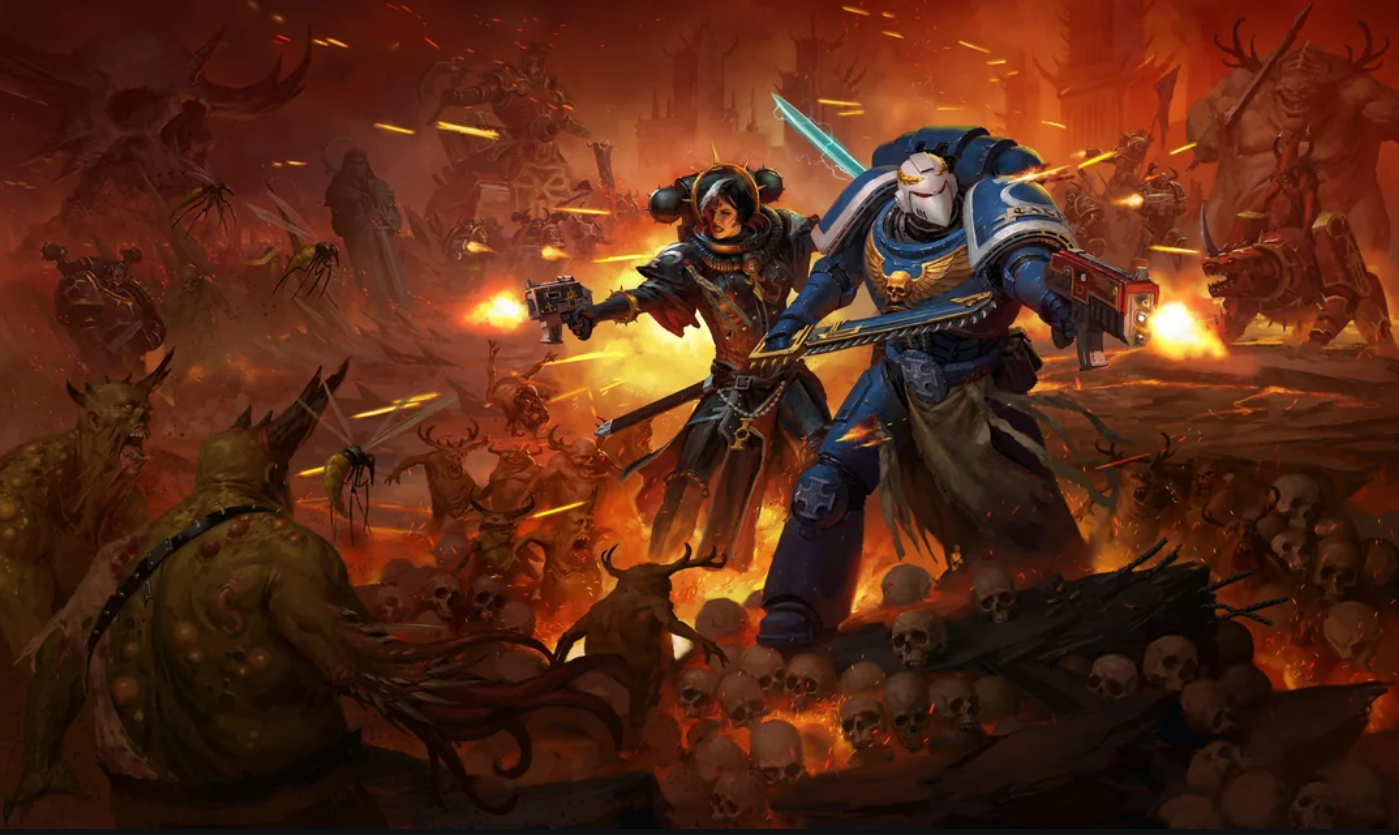
The broad strokes of this sequel are as before. Boltgun 2 is again a pure single-player experience, with no additional modes. The player is again up against the forces of chaos – this time the principal enemy is the Vashtorr the Arkifane, avatar of unrestrained invention and prolific arms dealer to the grotesque ranks of demonkind. While the followers of chaos gods Nurgle and Tzeentch were present in the first game, they are this time joined by those of Khorne and Slaanesh. None of this will mean anything to those unfamiliar with Warhammer 40,000, but the Auroch Digital team is very familiar with it indeed.
The single biggest difference this time around is that Malum Caedo, the Ultramarines Sternguard Veteran from the first game, is not the only playable character. Auroch Digital have added the option to tackle the story as Nyra Veyrath of the Sisters of Battle and this is a major draw for Boltgun 2. Some differences are quite minor – for example, instead of Caedo’s frag grenades, Veyrath hurls a slower, more powerful melta bomb.
More significantly, the two characters have largely different arsenals at their disposal. Strikingly, Veyrath is one of the relatively few shooter characters who has to make do without ever laying hands on a shotgun – in its place, she has the long-range precision of the condemnator boltthrower. The loadouts and special abilities are different enough that it definitely feels worthwhile to play at least some of the levels twice.
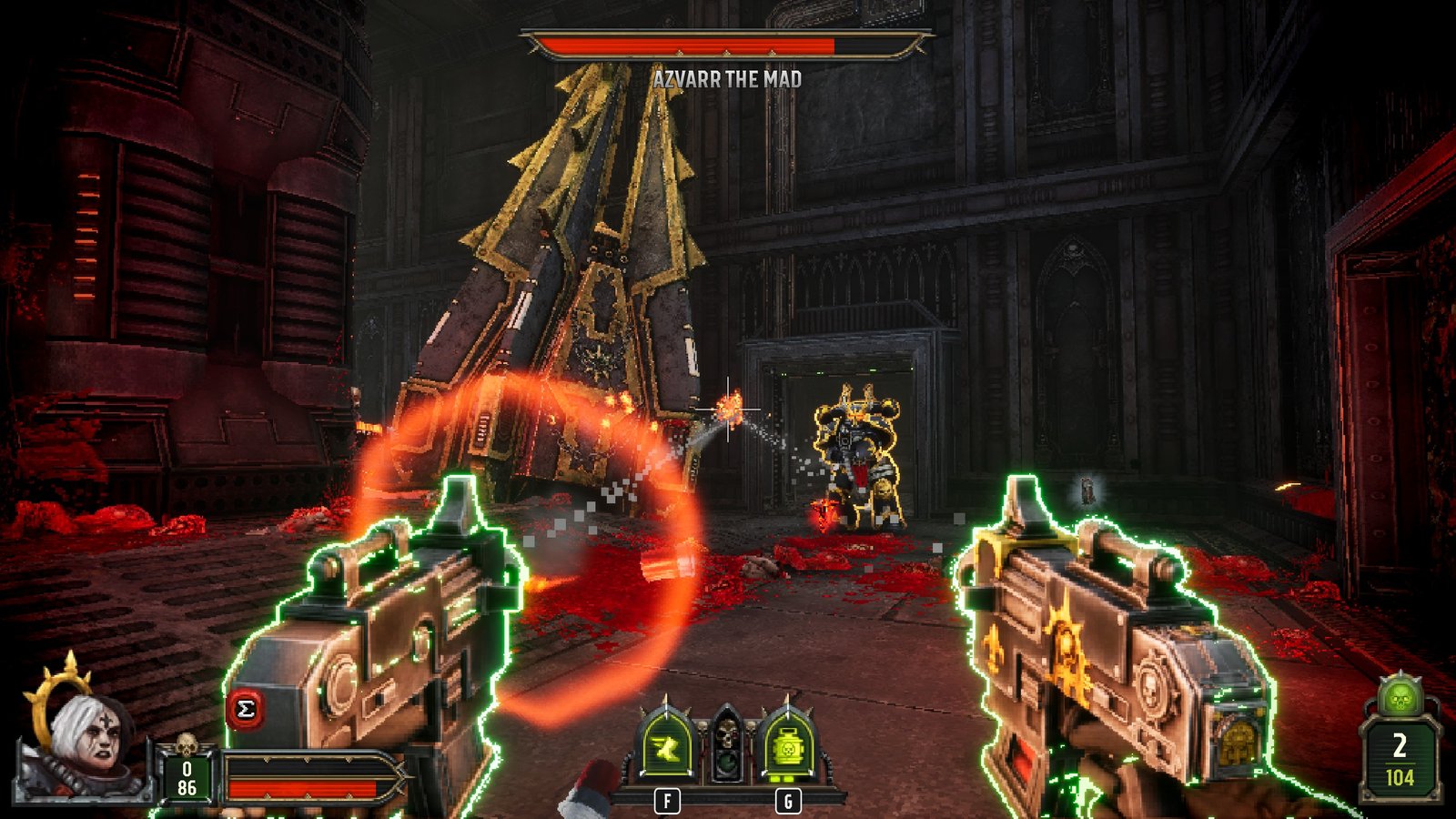
Machine spirit powerups significantly enhance the power of a specific weapon
It is clear that enhanced replayability is a priority here. Where the first game was strictly linear, the sequel introduces branching paths through its campaign. Combined with a few optional levels – like “Dilapidated Prison” – this means that at least two playthroughs are needed to see everything. This aligns neatly, of course, with two playable characters.
Inventive level design was a high point of the first game and Boltgun 2 is at least as strong in this area. The developers’ deep love of 40K is evident everywhere in these locations, which happily are more varied than before. The branching campaign paths take Caedo and Veyrath to several distinct planets, each with diverse sub-areas. Amara Mors, for example, offers both an underwater lab facility and a set of frozen wastes – albeit not in the same playthrough. Similarly, visitors to Erythine can tackle battles on its surface, or on its hollow, mined-out moon.
Some of the levels are truly spectacular. Erythine’s moon offers “Renegade Train”, a fine entry in the tradition of “Phantom Express” from Blood or “AS-HiSpeed” in Unreal Tournament. As in those classics, the player is tasked with recapturing a train from the enemy. This being 40K, the train is absolutely vast and multi-layered, running through an immense tunnel and clogged with hundreds of deranged cultists and chaos space marines in thrall to Slaanesh. Another highlight is “Vicious Circles”, a level set within concentric, unfolding circular structures inside the Arkifane’s warship.
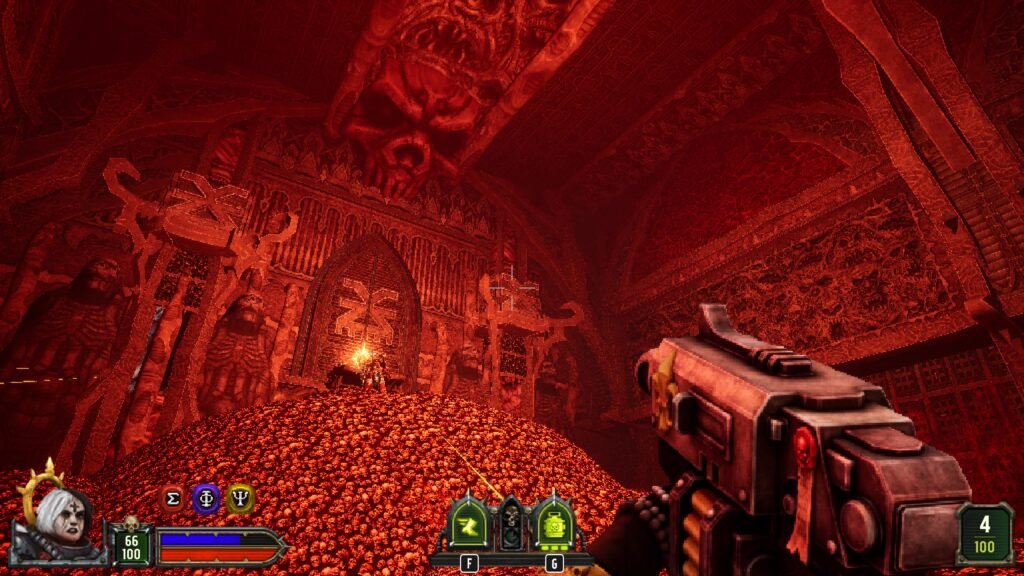
Khorne’s forces are present for the first time and his levels are tainted by the blood god’s influence
Some subtle gameplay changes have come along with these new spaces. Jumping, especially across large gaps, seems to play a larger role in these levels. Plunging down on enemies, chainsword or power sword in hand, remains consistently exciting. There are also more moving elements within the levels, from vast turning cogs to motorised bridges. These make the environments feel livelier; similarly, the fairly frequent presence of allied troops – the Death Korps of Krieg – makes the player feel slightly less alone, and more as though they are actually taking part in a war, rather than a one-man or one-woman crusade.
The broadening of the chaos threat has seen Auroch Digital add no less than 40 new types of enemies, on top of those returning from the first game and Forges of Corruption. Once again, the pixel art for the weapons and enemies is extremely good, and reflects the tremendous love that the developers have for this setting.
Auroch Digital have not reinvented the wheel for Warhammer 40,000: Boltgun 2 – but they didn’t need to. The original game was easily one of the best retro-style shooters available, up there with the likes of Cultic, and by gently iterating on that formula, this sequel comfortably enters those same ranks.