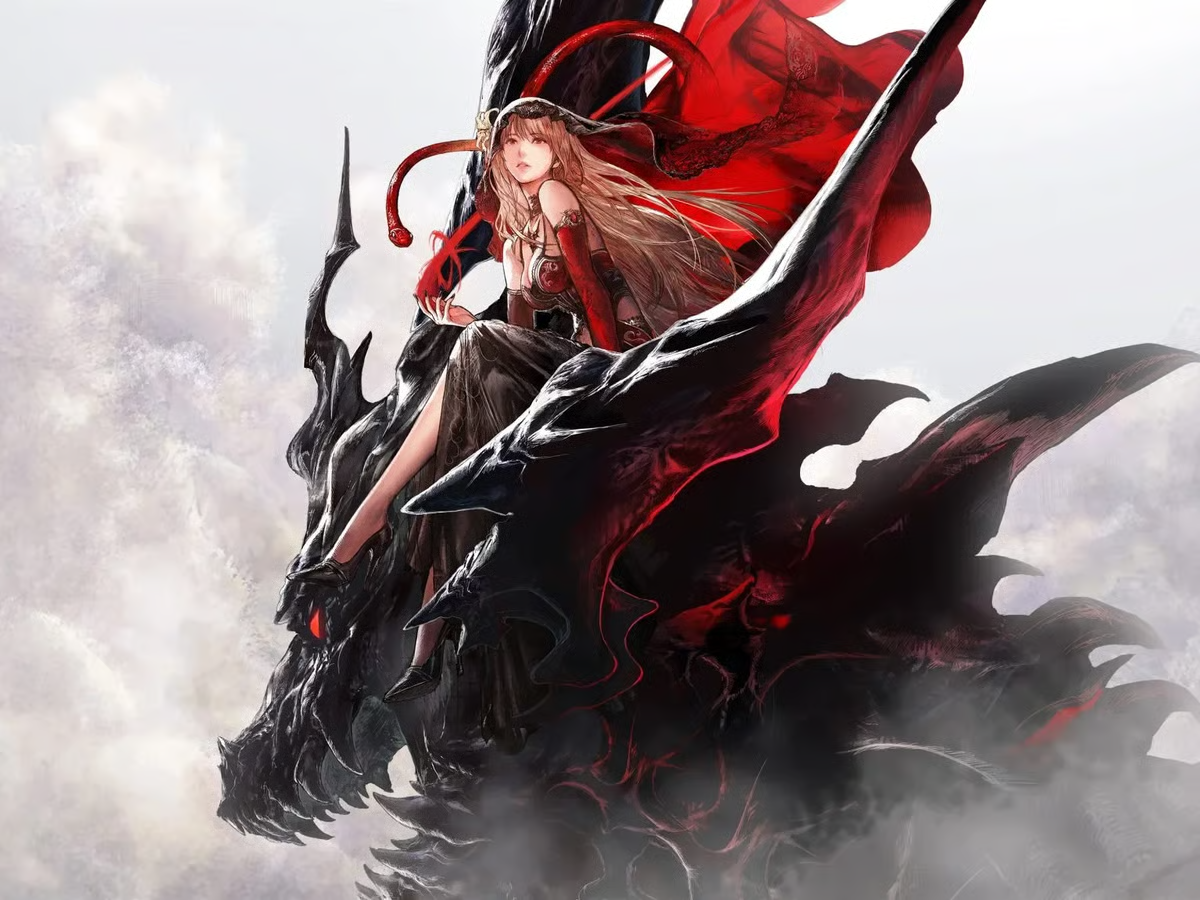
If you had told me that I would be so into a reworked version of a previously mobile-only gacha game a while back, I would’ve called you a crazy person. But here I am, about to gush about Final Fantasy Resonance. In the most basic of descriptions, it is a retooled and completely rebuilt version of Final Fantasy Brave Exvius, Square Enix’s microtransaction-fueled RPG for cellphones from years ago, now with a drop dead gorgeous HD-2D presentation, loads of voice acting, and, most importantly, without any sort of post-purchase costs whatsoever.
Taking place in what was the first season of Brave Exvius, Final Fantasy Resonance puts you in the shoes of Rain and Laswell, adoptive brothers and knights from the kingdom of Grandshelt. They bear witness to the invasion of their land by the mysterious armor clad group simply known as the Sworn Six of Paladia, who seek to destroy the precious Crystals which serve as the basis of not only the world but – to a grander sense – Final Fantasy as a whole. After suffering a huge defeat and having their home razed, it falls to the duo to chase after the bad guys and try to keep them from causing more harm.
Things aren’t as easy as they sound, at least for our heroes, since the game’s overall difficulty isn’t anywhere near the hard side, but we’ll get to that in a moment. Going back to the story, however, their quest takes them on a whirlwind tour, as they pick up extra party members on the way like Fina, an amnesiac girl who has the power to control Espers, Lid, who aspires to become a master engineer like Cid before her, and Jake, a merc with a shadowy past, to name a few, all with their own personal reasons for joining up the knights’ cause.
Each of them serves as pretty much your RPG archetypes, specializing in a particular function, something that plays into the kind of Visions that best match their skills. Visions, for that matter, are the souls of many of Final Fantasy’s most beloved protagonists from over its extended history that you happen to pick up along the way by visiting shrines, like Cloud (Final Fantasy VII), Zidane (IX), Tera (IV), the Hero of Light (I), and Y’shtola (XIV), for example. You equip them to your party members and level up so that your characters eventually get to keep new skills for themselves; so when you switch over, your fighters can then equip those and further spec into whatever custom spec you have your eye on.
It makes for a particularly fun mechanic being able to build your team in this manner While their initial archetypes is an incredibly useful starting point that is perfectly feasible to keep following til the end of your adventure, branching out and experimenting different combinations is an effective way of breaking the game, much like you could do with the very first Final Fantasy back in the day. That’s why I mentioned how Resonance can become even more of an easy time than it already is just by playing through the story normally.
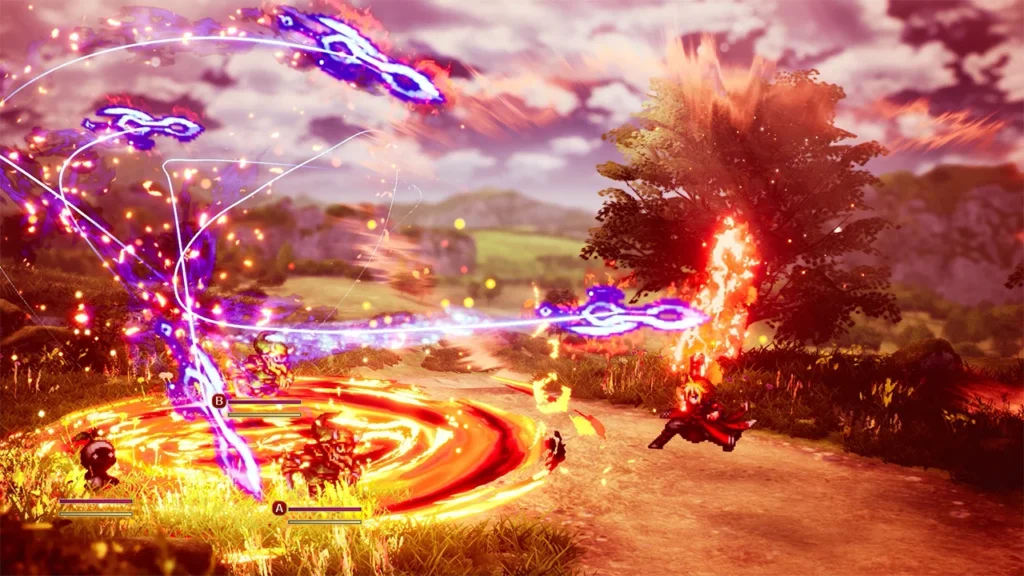
Then there’s the actual way that you fight in it. Taking a cue from Square Enix’s other HD-2D wonder, the Octopath Traveler series and some of the more recent entries in Final Fantasy like Final Fantasy VII Remake and Final Fantasy XIV, your main goal in battle is to break your enemy’s defenses by applying damage that matches their weakness and then laying down your strongest attacks once they are staggered. It makes for some of the fastest and most intense battles in any FF I’ve ever played. Once you’ve got your custom party set up and can dish out attacks that exploit a reasonably large pool of weaknesses, finishing up with an all-out uber-powerful attack from one of your equipped Visions, you’ll be an unstoppable killing machine, which can be extremely entertaining, considering the size of some of the foes you come across.
That added to the fact that the main quest is a world tour of sorts that takes you to key locations of the game’s world in mostly linear fashion, with a handful of sidequests that help you expand your arsenal of Visions and Espers. It all makes playing Final Fantasy Resonance not just a nostalgic trek through memory lane, but an enjoyable romp at that. It’s a surprisingly good side entry in and of itself within an already overcrowded series. Its original characters are especially fun and sometimes have genuinely hilarious dialog in the midst of all the seriousness going on.
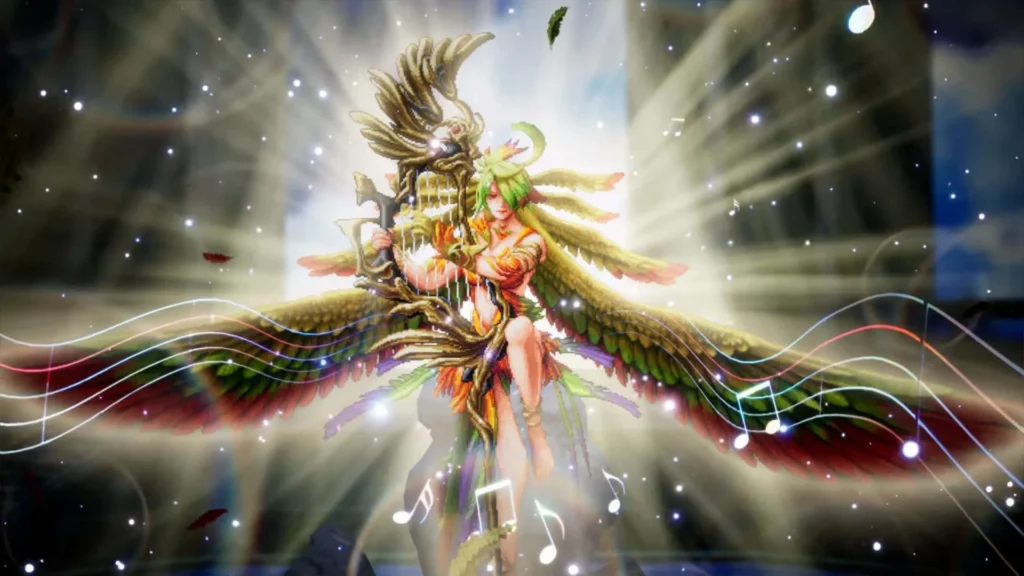
All of it is further made more memorable by the amazing art direction that Resonance has got going on. Taking the HD-2D approach that was started with Octopath Traveler and upping things a few notches, it’s what I would call “16-bit on overdrive” as sprites are much more detailed than Square Enix’s previous releases that are presented in this manner of graphical presentation, further boosted by the implementation of polygonal meshes rendered out to resemble 2D sprites. It’s a confusing description, I admit, but it all makes sense once you see them in motion. Very visually stunning, truth be told, while still feeling retro. An amazing achievement.
While die-hard Final Fantasy fans might look down upon Final Fantasy Resonance with what they’d label as nothing original due to its origins as a mobile game, truth be told, it’s much more than a mere cash grab. I’m not particularly fond of playing on my phone nor having to sink coins into microtransactions myself, so having the opportunity to see what all the fuss was about in regards to Brave Exvius has been a pleasure, especially with how it was done with this retail version in the form of Resonance.
Much like earlier this year’s Octopath Traveller 0, which took a similar approach and successfully converted another one of the company’s mobile titles, Octopath Traveler: Champions of the Continent, Final Fantasy Resonance is another example of how the core ideas were already in place and it was only a matter of taking away the hooks that annoy most console players when it comes to diving into free-to-play games in order to highlight what they are to begin with, great RPGs. Frankly, I’m shocked at how much I’ve liked both of these, with Resonance being the latest and noticeably shinier of the two thanks to the brilliant work that was done with its presentation.