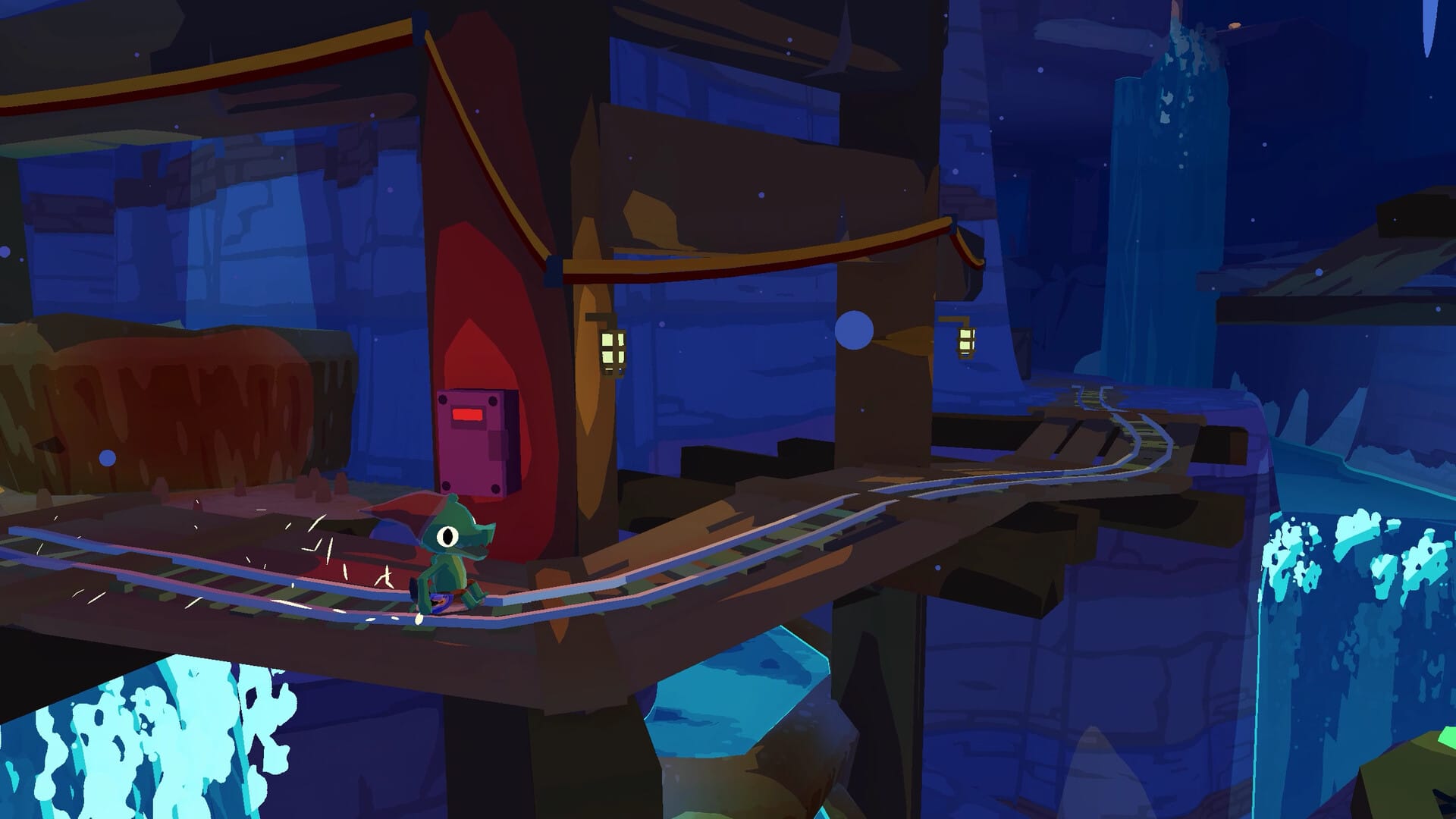
Skateboarding in games could largely be considered solved. The Tony Hawk’s Pro Skaters and Skates of the world generally showcase how you might adapt it. But those are also primarily models for how to make skateboarding work in a 3D space. Trying to make skateboarding work as a side-scroller is a bit different. Tricks and how to perform them become difficult when you have more limited space, let alone potential combo lines. It’s a challenge Seafrog tackles with aplomb, focusing on the inherent platforming the form provides and simplifying the tricks to suit the 2D form.
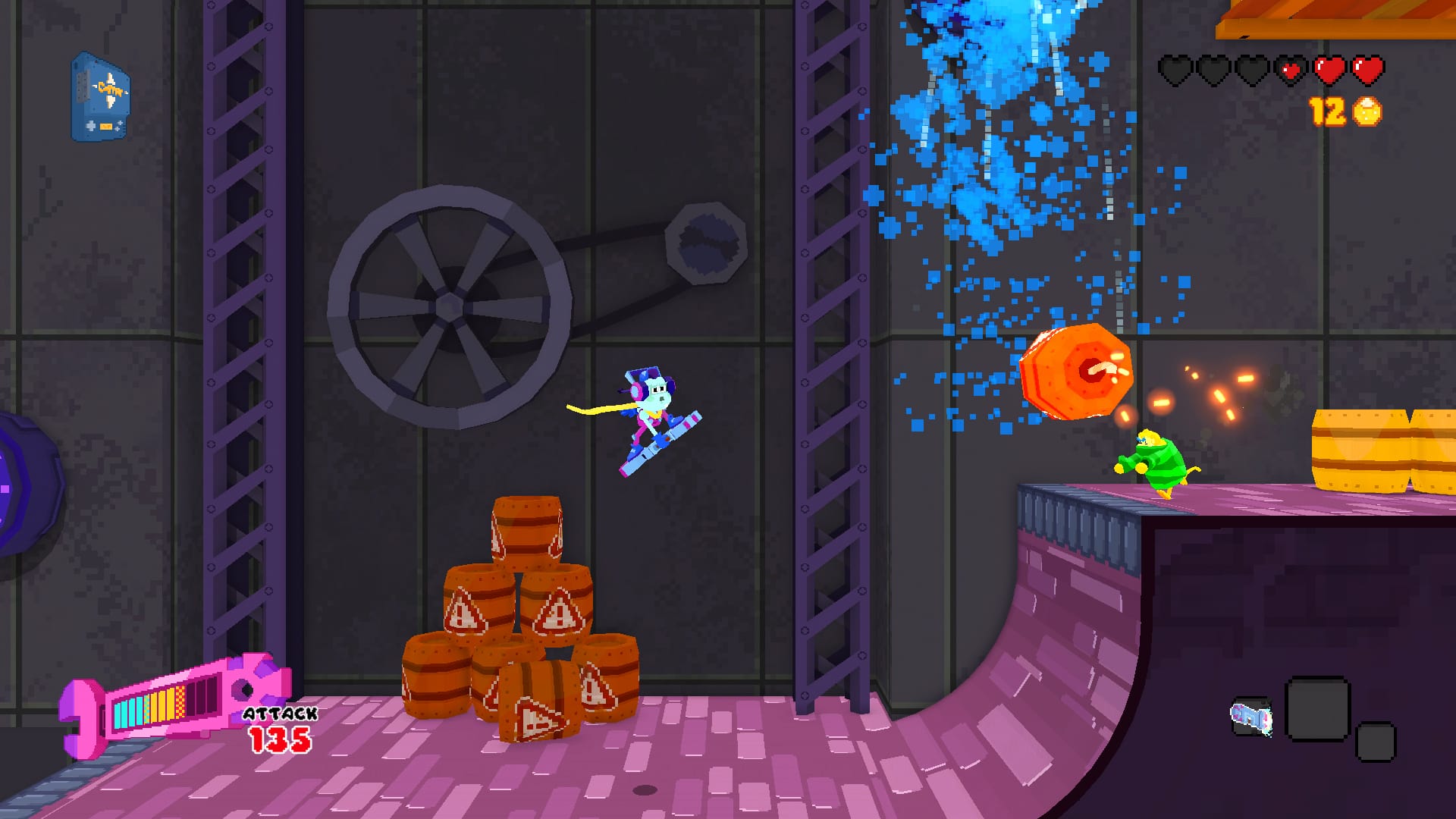
It works like this: you hold down the right trigger to start skating on your wrench. As long as the button is held, you’ll constantly be in motion. Let go of the button while you’re airborne and you’ll automatically perform tricks. Press it again right as you land and you’ll manual to keep the combo going, while landing on rails will make you start grinding. Tricks are important as they build your boost meter, which helps you scale walls and run along ceilings among other things. Seafrog isn’t a score-chasing game, so the tricks are more a means to an end rather than the focal point of play, but they are important and Seafrog‘s take touches on the satisfaction of performing tricks without the dexterity required of most others. It acts as texture to the platforming, a bit of expression you can add while you soar through the air or get some notably good airtime off that half-pipe.
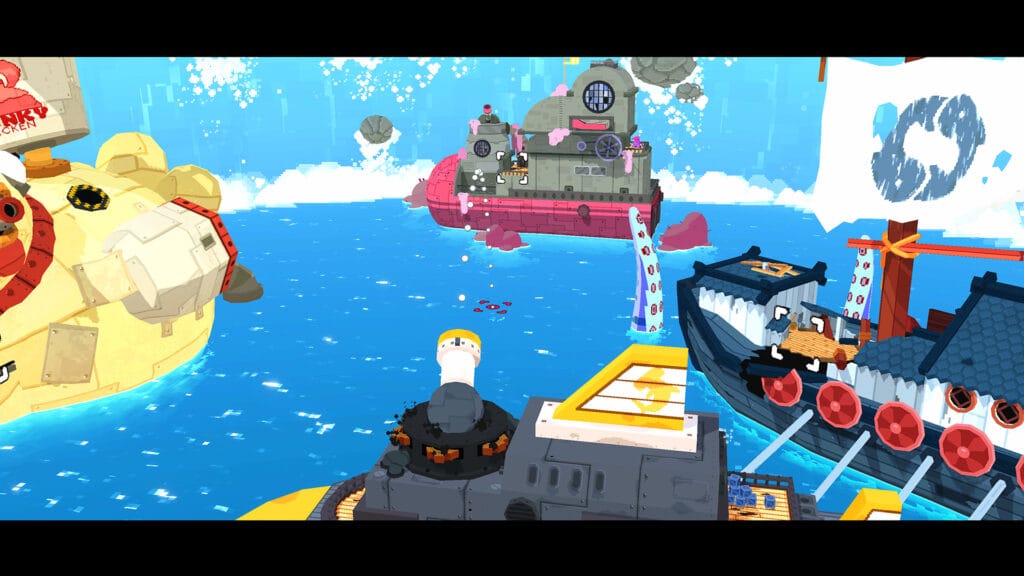
This is all done in service of collecting enough energy to power your home base’s cannon to escape the ship graveyard you’ve ended up in. The premise is that they have ended up adrift at sea following some job going awry and eventually end up in a ship graveyard of sorts, hopping between stranded vessels retrieving whatever energy you can to make your exit. Every ship has many layers of rooms with objectives to complete and items to collect. You’re primarily just looking for energy to deposit back at base, which you find laying around and obtain from defeating enemies, but also through deposits tucked away in various corners of each area.
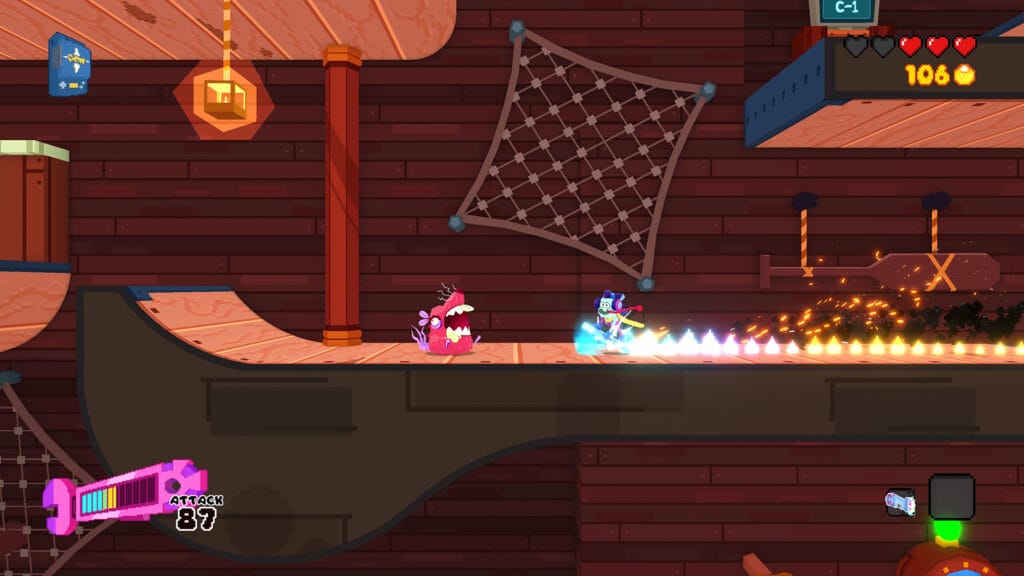
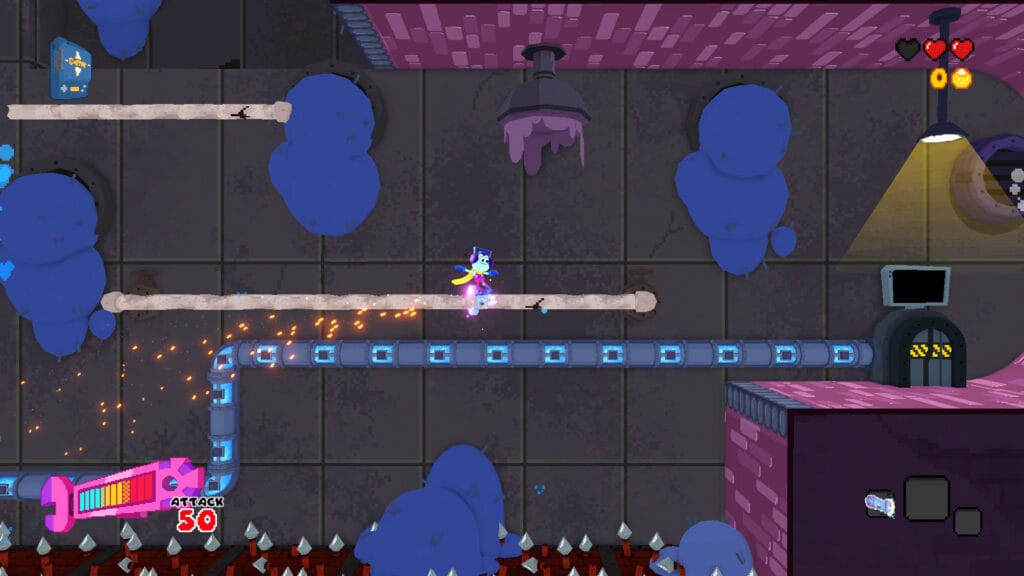
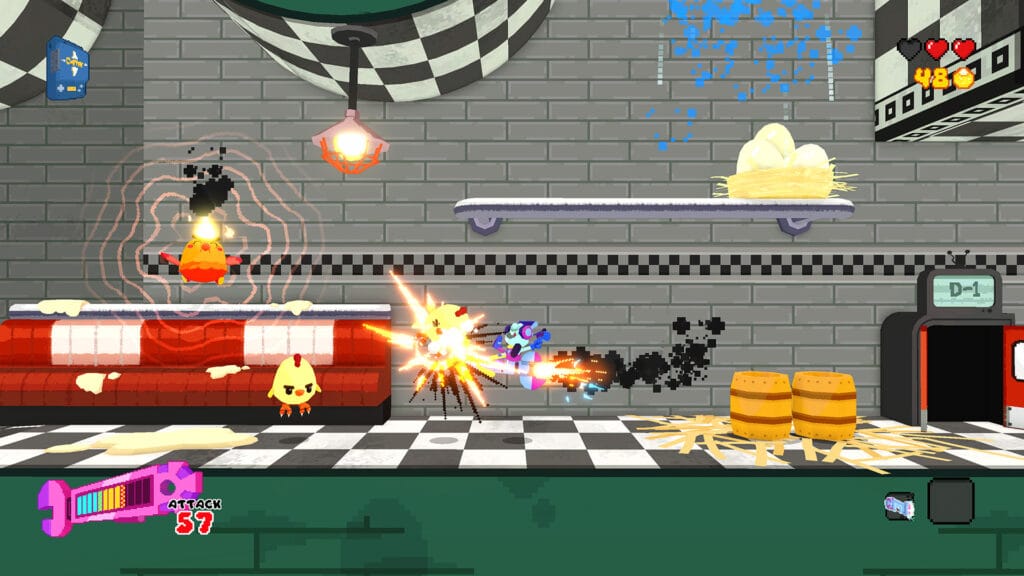
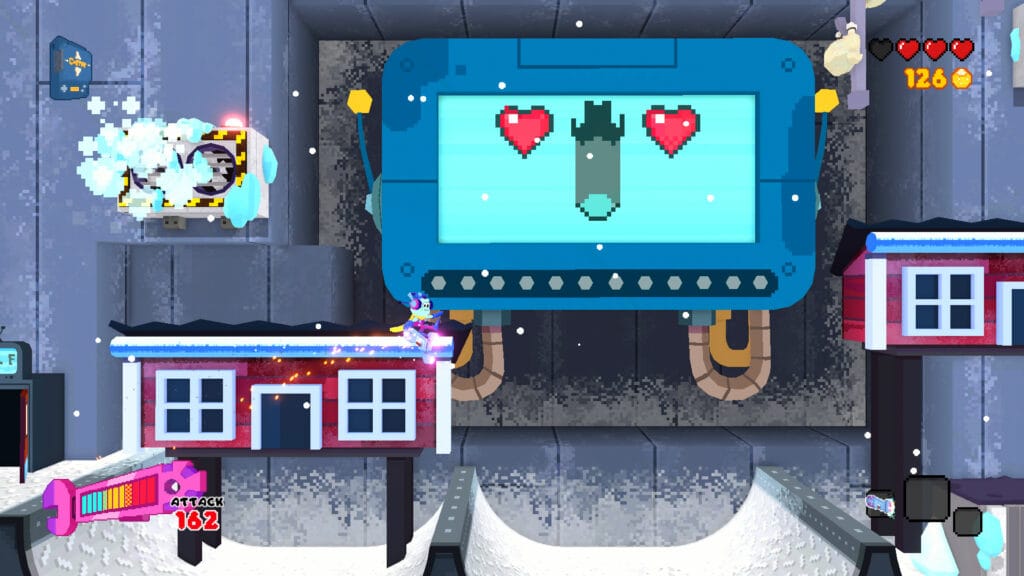
The primary challenge comes building and using momentum to access higher levels of each room and obtain the rewards contained within. The boost is key, but it alone can’t get you everywhere. It’s as much a matter of when you start boosting as how much speed you were able to build and the angle you made your approach from. The interiors of the ships you skate around in make it easy to find suitable skate lines to grind along and gain air time with, but actually getting around can be tricky.
The exact angles and approach you need often require some finesse. For as much as Seafrog simplifies some parts of skateboarding, as a platformer, it can be quite difficult. Not to any extreme degree, mind, but enough to demand a proper understanding of the space and, when enemies are involved sometimes, a clear plan of attack. Some of this is due to the inherent difficulty of platforming via a skateboard (variable speed and less fine control over your jump arcs), but mostly it’s just down to knowing when you need to boost and when you have to time that jump; things that come naturally with running through each level a few times, something you’ll naturally do with how they naturally loop.
Which is ultimately a sign of how much Seafrog gets skateboarding. It’s a different context, but running through a level and understanding how to navigate it properly, how to fit in tricks smoothly is the appeal of skating in games. There is satisfaction in learning how to move through an area from start to finish in one smooth motion, to perform feats that seem impossible on the first dozen tries only to become second nature in due time. Seafrog doesn’t quite demand that level of dedication, but it still can evoke it just as well as its peers.
Callum Rakestraw (he/him) is the Reviews Editor at Entertainium. You can find him on Bluesky, Mastodon, and his blog.