I’ve always had a weird relationship with horror movies growing up. As a kid, I was always deathly afraid of them, to the point of not even wanting to see their posters when visiting rental shops because they would cause nightmares. A little later, as a young adult, I slowly started dabbling into them through the works of George A. Romero and, later on, other classics such as Alien and the Friday the 13th and Nightmare on Elm Street, with which I thankfully got over that hurdle. Granted, I’m not not a big fan of the more bizarre approaches to horror that involve torture and suffering, so even though I’ve enjoyed the first Saw, a much more psychological kind of film than its sequel, I try to steer clear of those.
Case in point: I never really had a lot of contact with the Hellraiser series. I know about it through pop culture osmosis, admittedly, but I’ve never really sat down to watch any of them, only knowing that – at least the first couple of them – are supposedly praised. And, of course, I’m well aware of its big baddie, Pinhead, whose iconic look is synonymous with the franchise and to Clive Barker. The latter I’ve known for a while through the handful of games that were written by him, mainly Jericho, released during the Xbox 360 gen, problematic but overall impressive for the time.
So when the opportunity popped up to check out Saber Interactive’s Hellraiser: Revival, I tentatively jumped on it. What’s the worst that could happen? I’m a 41-year old man now. I guess I can take a few frights, a bucket of gore, and some genitalia here and there, right? This single-player first-person immersive experience is indeed what I would expect out of a Hellraiser game, that is, gross, tense, and ultimately messed up, but, in all honesty, it’s not nearly as out there as what I had in mind. Given my experience playing things like Outlast and Silent Hill (especially the remake of 2), while I wouldn’t have gone out of my way to play this in any sort of casual manner as not someone necessarily a fan of the source material, it’s… surprisingly okay.
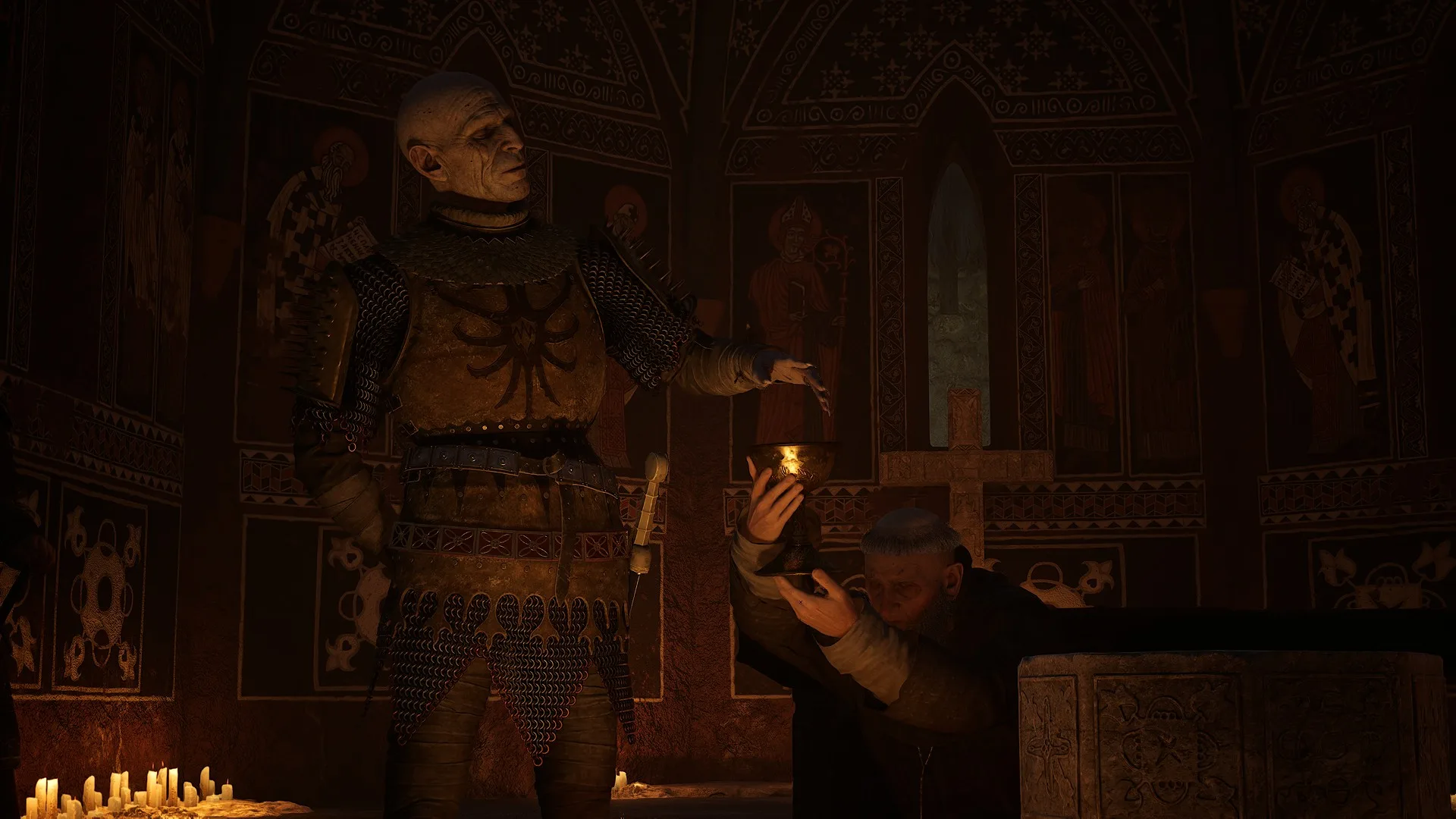
In it you play as Aidan Lynch, who’s a member of a biker gang and is in a relationship with a girl who’s into the kinky stuff. During one of their more intense moments of intimacy, the two start messing around with a mysterious little cube that happens to be next to them, when all kinds of messy shit start happening. A portal opens and Sunny, the girl, ends up crossing it in her birthday suit, with Aidan following close behind. In the franchise’s Cenobite realm of hell, our protagonist ends up getting acquainted with the horrific group, headed by none other than Pinhead (played by original actor Doug Bradly, a veteran of the series who’s been at it for decades at this point), who strike the horrific deal with his girlfriend, trading plenty of pain for sinful pleasure, skinning her alive right in front of the guy.

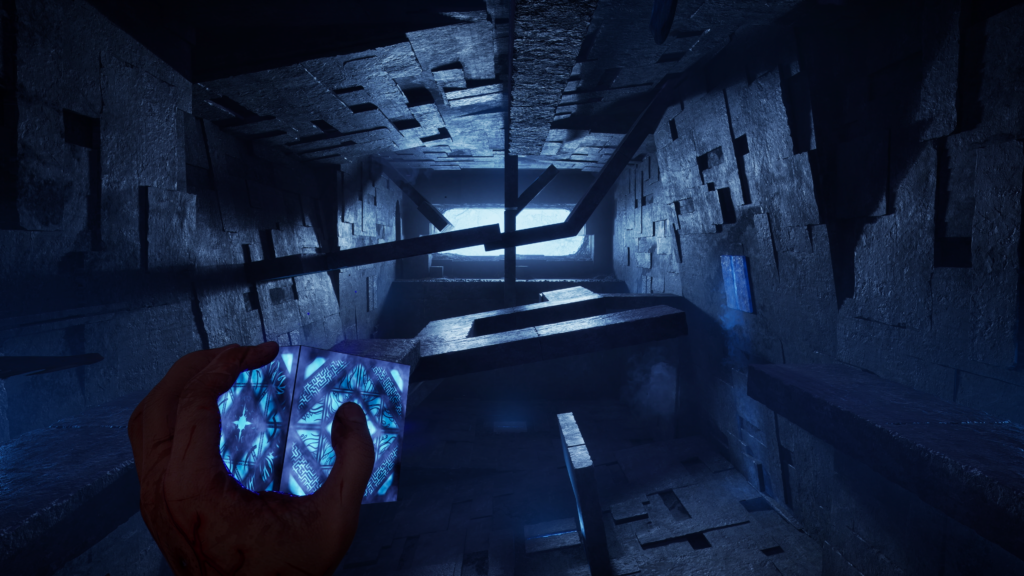
Understandably frightened and traumatized, he passes out and continuing his streak of terrible luck, ends up getting abducted by the Scarlet Church, a leatherbound group of humans who worship the Cenobites and perform all manner of bloody rituals hoping to call in their “gods” to our reality. Naked, wounded, and trying to understand what is happening, Aidan is able to escape the trap that he’d laid in by the masked leader of the baddies and now has to find a way out of their lair in order to try and save his girlfriend. Things aren’t that simple, because now that he’d been in contact with the Configuration, the weird cube with the crazy powers, and ends up getting randomly shifted to the Labyrinth, where he has to deal with the all-powerful Cenobites.
Hellraiser: Revival plays like your usual first-person exploration game with some combat. While I wouldn’t equate it to Condemned in terms of depth, where you were able to parry and counter attacks, there’s an initial attempt at providing more immersive melee, with different types of blades that can break apart and be repaired (or even further upgraded) by using items and crafting. Sadly, for one there’s nothing in place in terms of any manner of blocking since you’re only given a measly dodge, and it doesn’t take long for you to find a gun, but unlike the aforementioned game, ammo isn’t at all limited, and enemies instantly start carrying firearms as soon as you pick one up. What could’ve been a much tenser time scurrying around the dank halls of their base and eventually the alleys of Clairport and its surrounding areas shifts into mad dashes of trying to land headshots.
So the best parts of the game end up being your visits to the underworld, where you engage in all manner of environmental puzzles, making use of the Configuration in different ways in order to find the way ahead. Sometimes, you’re faced with trying to avoid one or more members of the Cenobites, scrambling to find an escape path before either coming back to the real world, or getting to mess around with rocks, collectibles, or the random wall panel. The Labyrinth is incredibly atmospheric, a very moody space that makes great use of Unreal Engine’s lighting model to generate a near constant state of dread as you make your way through its tight corridors. Sadly, in case you end up failing these scenarios, the illusion of danger kind of dies down somewhat as practically all of them are heavily scripted, usually relying on a single solution or path to be taken in order to beat them, so the more you have to repeat them, the less of a shock they provide. Still, work was most definitely done to make your visit to the Cenobites’ home memorable and the game is mostly successful, even more so if you can manage to get through them on your first attempt.
The further you get into the game, the more videogame-y it becomes, as you start unlocking more Configuration powers, granting you abilities you’ve probably seen elsewhere, like Tele and Pyrokinesis, chains that jut out of yourself in order to spale enemies, juxtaposing with more down-to-earth gameplay mechanics like stealth takedowns and face-to-face beating the absolute crap of people. It’s during combat that I believe Hellraiser: Revival is at its weakest, where worldbuilding, with its awe, wonder, and resulting grossness, tends to be its strongest asset. It also helps that there’s quite a bit of reading material that can be found that provides a lot of the backstory and lore that helped someone like me who isn’t at all studied in the source material.
For a fan of the movies and horror videogame fanatics, though, Hellraiser: Revival will most likely be one of the best interpretations of a piece of license material in that particular genre. Outside of Blair Witch and to a lesser extent The Chronicles of Riddick, I can think of a more faithful conversion of a horror movie franchise to game form than this, at least to someone like me, who has always approached Hellraiser as a step above the rest when it comes to horror and being messed up. Hellraiser: Revival is just that.