I think I must be fairly atypical in my prior experience going into The Blood of Dawnwalker. I have quite a familiarity with The Witcher franchise as a whole, which many of the staff of developer Rebel Wolves previously worked on. However, while I have played most of The Witcher original and a bit of The Witcher 2: Assassins of Kings, I am still yet to touch The Witcher 3: Wild Hunt, easily the most popular and most well renowned instalment of the trilogy. It has been sitting on my backlog of shame for years, even as I earlier this year finally got around to finishing CD Projekt Red’s newer game, Cyberpunk 2077, after playing it for more than 150 hours. The Witcher 3 however is certainly the biggest inspiration for The Blood of Dawnwalker, in both setting and tone. In terms of execution, it’s something quite different and satisfying in its own way.
The year is 1349, somewhere in the Carpathian mountains. The Black Death is sweeping across Europe, and millions are dying from the plague, except in the Vale Sangora. Here, an ancient vampire (known as vrakhiri in game), Brencis, along with his coterie of followers has seized control of the valley and executed the former ruler. The vampire’s blood contains incredible healing properties and is able to ward off the plague for all who drink it. Brencis offers this to the citizenry in exchange for a blood tax, where every adult citizen must “donate” some of their blood to keep the vampires sated. Anyone too weak or infirm is drained of all their blood, killing them in the process. Naturally the peasantry aren’t particularly happy about this arrangement, with a group of rebels known as the Manumits fomenting dissent.
You play as Coen, a young peasant man and former mineworker who witnesses the destruction of his village at the hands of Brencis, who has also kidnapped his mother and siblings and plans to execute them in 30 days time, as part of Brencis’ coronation. Brencis also cursed Coen by making him a vampire himself, hoping to use his bloodlust against him as punishment. Something went wrong in the process however and Coen was transformed into a Dawnwalker; human by day, vampire by night. Armed with his new supernatural powers along with some additional ones to learn, Coen must embark on a quest to rescue his family and perhaps liberate Vale Sangora before time runs out.
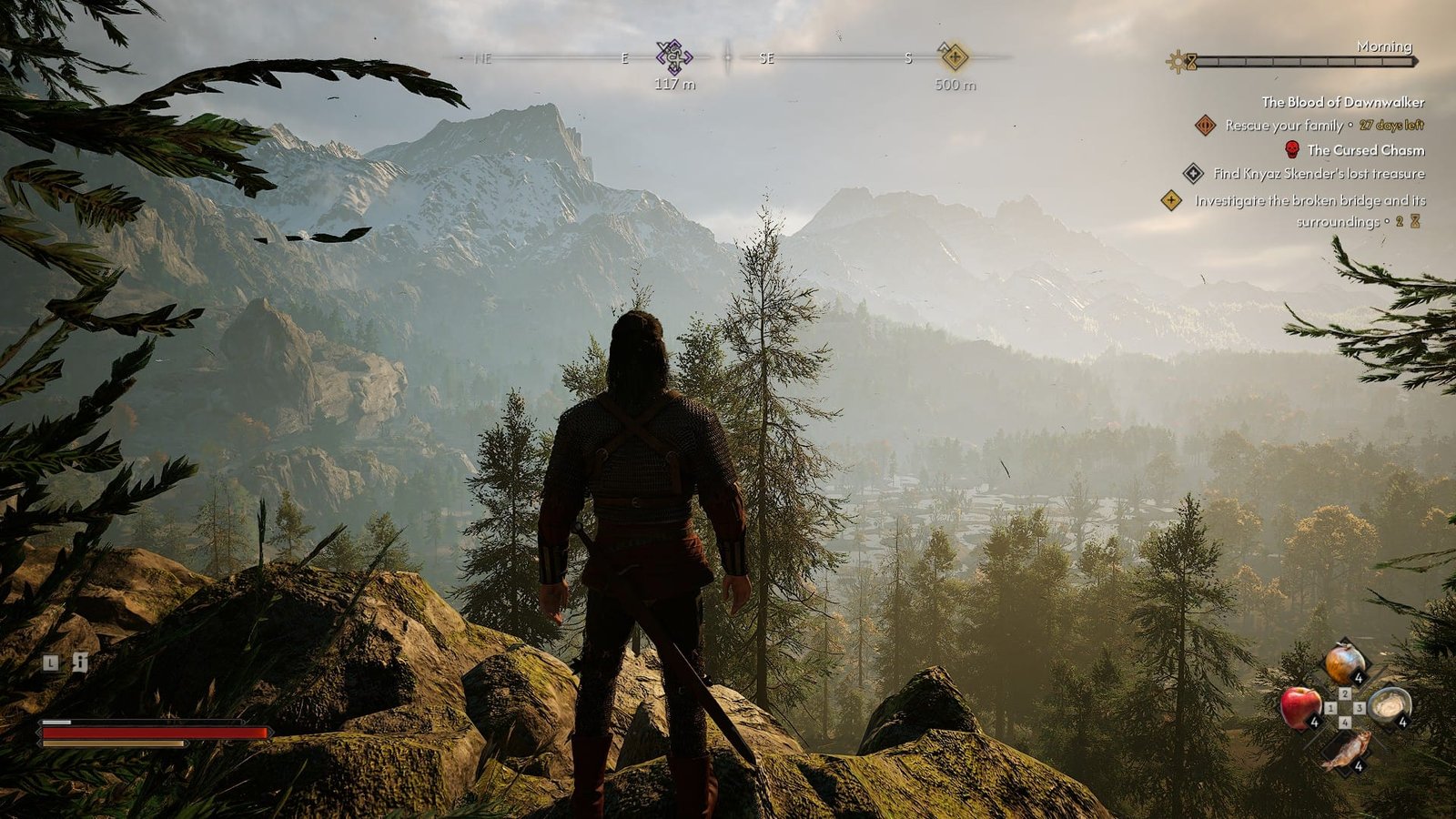
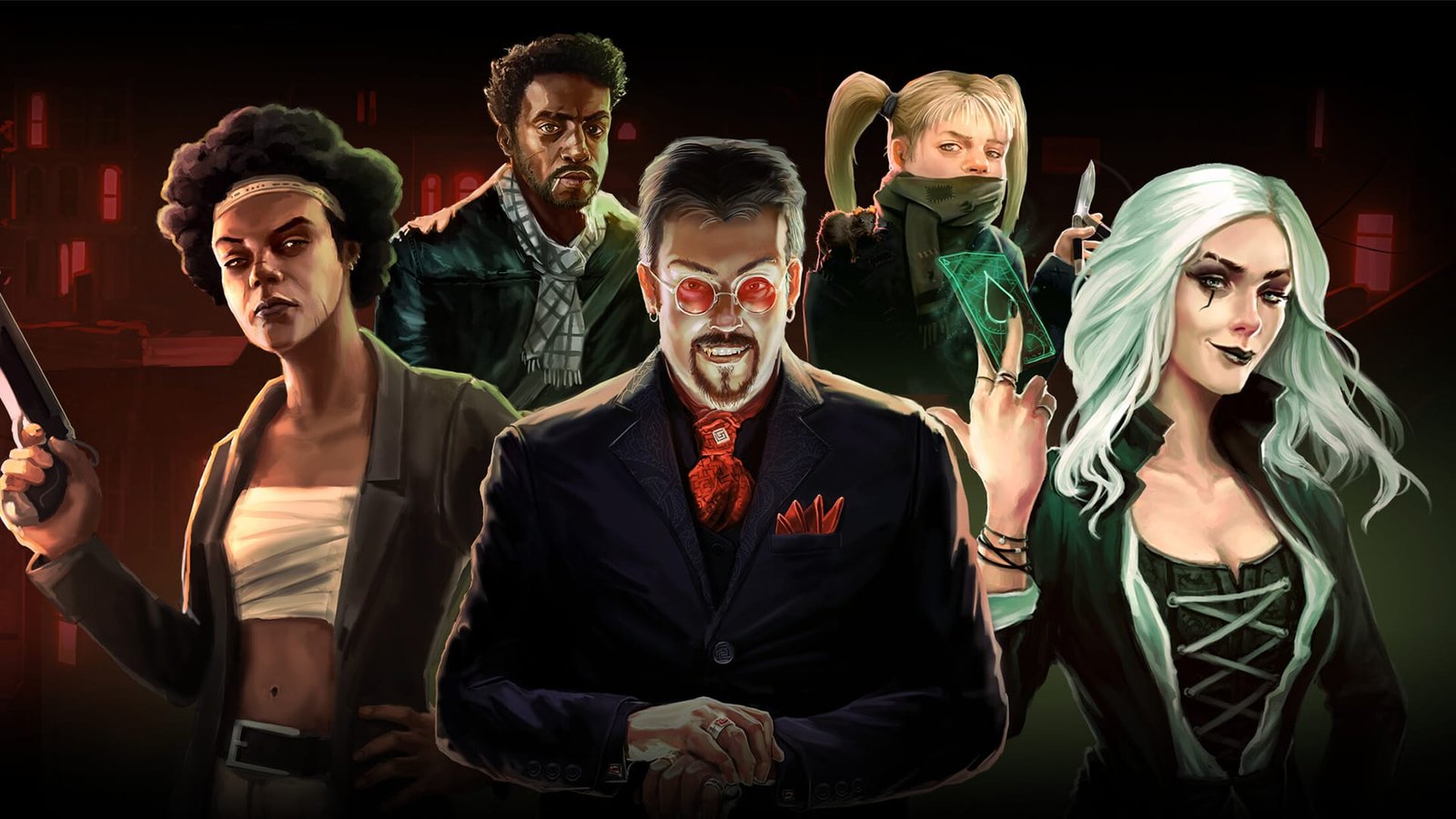
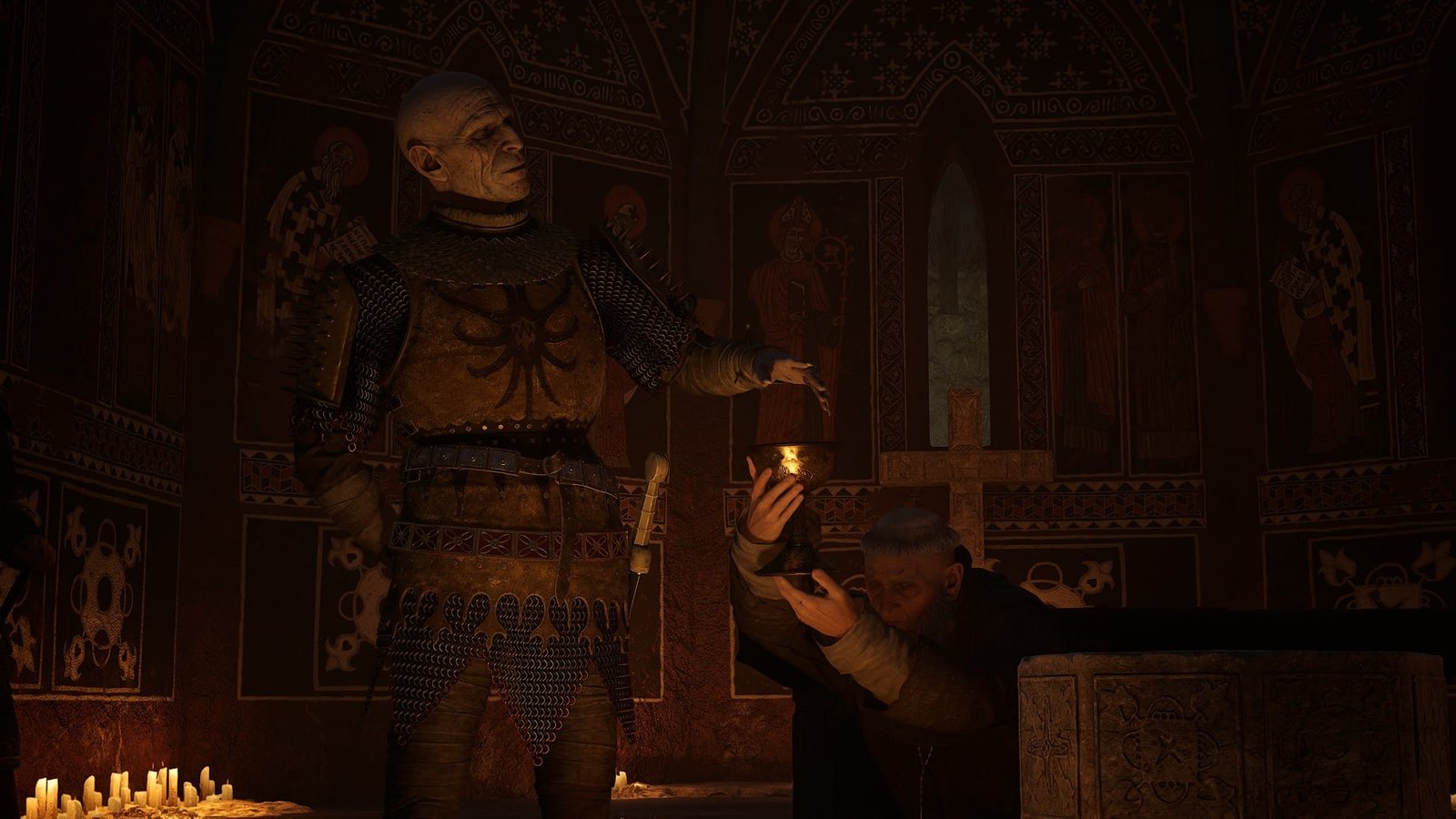
Coen is a great character; likeable and handsome, driven by his honour and love to rescue his family, but who gradually becomes corrupted by his vampirism. There are many other enjoyable characters too including Anca the herbalist and witch (who can become a romantic interest), Crake the leader of the Manumits, and my favourite Father Florin, who preaches a warped version of Christianity as sanctioned by Brencis. Florin’s adaptation of Catholicism into something which venerates the vampires as saint-like beings is wonderfully dark, and indeed the theme of religious belief underpins quite a few different quests given how dominant the church was in 14th Century Europe.
This time limit is perhaps the core underlying concept of how most story and gameplay elements interact. Time does not progress in real time; instead each day and night is broken up into eight different sections. When you’re walking around the world, fighting enemies, managing your inventory, buying things from merchants or fast travelling, time does not move forwards. Instead, it only moves forwards when you make meaningful choices; either to do a quest which advances a story, or to take an action which impacts the world. Likewise, while you can level up via XP from killing enemies or from completing quests, spending perk points and upgrades almost always takes a slot of time. More important quests might take more time, while smaller things might only be a single segment.
You may want to try and beeline for the main quest, worrying about running out of time, but this isn’t a sensible way to play. In part, there isn’t really a “main quest”; there are missions which are more central to your objective, but even innocuous side missions can be connected to and impact the wider world. Brencis is backed by three regional vampire leaders; Ambrus, Xanthe and Bakir. To loosen their control over each region, you have to undertake various side quests such as freeing prisoners, disrupting local guard camps and so on. These are very reminiscent of Ubisoft-style open world busywork, particularly from Far Cry 5 which had the same structure. However in The Blood of Dawnwalker each of these side quests feels unique and interesting, and normally will have other characters to talk to, or more information to learn about the world. It succeeds in making you feel like you are making progress, even if the mission isn’t something critical.
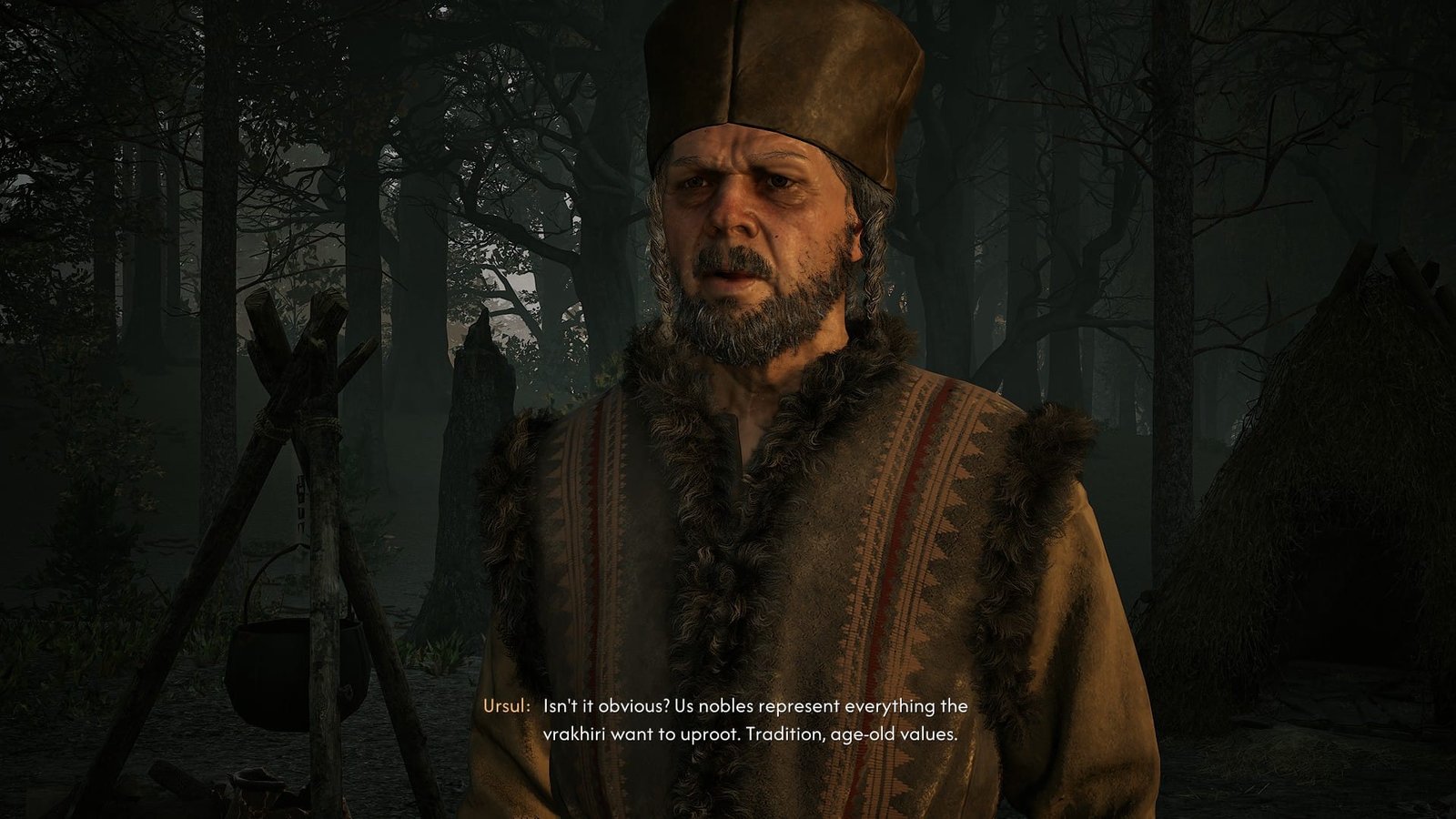
In terms of combat, your main weapons are your sword during the day, and your vampire claws during the night. Both function very similarly in terms of the combat system but the claws are faster and more agile, while the sword is usually slower. You can use your sword at night if desired, but the claws tend to do more damage. The fighting system usually works very well on keyboard with the direction of an enemy’s attack being indicated from the cardinal directions. You can block whenever you want, which drains stamina, but if you match the attack with a perfect block, there’s no stamina loss. The same goes for attacking; you can usually get in a hit after a perfect block, and enemies are more likely to block successfully if you keep hitting them from the same direction. You also get a few special abilities you can unlock, both swordplay and vampiric, alongside witchcraft which forms the third leg of the skill tree.
The dichotomy between vampire and human is really wonderfully realized. During the day, you’ll be talking to a lot more characters, generally behaving as a friendly and moral paragon, killing wolves, taking down soldiers and progressing quests. At night, you can only regain health via bloodsucking, but you’re also far more nimble, able to use a short range teleport to scale buildings, as well as your voracious bite to drain the blood from animals and unsuspecting people. I found myself often running through the forest chaining together various deer who would be drained, or snacking on a flock of ducks. When draining people, if you do so stealthily you can choose whether to only take some of their blood and knock them out, or a more lethal transfusion. The more blood you drain, the more advanced vampire skills and abilities you can unlock as your corruption deepens.
If you don’t keep your vampiric health high enough at night and are talking to NPCs, you may find yourself unwillingly giving into your bloodlust and snacking on them, which can and will kill them, potentially ending a questline early. Thankfully during the day, Coen is more in control, but at the same time he loses access to all of his vampiric abilities which make combat and traversal easier. Your inventory can get quite overloaded with objects and items, some of which are only usable at night or vice versa, and unfortunately on PC at the moment navigating with a mouse has an annoying habit of unequipping different bits of armour, and so it’s best done with keyboard only until that gets patched.
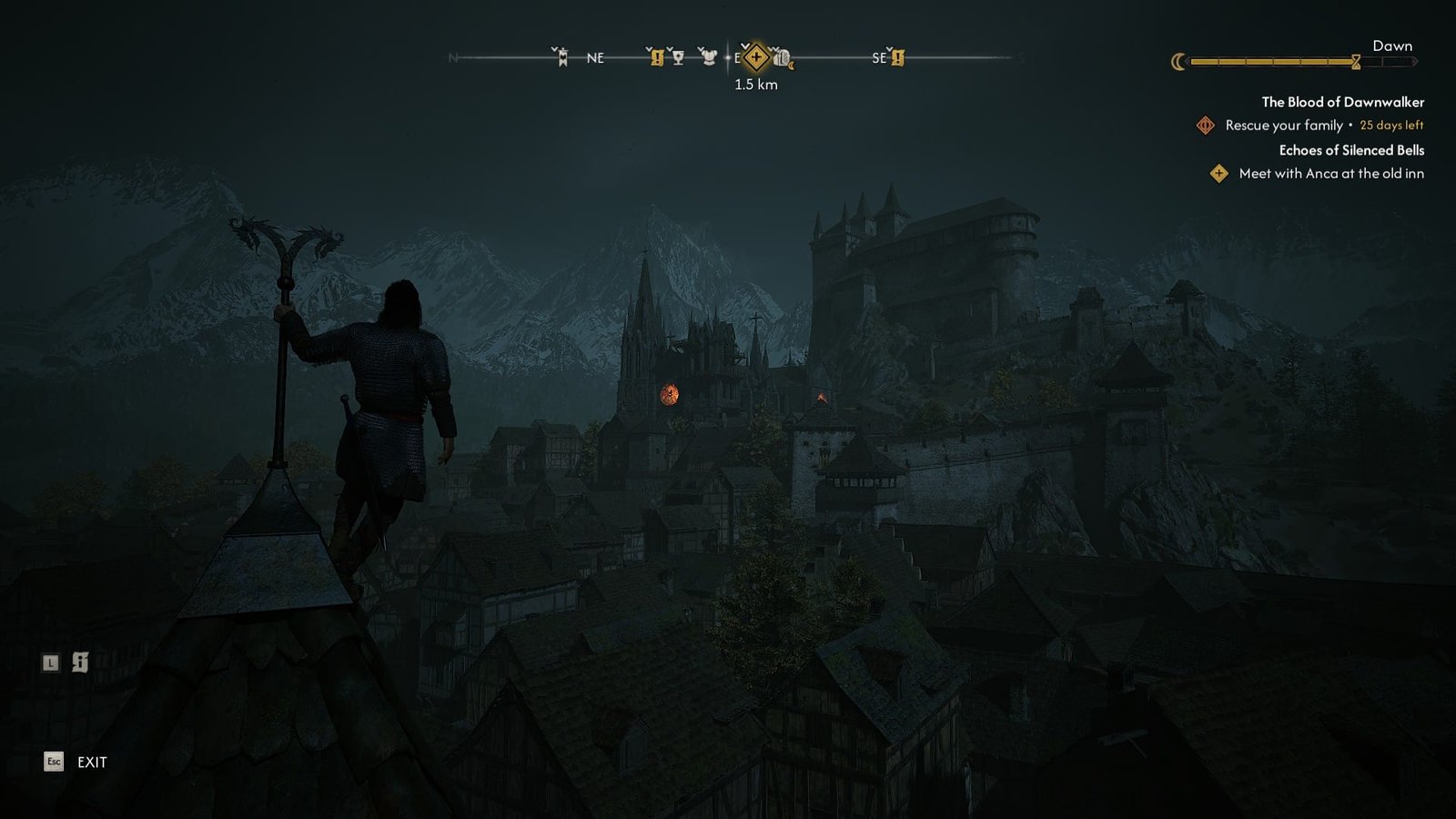
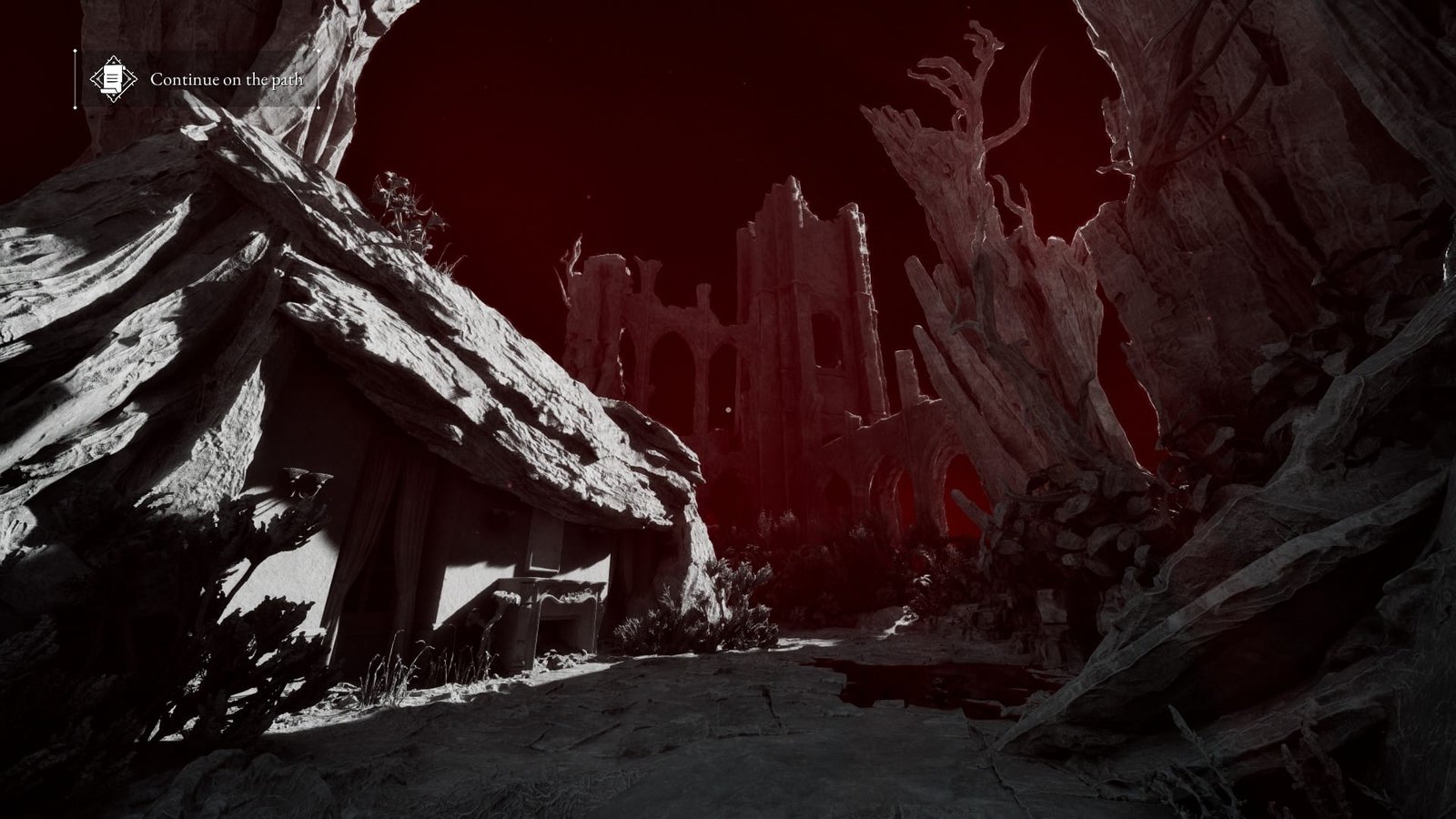
Visually Vale Sangora looks excellent and even on my creaking Nvidia 2070 Super runs pretty well at medium settings with DLSS enabled. The framerate does struggle a bit in busy areas, particularly around the capital city of Svartrau given there are a lot more people on screen. It’s a huge world but not so insanely vast that it feels daunting, and features a number of different biomes such as swamps, mountains and forests. You can use the shrines dotted around the map as upgrade stations and for fast travel, and given the time constraints you’ll often need to decide whether you want to spend all your upgrade points in one go and potentially shift into a new day/night.
The Blood of Dawnwalker feels special in how it makes what could have been repetitive open world filler feel like core steps of a wider and more overarching narrative, something I’ve never really seen successfully archived before. The number of unique quests, characters and locations you’ll meet along the way is impressive, as well as the variety of enemies, including various legendary monsters. I loved the setting of ostensibly real world medieval Europe but with various folkloric elements simply accepted as fact, rather than a wholly invented world akin to The Witcher. The time limit I also found actually enhanced the experience, making it feel more realistic despite all the supernatural parts. I am very much looking forward to seeing where Coen’s dawnwalking adventures take him next.