There was a lunar eclipse a couple months ago. The moon was almost completely covered in shadow, only a sliver of its shine visible. We were lucky to see it between the skies being clear that night and the eclipse actually being visible in our part of the world. Previous celestial events tended to be either just barely within our view or outside our area entirely. When the aurora was visible across the northern United States, we were just barely within the range it’d be visible, but we could only just barely see it amid the lights of the city, and even then only through our phone cameras. Despite this, it’s still a moment I think back fondly on. That I got even the tiniest glimpse of a rare celestial event is special.
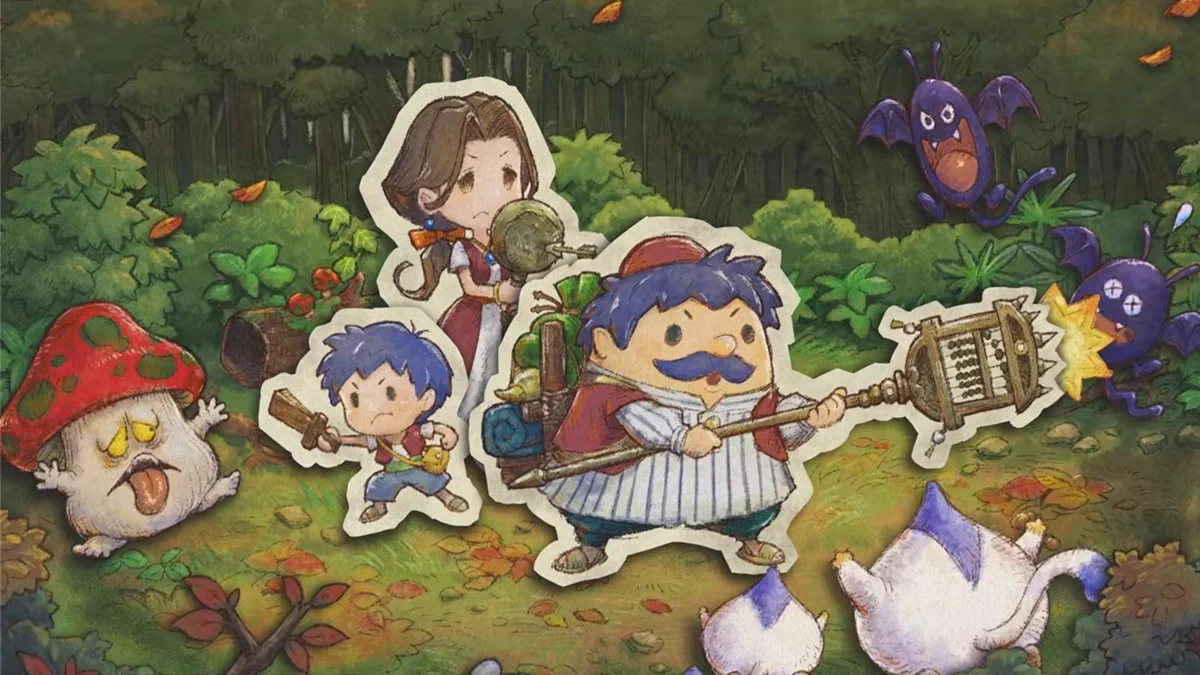
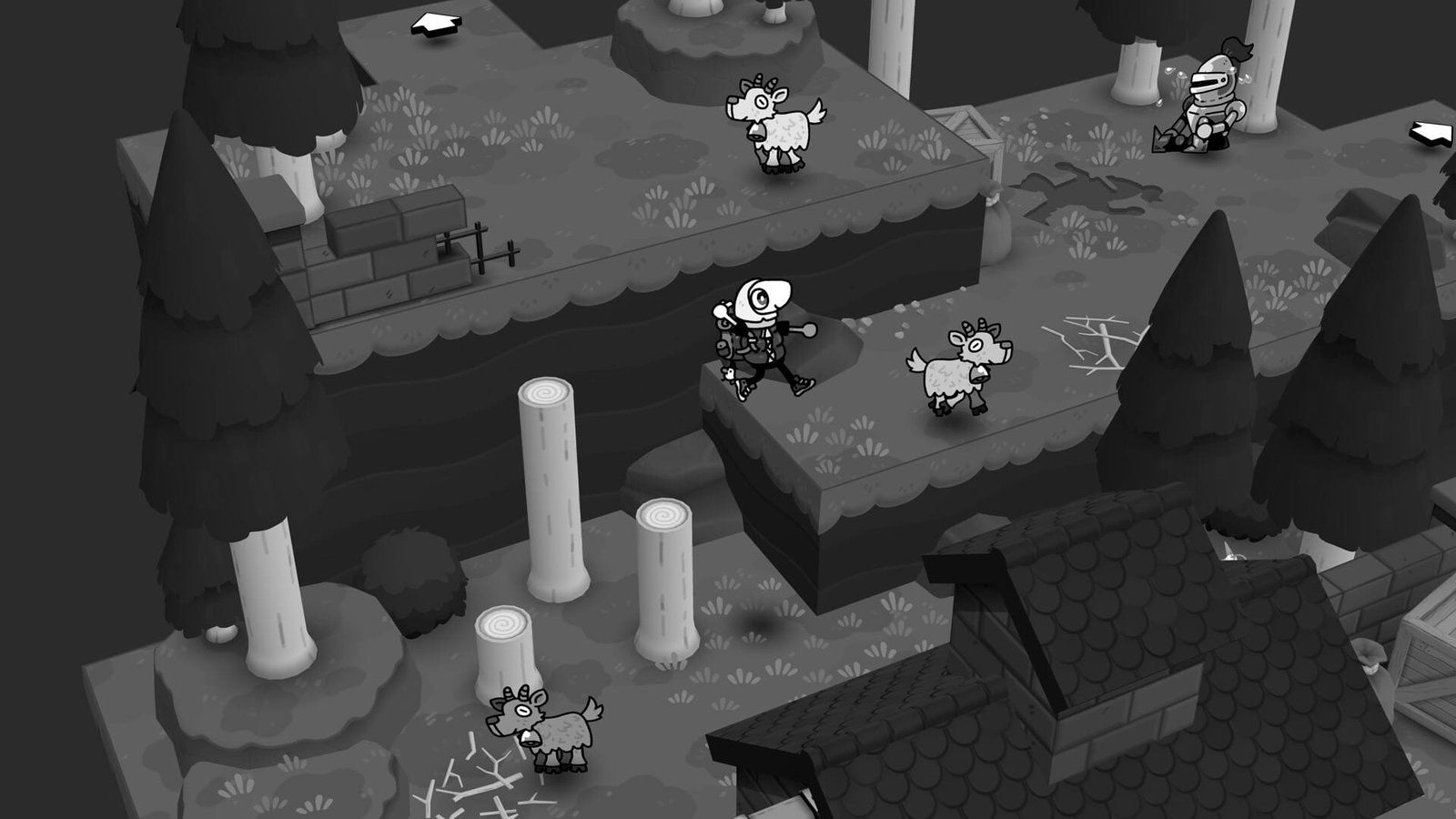
Toem 2 and its predecessor both understand the sheer majesty of these sorts of events. In Toem 2 you play as a young photographer off to see another of the mysterious phenomenon known as Toem following their previous trek to see it for the first time in the last game. It’s a long journey that sees you making stops at small towns and large cities along the way, photographing everything you see and helping people and making friends all the while.
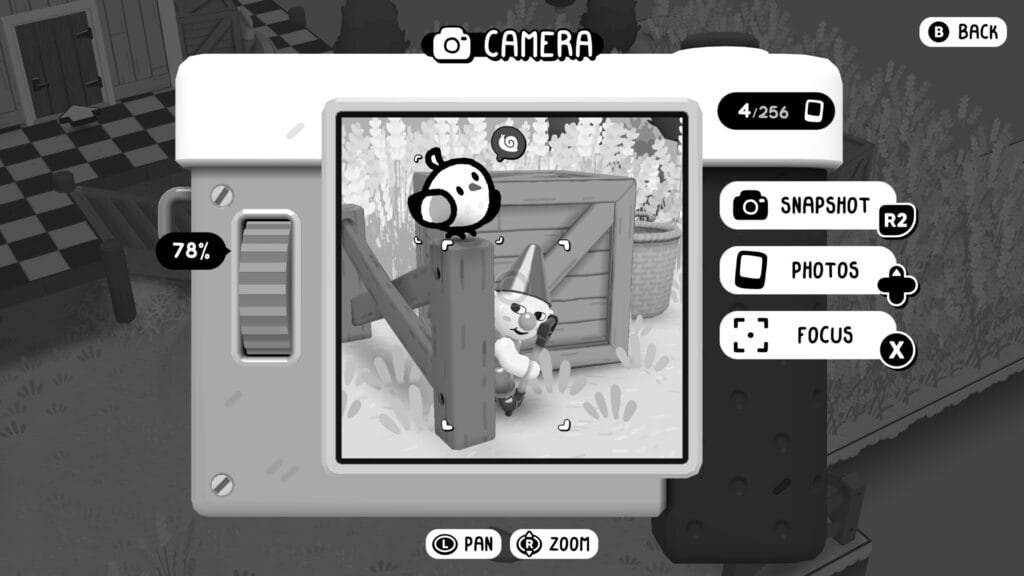
Photography is everything. Almost every interaction happens through the camera lens. Trimming unruly vines, hamming nails to help reconstruction efforts, cutting pieces of fabric as they fly through the air, and turning a wrench to fix some leaky pipes all require you to use your camera. Likewise every request you come across, whether it be finding someone’s lost possession or pet, always requires you to take a picture of the thing in question rather than retrieve it. It’s silly, but it suits the playful nature of Toem 2 and its commitment to the camera as the center of the experience.
Toem’s photography is intentionally simple. You just point and shoot. You can zoom in and set the camera on a tripod, but that’s the extent of it. Any of the finer points of photo editing and composition are absent. Toem’s interest in photography remains on the basics. As much as I sometimes wished I could get into the weeds and fine tune each shot, the simple pleasures of focusing only on framing is nice. Whenever I’m presented with a full suite of options – filters, depth of field, exposure, etc. – it is hard to resist just throwing a bit of every option at the resulting photo or obsessing over each detail to the point where I’m less focused on the actual picture and instead spend too much time altering it. There is certainly some fun to be had there, but Toem’s focus on the basics is also its own pleasure.
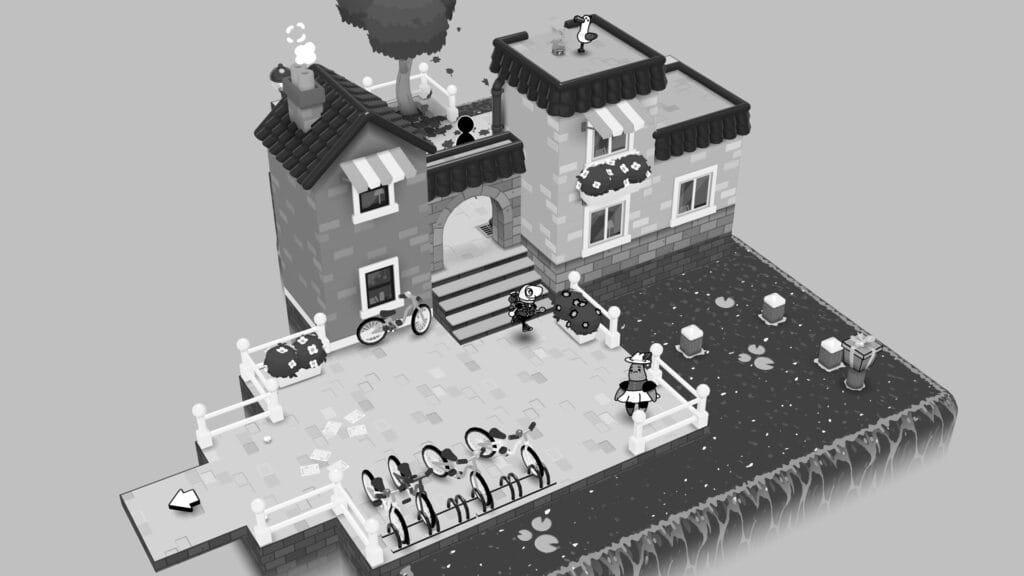
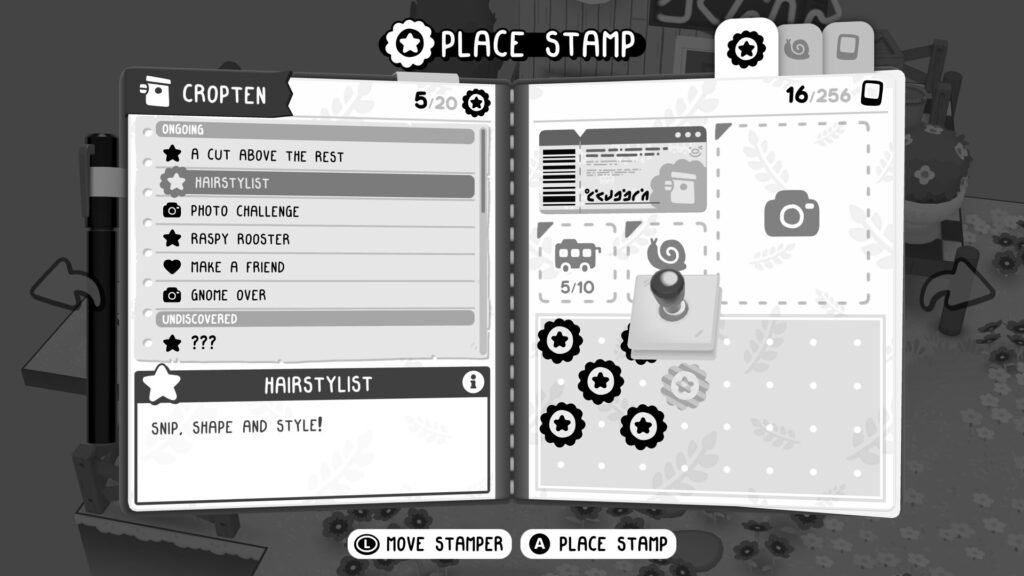
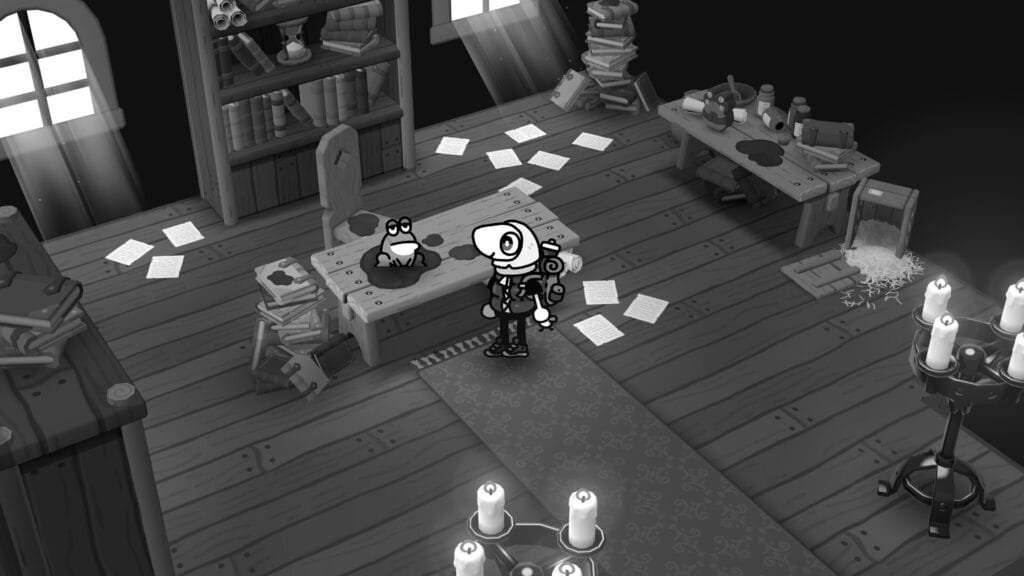
Taking pictures in Toem 2 is akin to taking photos of whatever catches your eye while out and about. Whenever I’m walking around town, I’ll often pull out my phone and take a picture of seemingly random scenes or things I run across. Occasionally I’ll try and find a good framing, but usually I’m snapping whatever I see when I spot it. I approached Toem much the same way. Most of the photos in my album that weren’t part of one of the existing checklists were taken off the cuff, made up mostly of random scenery shots. Other times I’d see if I could get a good angle on a scene, maybe see if I could insert myself somewhere, like in a bustling tavern in the middle of the woods. I would know a photo opportunity when I saw it and would pounce on it instantly.
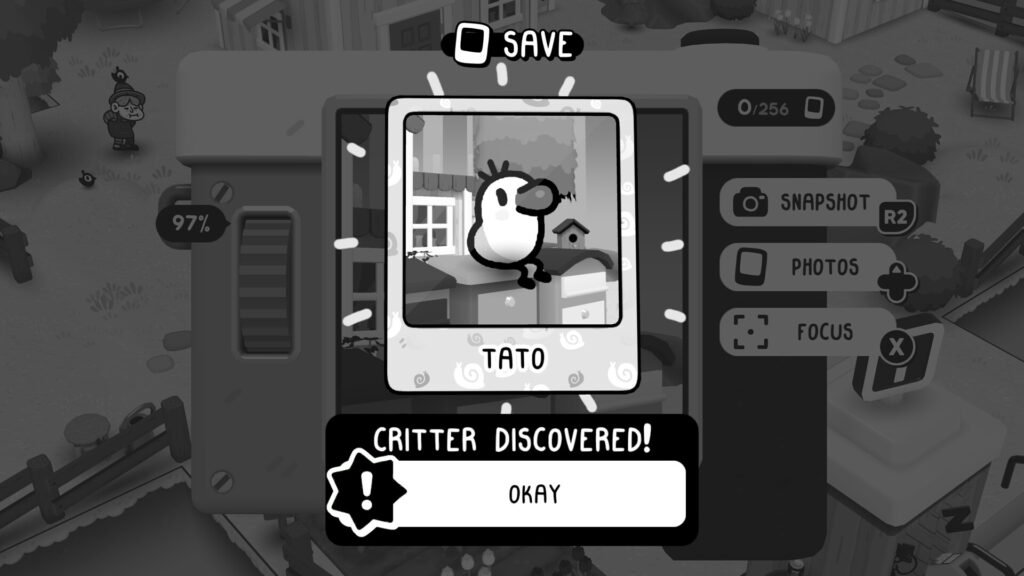
The plots of land that make up each zone are small but often dense enough to provide plenty of inspiration. Even just filling out your catalog of animals and insects has some opportunity for creativity with how you frame your subject and the timing of your shot. The limited toolset means you can’t do much with the final photos themselves, but it does force you to get creative with how you can use what you do have. The photo-ops you can do in each area are perfect for getting you to closely examine your surroundings because the prompts require you to look closely and puzzle out what they refer to. The first one you can encounter asks you to find the largest chicken in the area, which seems like an easy thing to find, but isn’t so immediately obvious. It wasn’t until I was almost ready to move on to the next destination that I finally figured out what I was looking for in a perfect “aha!” moment.
In the first game, the Toem was an event you viewed in isolation. A fleeting, quiet moment basking in the wonder of the natural world. Here, it’s a communal event, something people plan a whole festival around. It’s a celebration of the wonders of nature and how magical it feels to witness a rare event firsthand, just about everyone you meet along the way showing up in a delightful reunion. It recalls the ways everyone would share photos of the aurora when it was visible far beyond its usual confines or the lunar eclipse, a way of connecting all of us as we experience the same phenomenon across vast distances, a way to share the experience with those who couldn’t see it firsthand for any reason.
Toem 2‘s charms largely come from its silly eccentric cast of characters, but its heart lies in the universal reverence for the wonders of the natural world and the rare moments we get to see them directly.
Callum Rakestraw is the Reviews Editor at Entertainium. You can find him online at Bluesky, Mastodon, and his blog.