Paradox Interactive have long been known as the stewards of the grand strategy genre, with their various series offering differing flavours along the same theme. Crusader Kings is more character-driven and focuses on playing an individual person amidst the turmoil of medieval Europe, while Victoria is focussed on the 19th Century of revolutions and colonizations. Europa Universalis has always been Paradox’s flagship title, the first game in the series arriving in October 2000. Here we are 25 years later with the release of Europa Universalis V; a game so vast, so complex, so overloaded with intrigue, nuance and depth that simply beginning a playthrough is a frankly daunting prospect.
Europa Universalis V (EUV) spans 500 years of history, from April 1337 to the end of December 1836. You can play as pretty much any country across a truly enormous map, covering the entire European continent as well as large parts of the Middle East and Asia. At the start of the game, the arrangement of the countries mirrors real-life at the time, but very quickly into a campaign things can shift wildly and unpredictably. Unlike Crusader Kings where you are role-playing as an individual named person, here you take on a more metatextual role as the “spirit of the nation”, following the flow of history for your nation as you forge empires or alliances. This allows you to guide your nation across century long quests, either to conquer new territories or to meet particular goals.
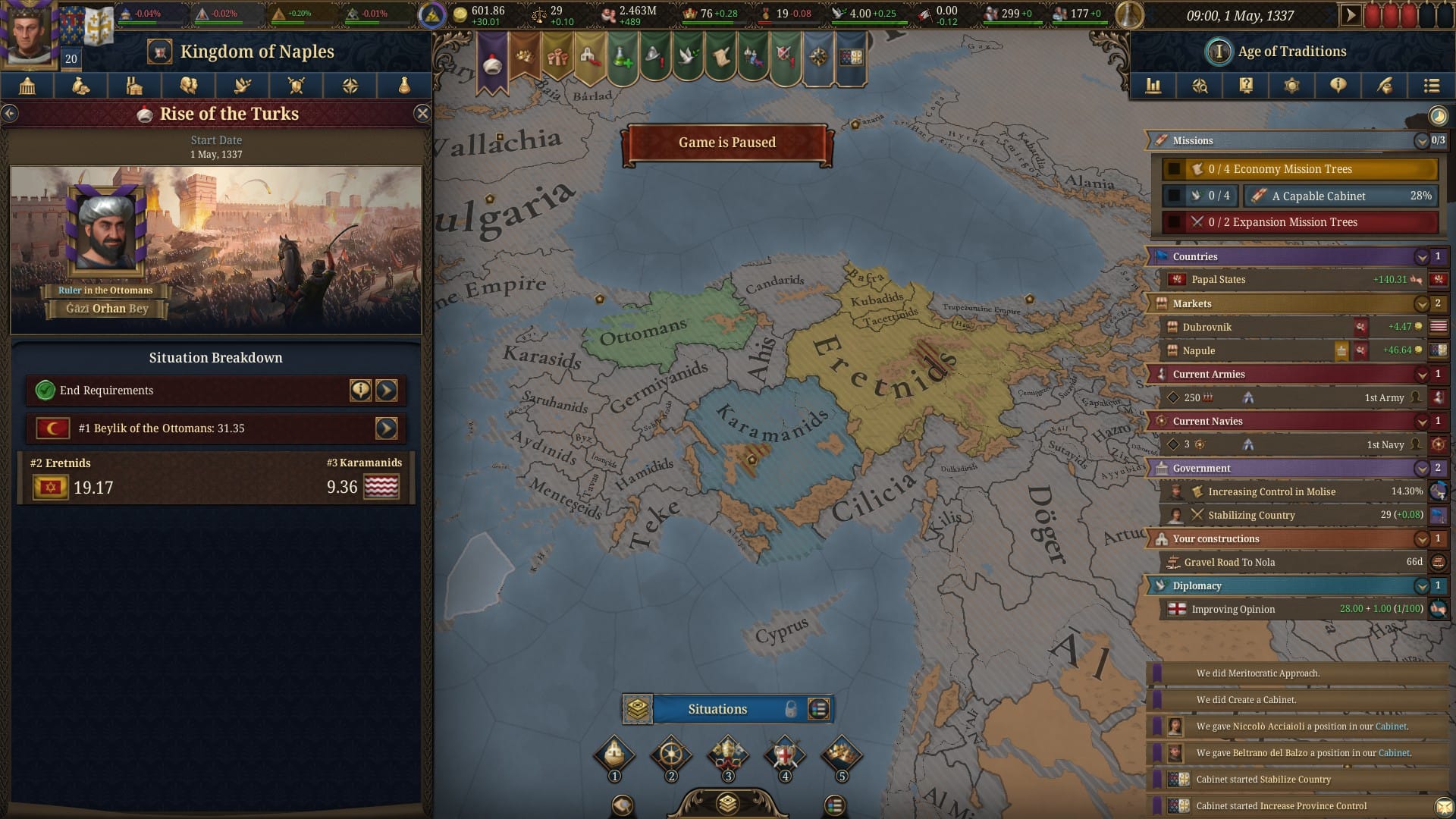
You have a lot of tasks to take care of; you need to manage your nation’s economy, keeping trade flowing and the coffers filled. You need to care for the population; making sure they have adequate services, their religious needs are fulfilled, and they have enough to eat. You also need to keep each different sector of the population happy, from the nobility to the clergy and the commoners. Each country also has ethnic groups to keep track of, and their opinion of your rule will change depending on which estate you grant favours to. And of course you need to run your country politically; having a competent ruler, a cabinet of ministers, and setting the policies you’d like enforced.
This of course isn’t even mentioning diplomacy, wars, legitimacy, crown power, and a myriad of other simulations that are continually being monitored in the background. Even more terrifyingly, none of this is turn-based; it all plays out in real time whenever the game is unpaused. Thankfully, EUV knows that it has a truly frightening amount of micromanagement when you drill down into each system, and offers a range of options to tone down the tasks that need to be completed. You can set the game to automanage taxation, construction, trade and various other routine updates, allowing you to concentrate more on the role-playing and grand strategy should you so wish.
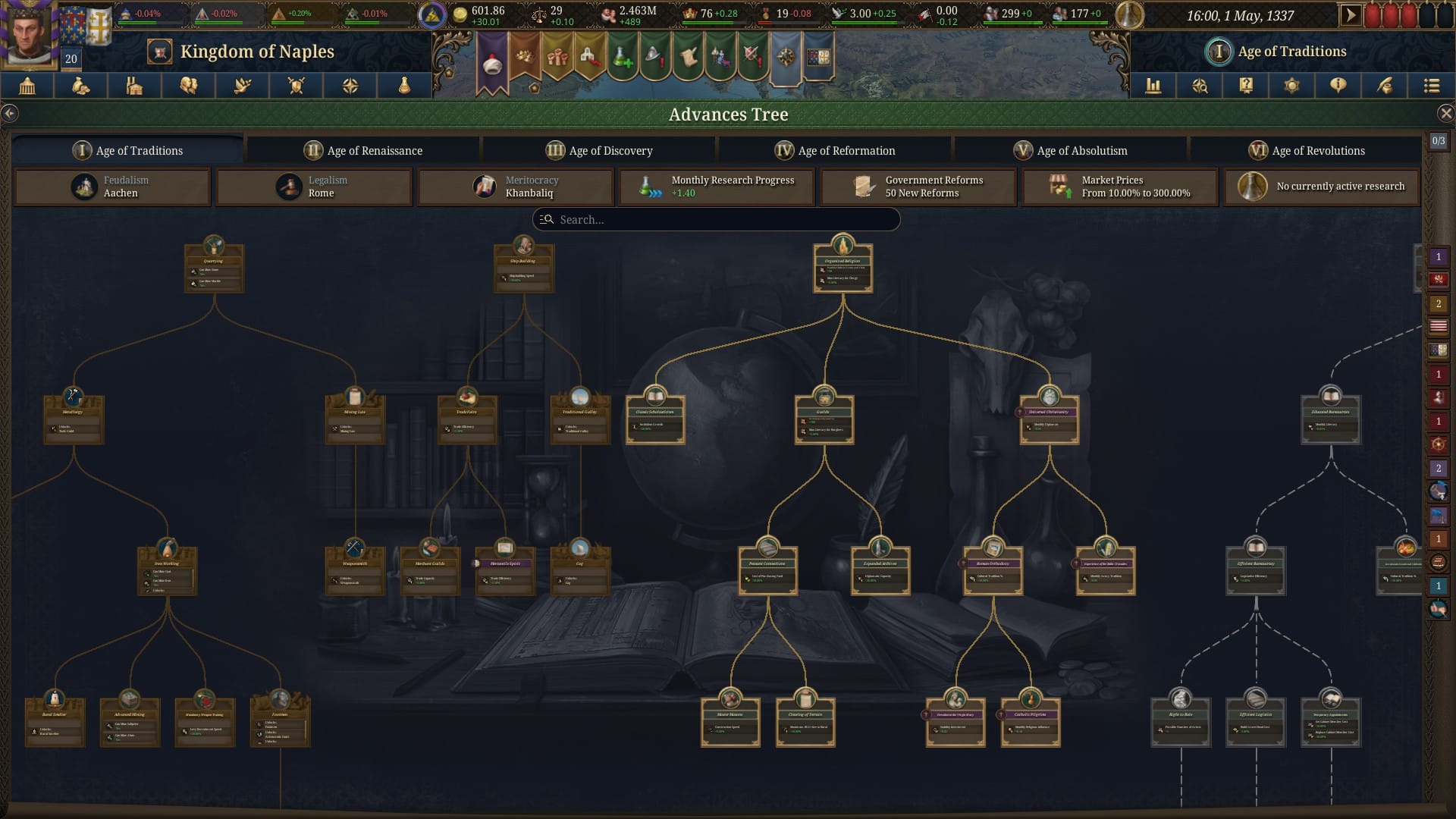
EUV has a number of learning tutorials which can help to introduce the key mechanics, as well as guide you through some of the early game objectives which help to set up the rest of the campaign. There are also a host of additional video tutorials available to watch on YouTube which Paradox have assembled. Story-driven missions from EUIV have been removed, and instead a variety of dynamic situations can occur, many of which may be related to each other. This feels very much borrowed from Crusader Kings III, and includes things like major historical events such as the Hundred Years’ War, which in real life also started in 1337, or the Reformation.
EUV somehow continues to get deeper the more I play it. I decided to play as the Kingdom of Naples since it was a recommended starter country, and among my first tasks was ensuring that my dynasty’s children were adequately educated, funding new road construction, appointing ministers to establish legitimacy, and I opted to create an alliance with the neighbouring Papal States (at this point in history, the Pope was based in Avignon, but continued to nominally control the areas around Rome). My long term goal was of course to unify Italy, but it would be a very long road to get there.
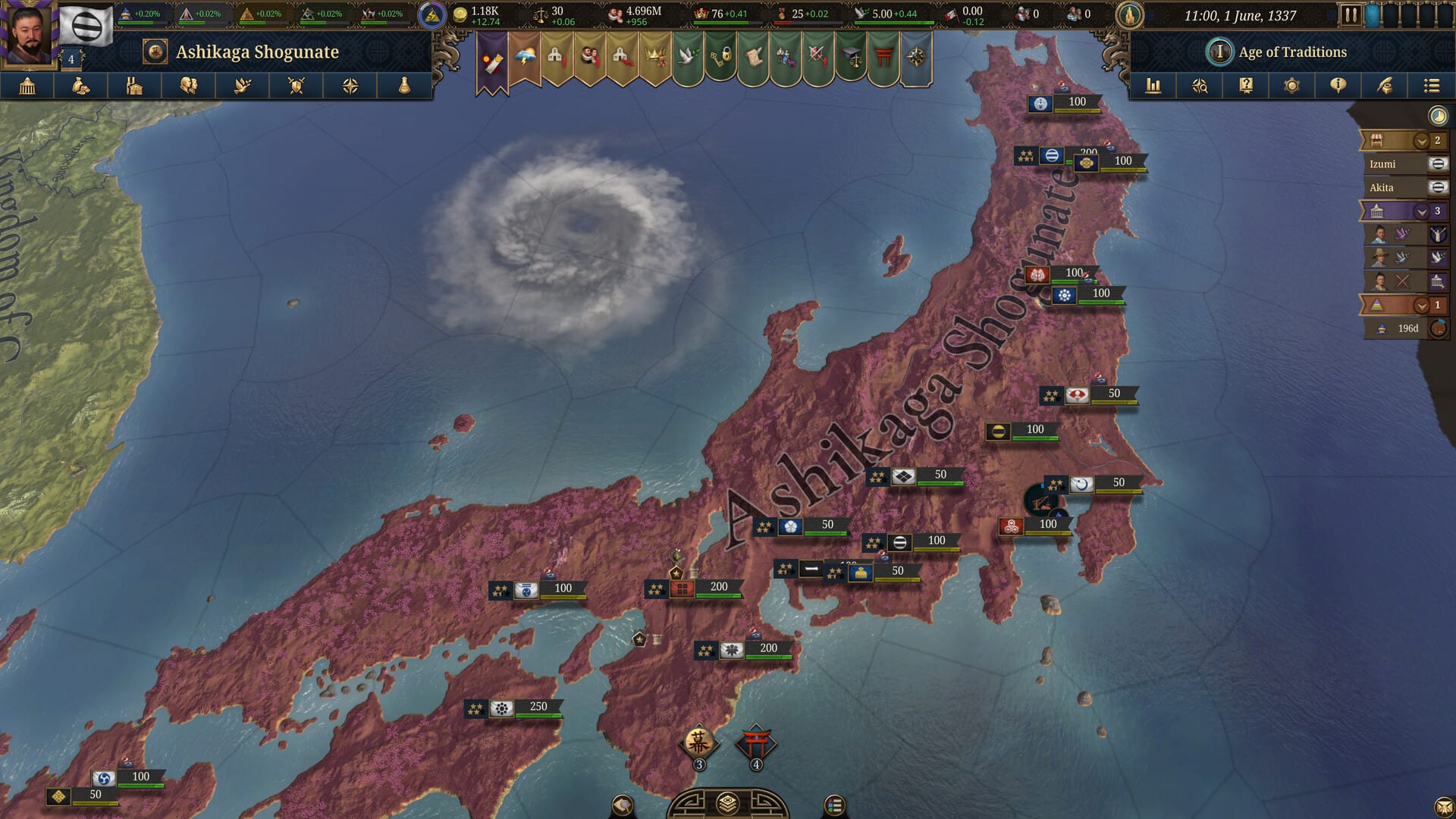
It must also be mentioned that the soundtrack is truly superb. The main theme is an incredible epic and immediately puts you in the mood, but the individual tracks which play during gameplay are an eclectic mix of traditional classical music and era-appropriate instruments combined with more traditional orchestral sections. Given you’ll spend the overwhelming majority of the time in various menus the graphics aren’t anything to write home about but they serve their purpose proficiently, with some nice details on towns and individual units when you zoom all the way in. Character portraits are also 3D models, which gives them a bit more personality.
Europa Universalis V is astonishing; its scope is unmatched and its complexity and rich historical simulation is second to none, with only Paradox’s own Crusader Kings III getting close. A campaign can last literally hundreds of hours if desired, and with such a vast range of countries to play as, each of whom has different gameplay characteristics, and undoubtedly more updates planned, you could easily spend all of 2026 playing it. Starting to learn its intricacies is a major undertaking, but is immensely rewarding. No other game has ever both terrified and daunted me, before going on to awe me in equal measure. Europa Universalis V is possibly the most ambitious and monumental grand strategy game of all-time.