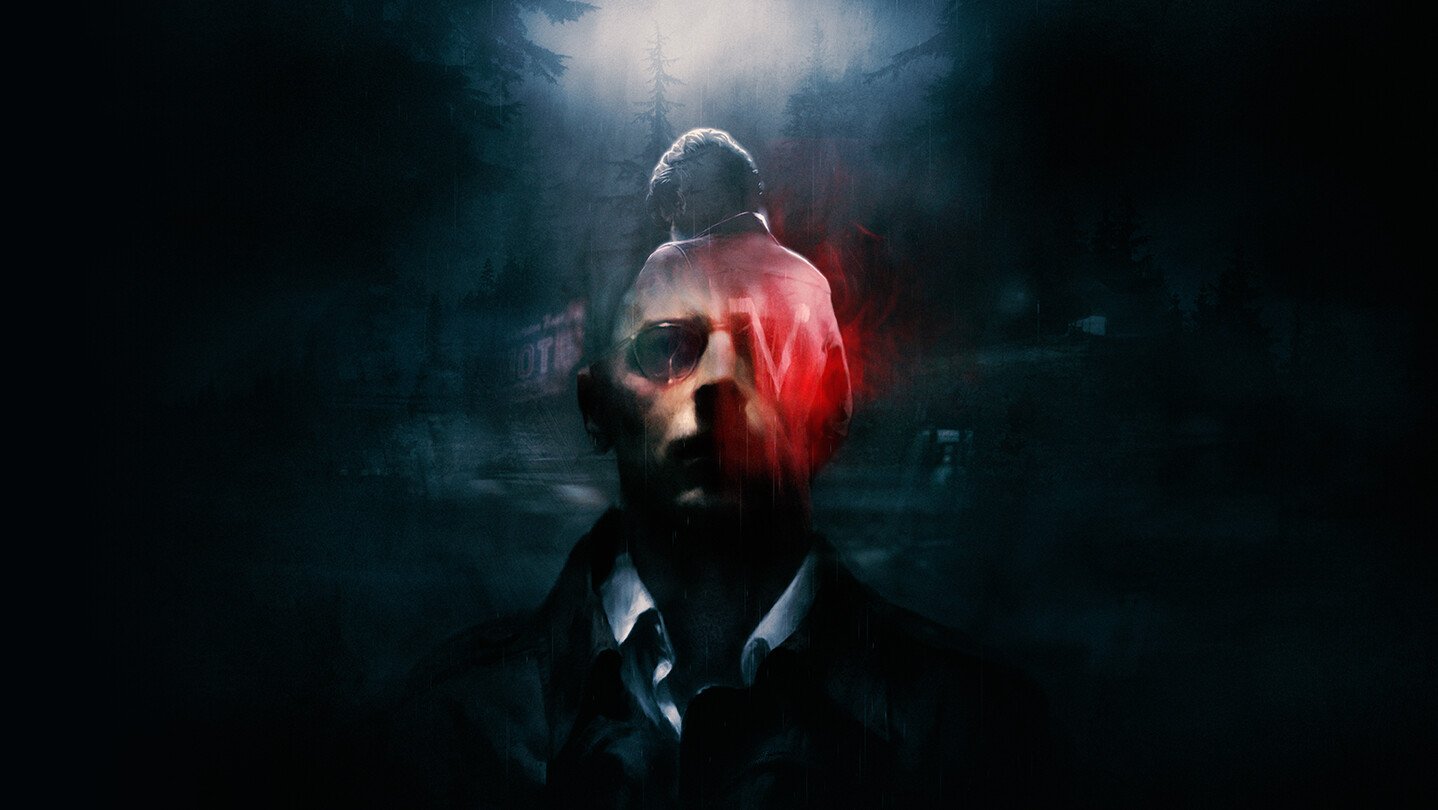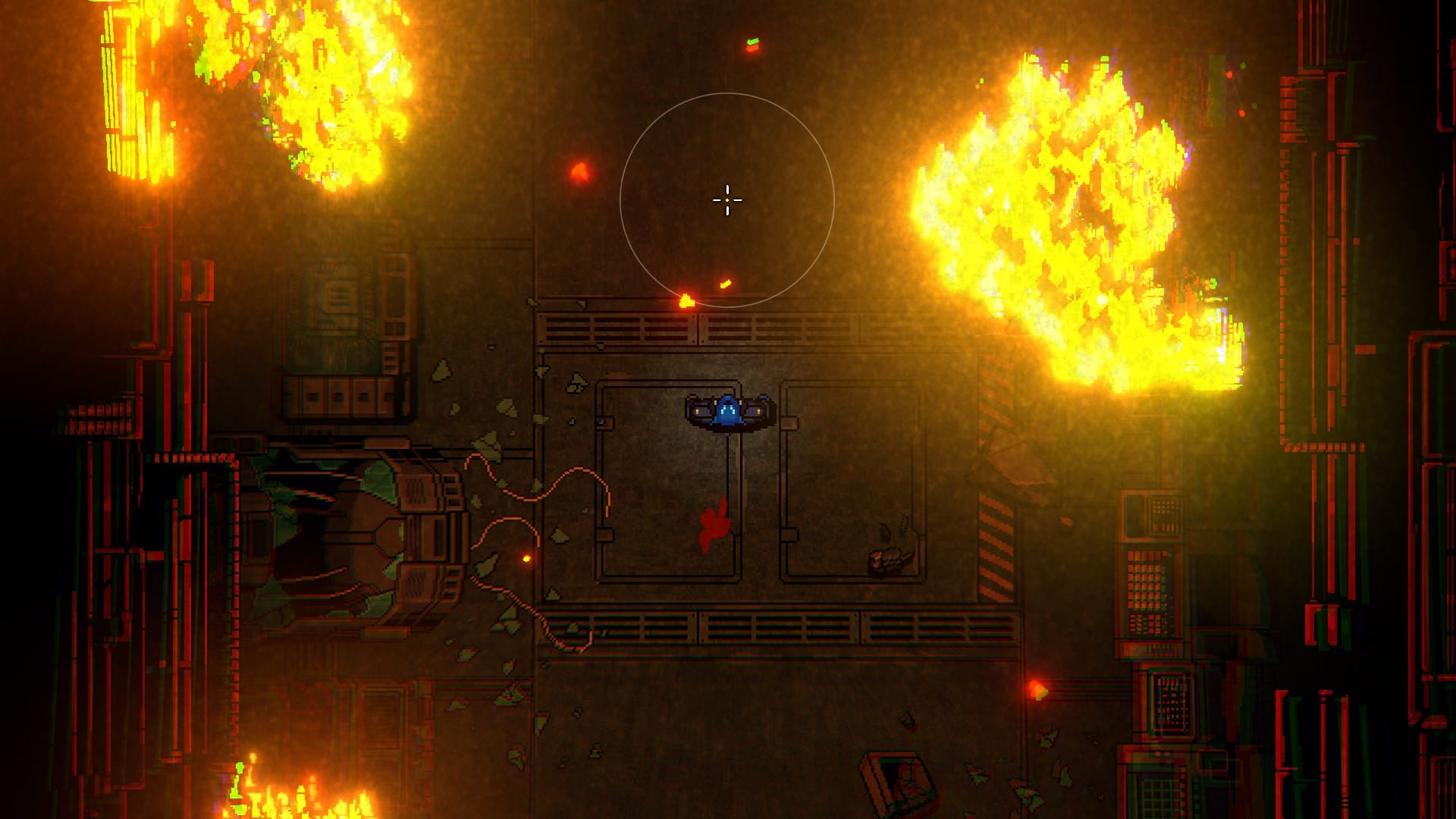
Hotline Miami, and to a lesser extent its sequel Hotline Miami 2: Wrong Number, have had a massive influence since the original release in 2012, not just on video games but even on films. Indeed, there is a sequence in John Wick: Chapter 4 which seems to be a direct homage to it (although the director claimed it was influenced by The Hong Kong Massacre, which itself was inspired by Hotline Miami). Kusan: City of Wolves, the new game from developers CIRCLEfromDOT, hones very closely to Hotline Miami’s formula, but it does have a variety of new innovations and ideas peppered into the mix.
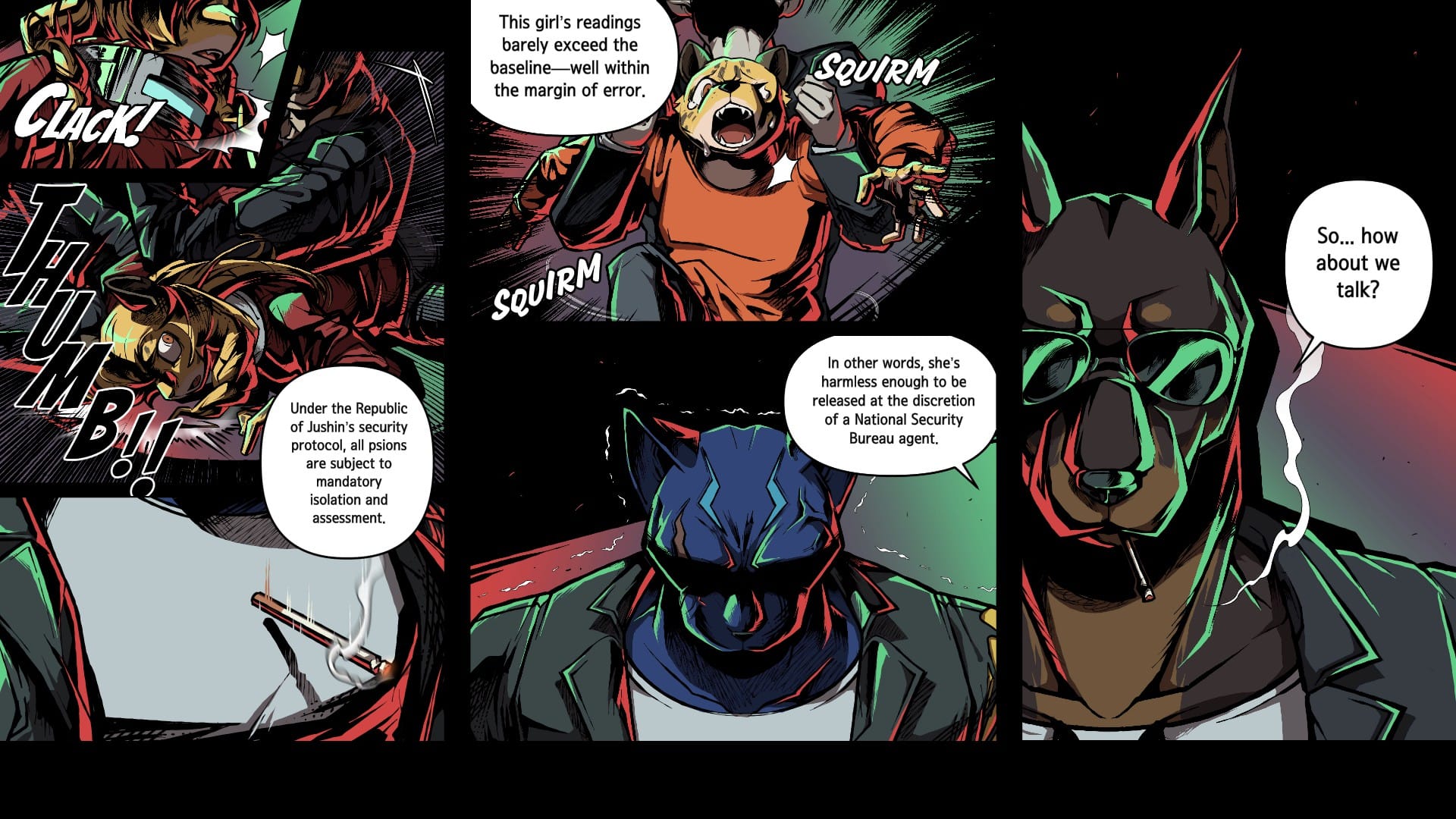
You play as Jin, a large, ripped cat with a scar over one eye. The story is primarily delivered via some incredibly animated cartoon comic book cutscenes, beautifully illustrated throughout. All of the characters are anthropomorphised animals; indeed I was reminded a bit of Tales Noir in some places. The general thrust of the story riffs quite a bit off Akira, the 1988 anime film, but with many different twists and turns along the way. Jin must go on various missions as part of his work with the National Security Bureau, but he is haunted by past trauma. My favourite character was Nimo, the weapons specialist and merchant, who is a sharply dressed dog with crossbows on his head like a pair of antlers.
Controls on mouse and keyboard are extremely similar to that of Hotline Miami. Left click is punch, right click is shoot if you’re holding a gun. You move the mouse to aim the target reticule and can independently control the direction Jin moves with WASD. You’re also equipped with a quantum knife you can throw at ranged enemies, which you can pick up and re-use. The controls on a controller aren’t as intuitive as on a keyboard requiring a bit of crab-fingers, so it’s worth experimenting with both options and seeing which works best for you. If you pull it off correctly, you can bounce around levels hitting, shooting and slicing enemies in a ballet of blood and bullets.
As you proceed, enemies may get savvy to certain attacks, with soldiers able to deflect bullets with a shield, or attempting to snipe you with a long-range attack. Your own abilities can change, unlocking things like a charged punch (acting a bit like Beymax’s rocket fist from Big Hero 6), or other changes like having your knife automatically return to your hand. There is also a parry system but the timing is incredibly specific and it often felt like blind luck when I parried a gunshot or a blade rather than part of a planned strategy.
Kusan is, unsurprisingly, very difficult. Just like Hotline Miami, Jin dies to any single hit from an enemy, a rule which is usually the same for any foes Jin attacks. The game only saves progress after clearing a floor of a building, and most floors have at least a dozen rooms or more which need to be cleared out, with the total number varying for each chapter. Enemies can range from standard goons to robotic dogs, and will get better weaponry as you progress through the story. Later on, there are levels with various other obstacles like trying to fight in the middle of a street with cars going by, or large lasers which create moving beams of death. Likewise occasionally you’ll also be facing off against tougher bosses who require more strategy to defeat.
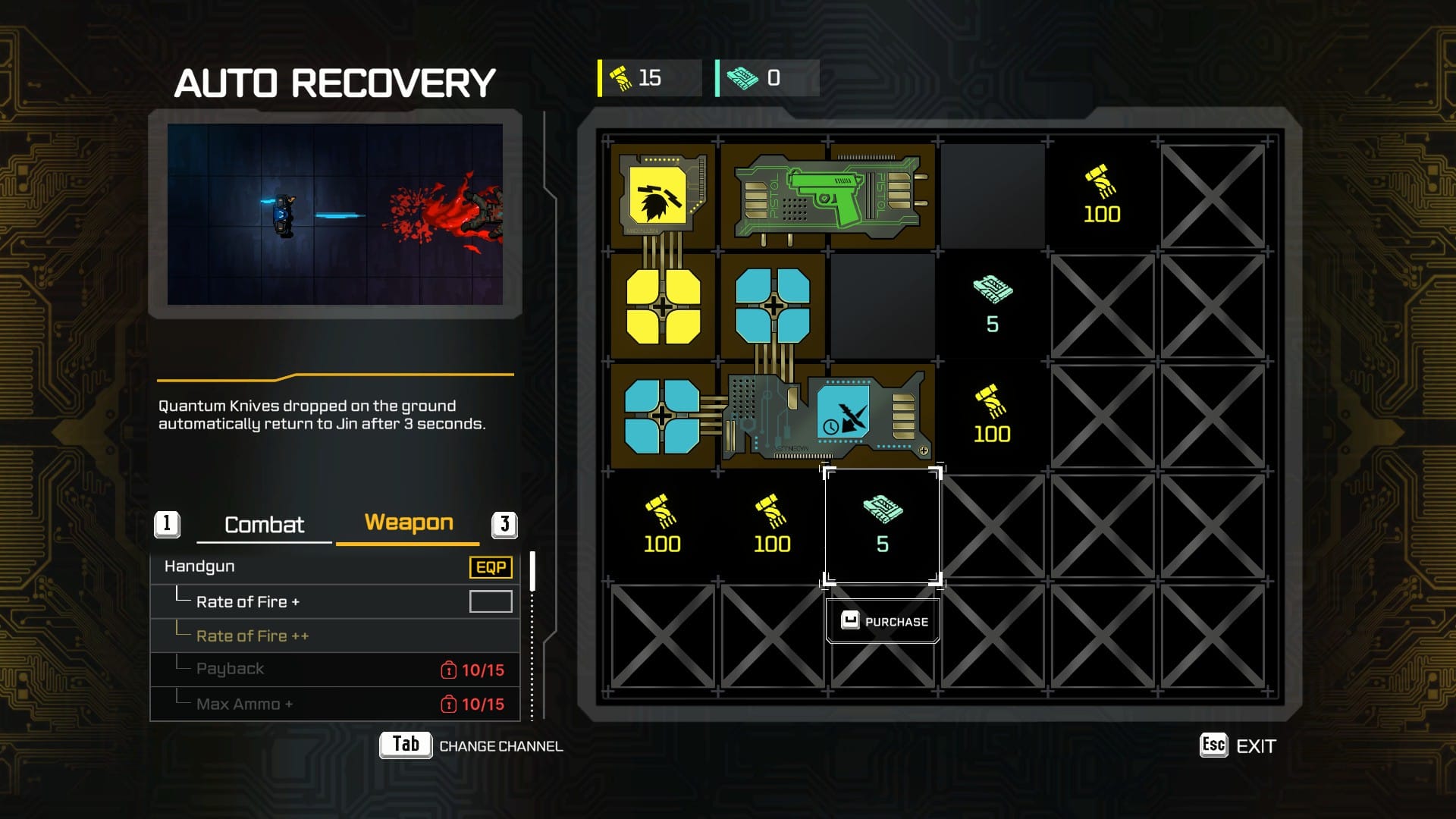
There is a much more fully-fledged upgrade system than Hotline Miami, where you can more thoroughly customize Jin’s arsenal. Along with unlocking new moves, you can unlock more weapons and even upgrades for those weapons. These then need to be equipped on Jin, using an inventory unlock scheme a bit like Resident Evil. There’s a limited amount of space to arrange the equipment and you need to spend bolts to extend the amount of room you have. Bolts can be acquired via defeating enemies but also smashing random pieces of furniture in the levels, which incentivizes you to completely demolish every room you enter in the search for more upgrade points.
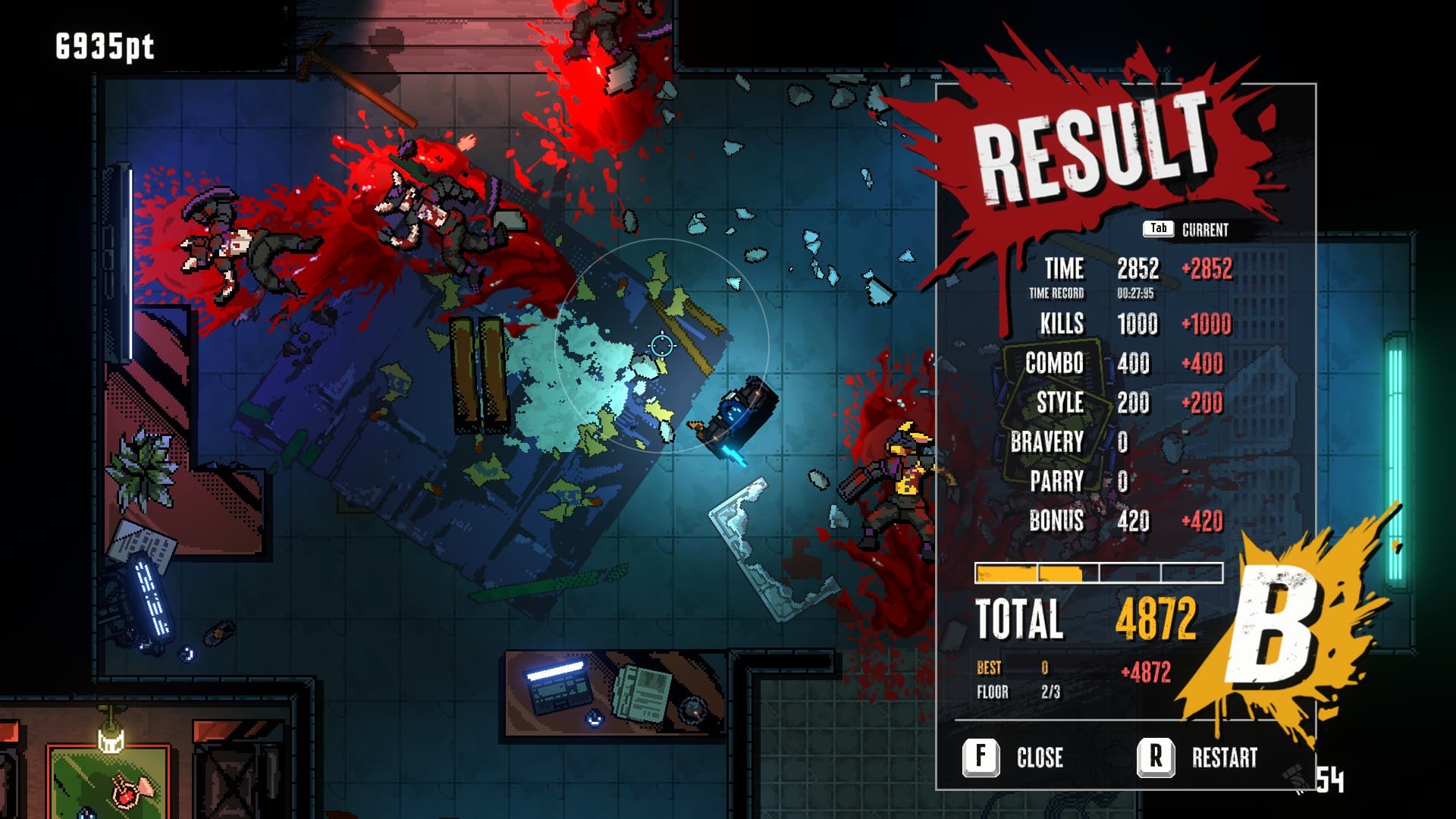
The visuals are excellent, a step up from Hotline Miami’s rather minimalistic but blood-soaked aesthetic to a more detailed, cyberpunk look. It’s still top-down plus there’s still plenty of blood on the floor after Jin has glided through a level, and because you can smash just about every piece of equipment or furniture, rooms can look like a bomb has gone off. Similarly the gameplay merges well into the animated cutscenes and even though there’s no voice acting, the writing is still able to give characters a bit of personality.
The music is a bit of a mixed bag. Some tracks I confess I found rather annoying, with very short loops which didn’t escalate in tension, just remaining as a droning background beat. Other tracks more properly invoke the spirit of Hotline Miami’s soundtrack with some techno tunes and vaporwave, but these too can get a bit repetitive if you’re having to redo a level several hundred times, which is most of the time. Still, it does set the vibe well and can become memorable via sheer attrition.
If you’ve been yearning for another game in the vein of Hotline Miami, Kusan: City of Wolves will be right up your alley. It does require twitch reflexes to fully master but the upgrade system and ways to help make Jin more competent mean you feel like you’re making progress every time you clear a zone by the skin of your teeth. While I was never able to pull off any true feats of stylish crazy action, I managed to get workmanlike “B” ratings for most levels. Coupled with its gorgeous comic book cutscenes, it manages to differentiate itself enough to not simply be a clone, into something with its own ethos.