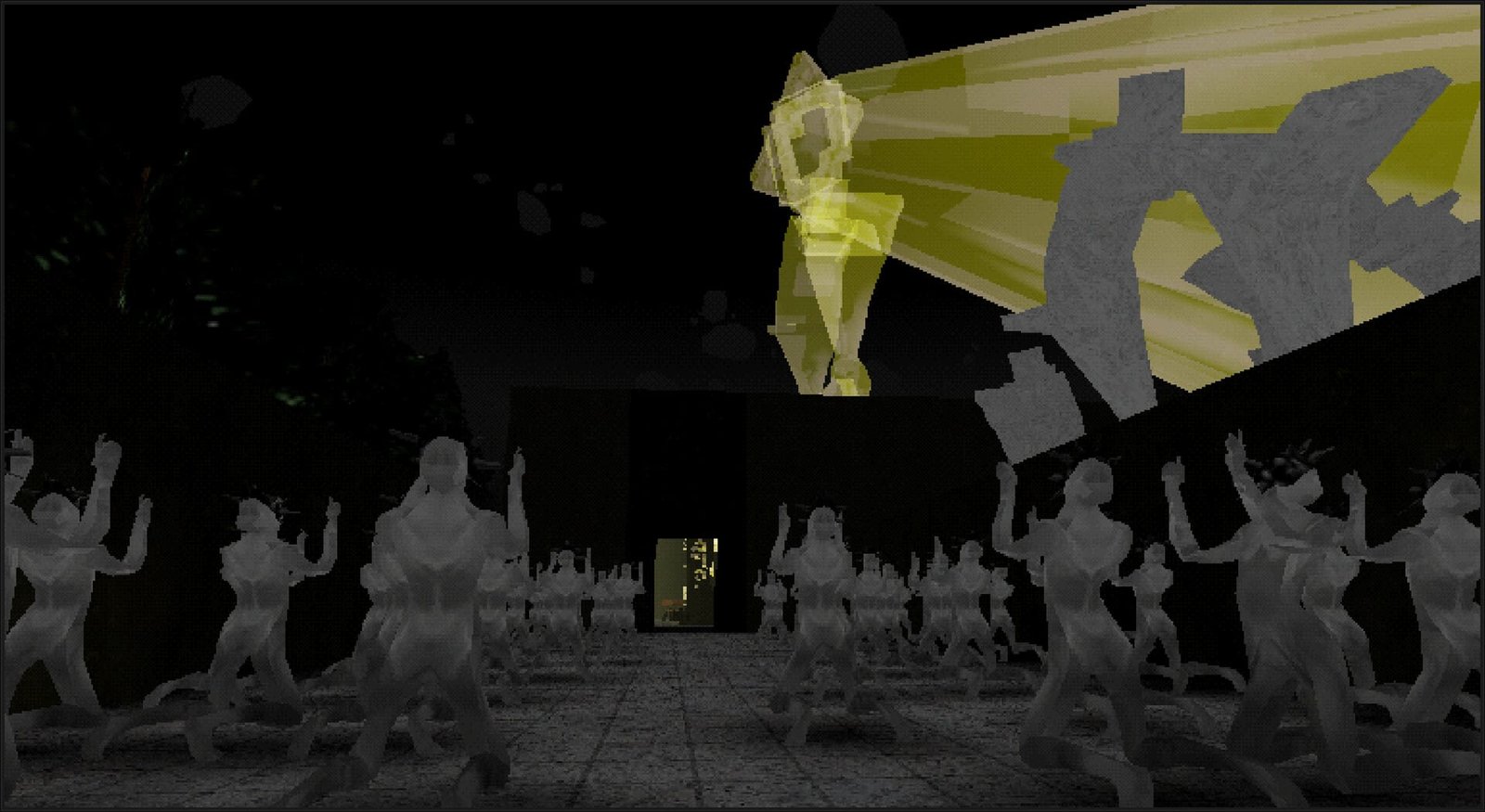
Memoirium caught my attention through a single gif: one of a room being decorated. This is a souls-like with all that it entails, one that delivers on those expectations well, but also something quiet and contemplative. It’s one of the more unique features I’ve seen from a game of this style, one that communicates Memoirium is doing something more than simply being an excellent souls-like.
Memoirium is set in a dream world. You awake as a new dreamer in a graveyard, a featureless human form with little direction but to move forward and find a way out of here. To truly leave this place, you have to vanquish the three figures who protect their respective domains – a fort of wax, a giant house encased in ice, and the very depths of the world itself – for they hold the keys to the exit.
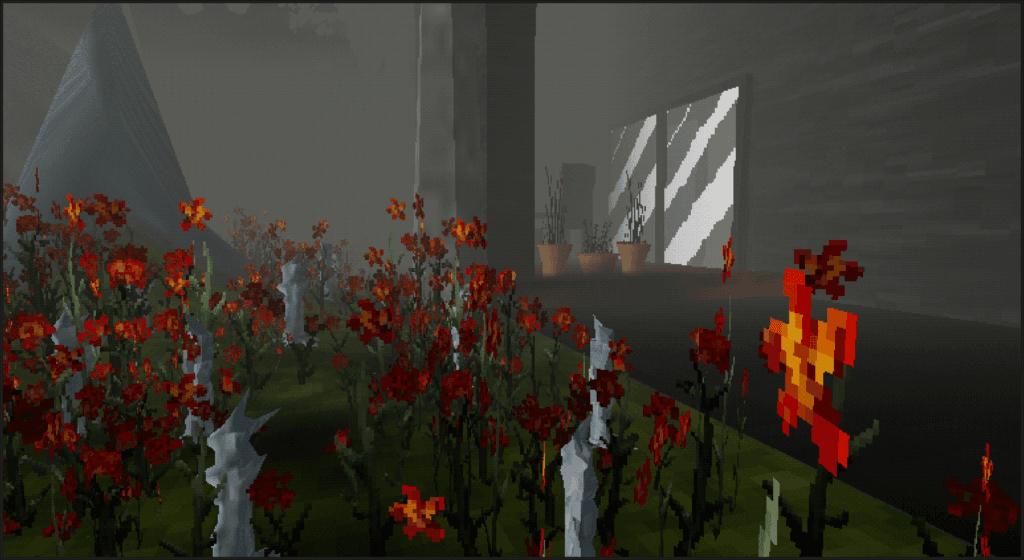
Each of these areas are tightly pressed together in bizarre ways. A school stands beside a tunnel leading to a city pelted by an endless torrent of rain, which sits by a library made of floating corridors, the space linking these disparate spaces together a small plot of land surrounding massive statue, its sword bridging it and another piece of earth. It’s an electric mix of aesthetics and architecture with no care for making it all cohere. It’s a dreamscape! Nothing has to be logical. Memoirium fully leans into that, going so far as to have random furniture act as platforms in one area, even acting as enemies too. It’s the exact kind of surreal you’d expect out of a dream.
Memoirium is a souls-like that takes inspiration from many peers. It’s not just focusing on any one name in the genre, but mixing and matching bits and pieces together to make it more than just another solid souls-like. You can call it Sekiro-esque for its focus on deflections and applying pressure, but it’s not built around the constant unrelenting offense that the game emphasizes. It is, to a certain degree, closer to the more methodical pace of earlier Souls games than the fast, reactive pace of the modern games and their contemporaries.
Memoirium is one where I felt the struggle of managing stamina constantly, often on the verge of overextending because I got too greedy after successfully parrying an entire combo by trying to press my advantage too hard. It is one where I felt actively encouraged to experiment with different approaches and was rewarded for it rather than pigeonholed into a single playstyle. I could play the parry-focused game against one boss, then keep my distance and whittle down their health by setting them ablaze in another, only to pull in help for another to distract my opponent and go full-on berserk in a risky, but ultimately successful play to skip to the second phase. And all of it possible without needing to actively build around any one approach.
I couldn’t really build around anything because, in my initial playthrough, I’d foolishly spread myself thin. Instead of focusing on one or two particular attributes, my stats were all over the place. Each one conferred good benefits – increased blocking power, longer item durations, more stress damage when rolling through certain attacks – that it seemed like a good idea to invest a little in all of them. My damage suffered greatly for it, every encounter a long drawn out fight, straining my resources. But I was able to find success in spite of that because Memoirium doesn’t force you to conform to a specific play style.
I initially tried to play the same way I do any souls-like: pure melee, focusing on dodging where possible and blocking where I couldn’t. It worked to an extent – insofar as I could win most fights once I learned attack patterns – but it was slow and I often ended up on the backfoot. It was almost always an uphill battle than an evenly matched one. I couldn’t make any mistakes, for my opponents always had the upper hand and could capitalize on my mistakes more often than I could theirs. So I resorted to using my items to the fullest.
If I laid down a stack of books that act like landmines, I could pretty easily destroy a large chunk of their health bar. Likewise, inflicting them with enough fire damage would cause damage over time for a short while, meaning I could literally chip away at them safely with minimal direct interactions. If the help I could bring in was able to survive for a while and contribute to the fight as well, all the better.
There were limitations to this approach. For one, calling on help seldom made a tangible difference as my ally would die very fast, sometimes almost immediately after a boss fight began (they don’t have a lot of health, nor do they have any self-preservation). Secondly, even though items are effectively unlimited (they’re automatically restored at checkpoints), I could still only use them so much before they ran out. If anything I threw missed or the target wouldn’t stay in the range of the elemental bombs after detonation, they were effectively useless. It all relied on the opponent being cooperative enough for the strategy to work. A volatile play style, annoying as often as it was effective. But it worked well enough to get me through most of the game.
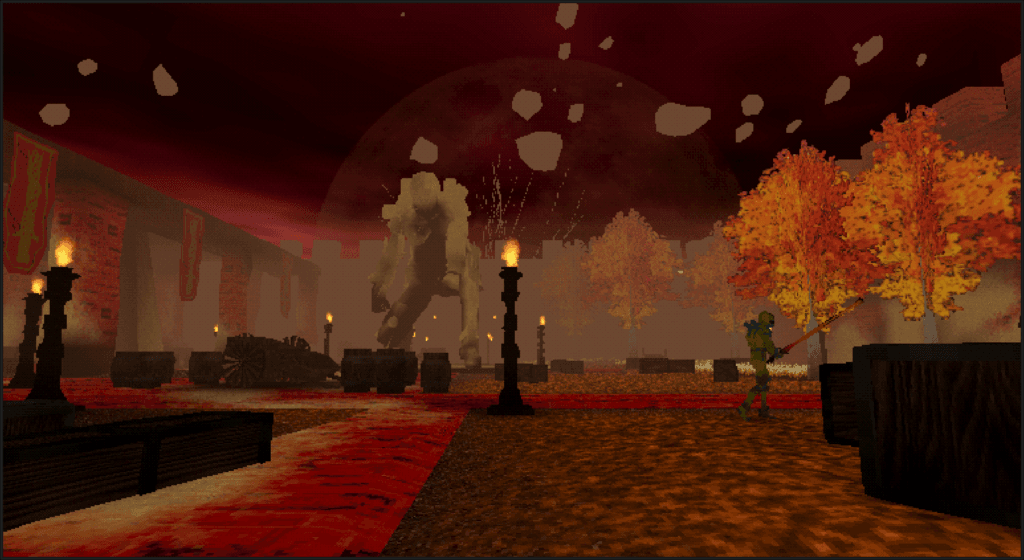
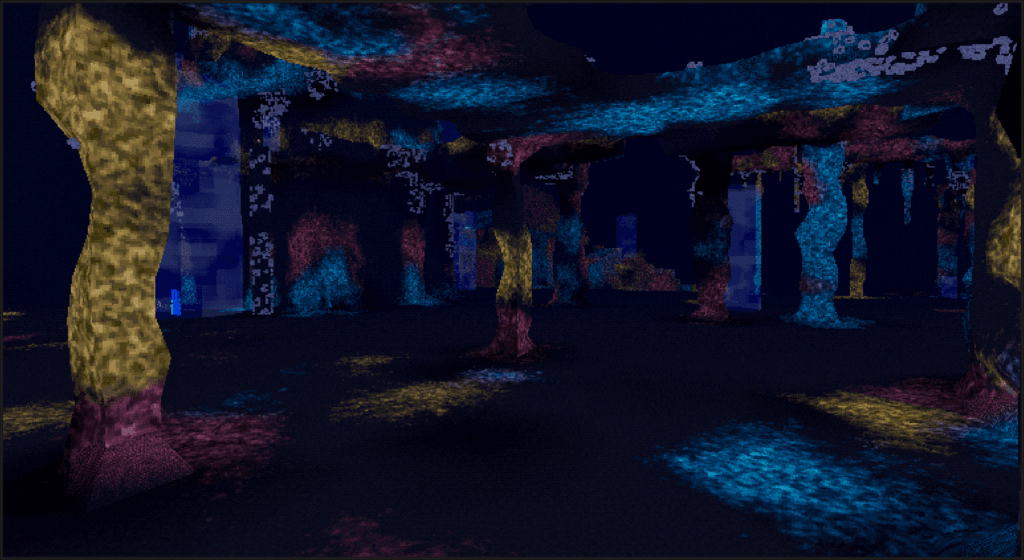
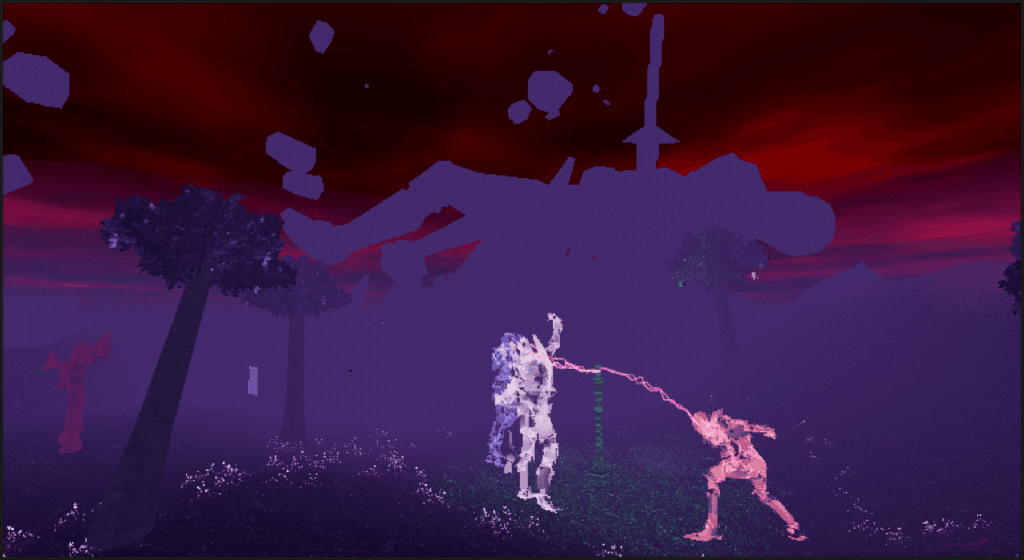
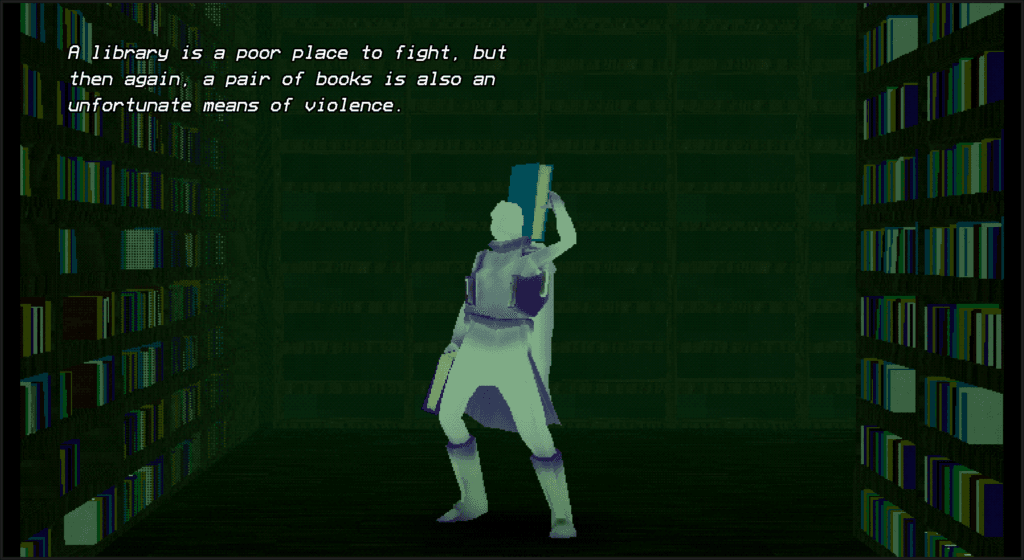
When I started over and actually chose a couple stats to focus on, everything went far more smoothly. It felt like what I expected Memoirium to be: a traditional souls-like with all that entails. It’s well put together, the combat particularly shining when your strength actually matches the opponent’s the push and pull of the stress and connection meters giving the game its own unique twist on the stagger/parry dynamics of modern souls-likes. Where so many focus on the singular mechanic of staggering your opponent through successful parries, Memoirium adds a secondary layer as an additive and alternative method of burst damage.
Two bars surround you and your opponent’s health meter: stress and connection. Stress is effectively a stagger meter. Once it’s full, the enemy is vulnerable to a critical blow. Connection is more like a status affliction meter in that it only fills if you attack using an element that can inflict a condition. Upon filling, you can either attack with a charged light attack or use a different element than the one currently afflicted on the opponent for high damage and reset the meter. Crucially, these meters and their effects also apply to you. Should either of your bars fill instead, you’ll be placed into an equally vulnerable position. Should a status be inflicted on you, you have to deal with the added trouble of being slowed down or having your controls reversed.
Memoirium‘s strengths come from these decisions. It’s steeped in the familiarity that comes with working in the souls-like space but subverts expectations enough to surprise. A stats that fucks with your controls is more interesting than yet another form of poison or some kind of instant death. And even though that initial playthrough was rough through my own poor decisions, it was valuable in how it forced me to play with the systems available and get creative with how to fight.
There’s a world in which I didn’t ever really engage with leveraging the opponent’s connection meter in battle and instead stuck to the classic attack, dodge, and block approach. I tend to stick to what I know works, which means I don’t always step outside my comfort zone and actually explore my options and the game systems to their fullest. I could feel it happening during the first few hours where I would pick up a new item and immediately ignore it. I never used them much in any other game like this because they’re strength would very quickly fall off past the early game. I assumed this would be no different. But ending up weaker than I ought to through my own mistakes pushed me to adapt and use everything at my disposal.
But even relying on the most basic skills, the flow of combat provides a natural back and forth that is exciting. The fights where I felt forced into sticking to the basics, moving in and out trading blows, met the baseline of dueling someone with the same skillset, which is almost always where the most thrilling fights come from. Just about every boss in Memoirium excels on this measurement, each opponent pushing you further in unique ways and inspiring you to tailor your strategy to the conditions of each fight.
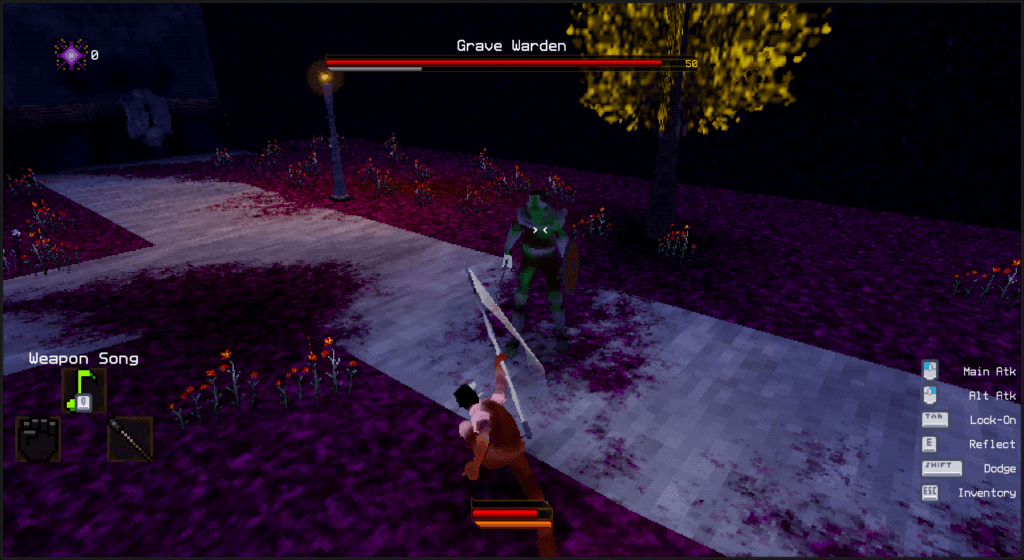
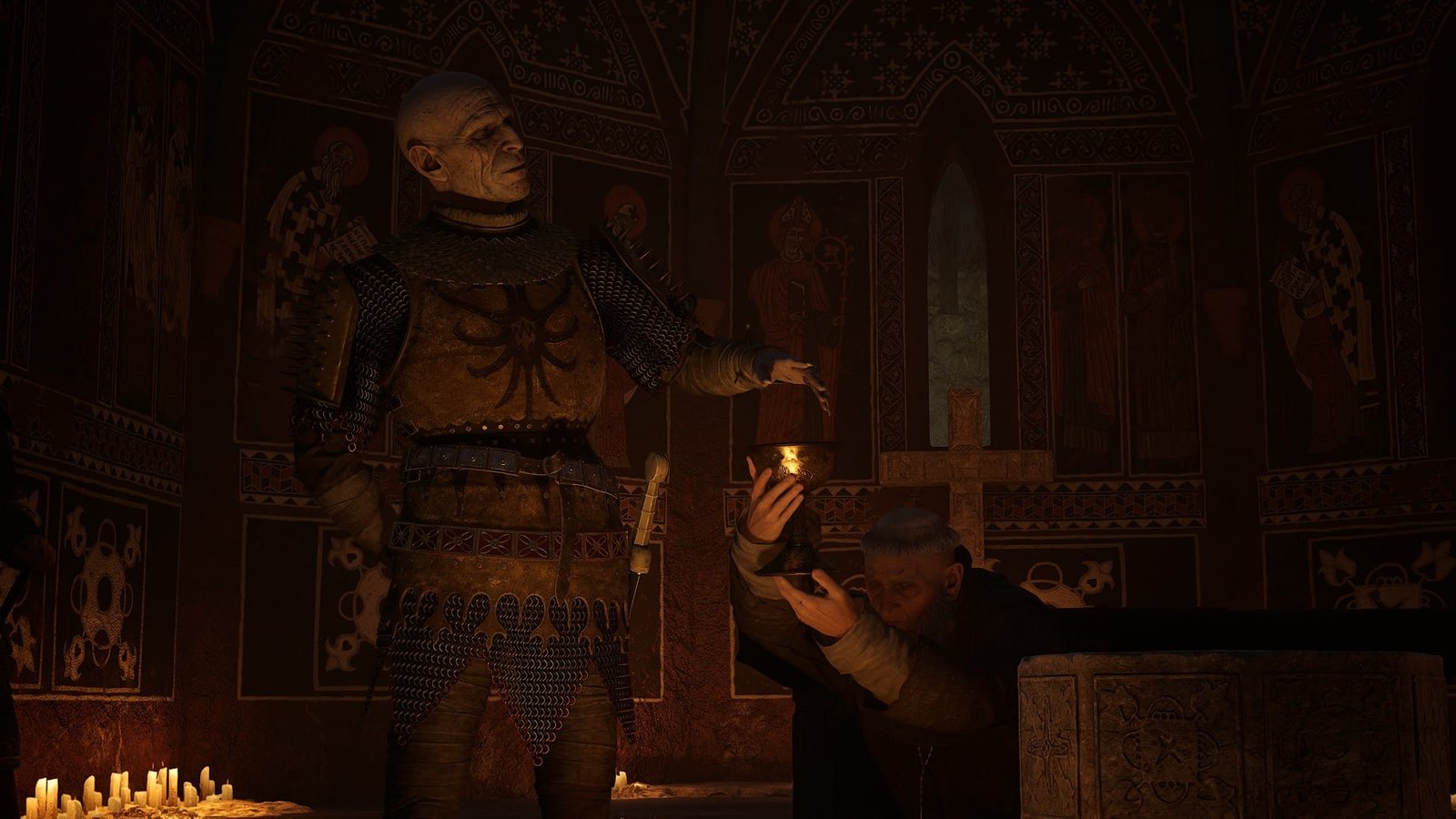
On top of the boss itself, the arenas pose some additional complications. The second boss is set in a room laden with traps that lock you in place if you approach the pillars. You can avoid these with a well timed roll, but being cognizant of your surroundings while also paying attention to your opponent’s movements is difficult to say the least. In another fight, at regular intervals, the arena fills with fiery liquid requiring you to quickly leap onto one of the rocks for safety. These rocks vanish after taking enough damage and have to be restored whenever you can find a moment to do so between the boss’ onslaught. Additionally, there are four types of unblockable attacks to account for, each requiring their own countermeasures. One can only be parried, one must be jumped over, one you have to dodge into, and one that you have to clash with using a charged heavy attack. A successful counter means heavy stress damage to the enemy and an opportunity to get a few hits in besides.
It’s a lot taken together. It veers on the edge of excess. Any one of those unblockable attacks can be a strain on the mental stack already. Multiple makes being ready for them harder due to how fast you have to react. Most of its peers would usually top out at one or two types to sidestep any potential to overwhelm. Avoiding these attacks entirely isn’t terribly difficult in most cases, thankfully, your dodge roll being very quick and traveling surprisingly far, so you’re not forced to take the hits if you can’t properly counter them accordingly in time. Memoirium is nothing if not fair.
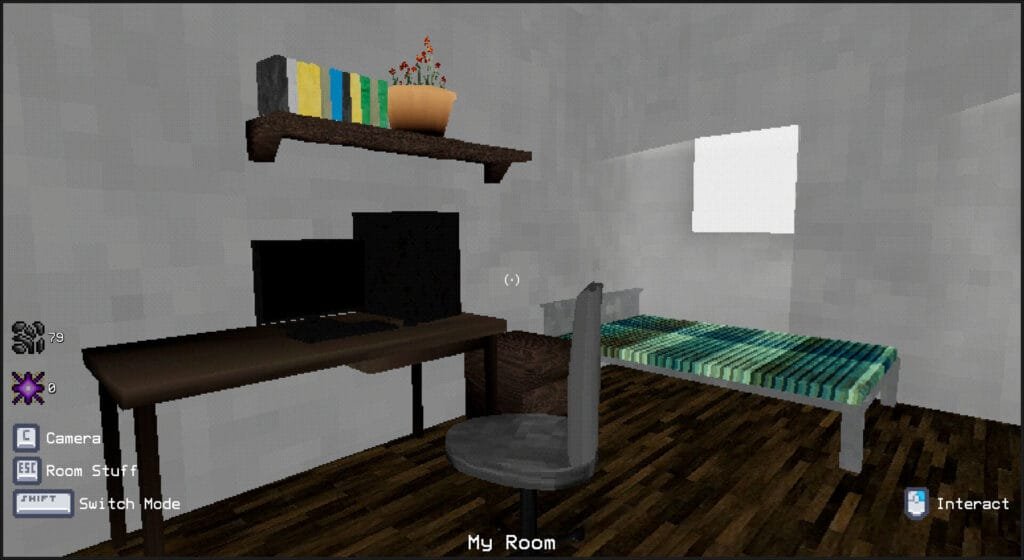
Between all the fighting, you can step out of the dream world and into a house and decorate its rooms. When you examine each object, a blurb reflecting on life appears, written from the perspective of, I presume, the player character (or the developer’s own voice, perhaps). You’re then prompted to write something yourself, to express your own reflections on whatever the object inspires. These writings are only for yourself. They don’t interact or influence anything in the rest of the game. It is purely a space to do with as you please, to decorate and reflect or mediate in at your leisure. And that’s why its presence is so striking. It exists for its own sake.
It would be easy to imagine how Memoirium could try to entice you to partake in this section of the game by providing some extrinsic reward or mechanical benefit. And it would be worse for doing so. Memoirium is already a great souls-like, its particular spin on the form welcome and satisfying. But what makes Memoirium memorable is that room. Souls-likes so often adhere to very specific conventions that something so far out of the ordinary and unexpected, no matter how small, is meaningful.
Callum Rakestraw (he/him) is the Reviews Editor at Entertainium. You can find him online at Bluesky, Mastodon, and his blog.