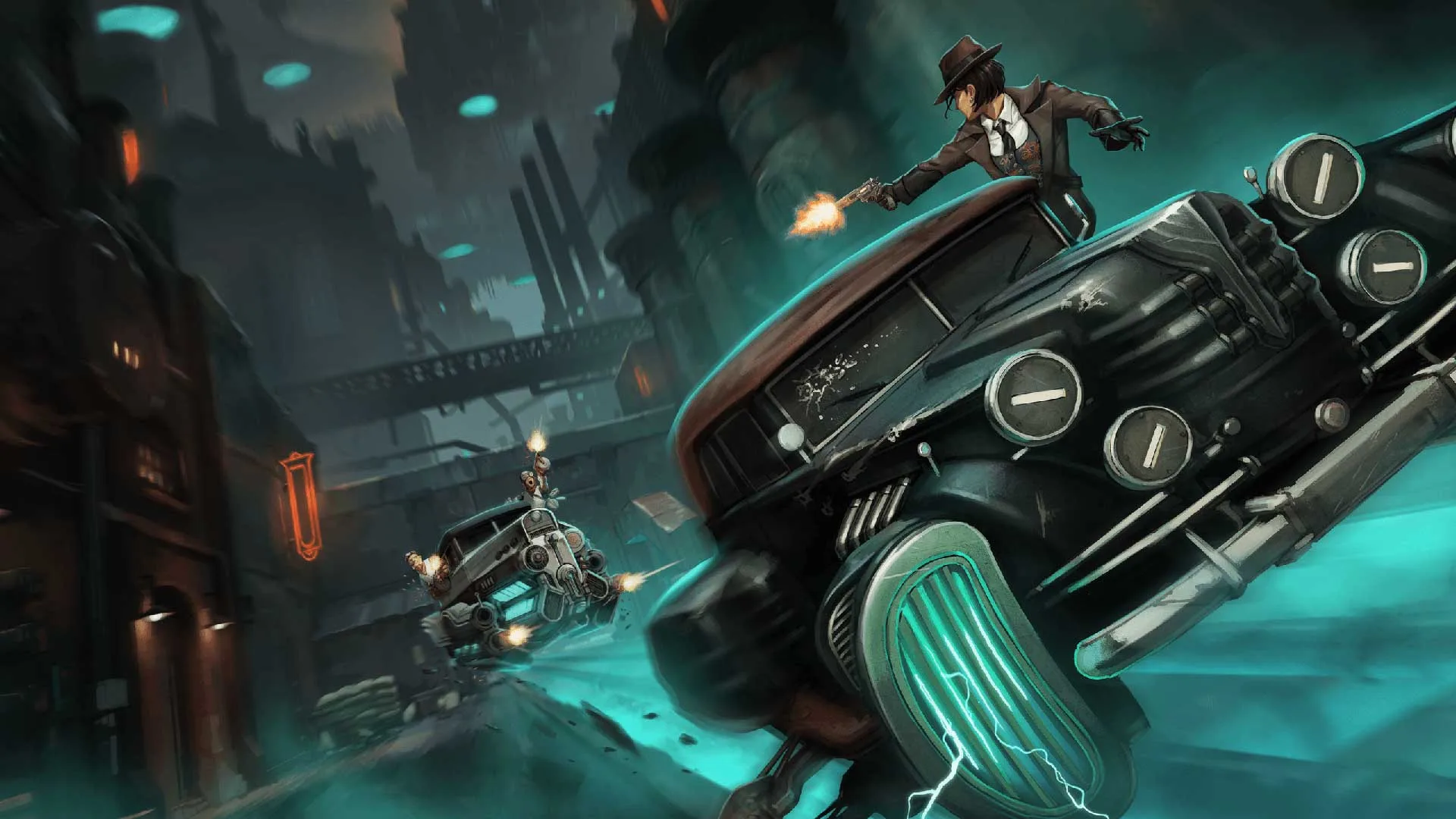
In the 1950s, the science fiction writer James Blish had Earth’s metropolises take off into the stars, using anti-gravity devices called “spindizzies”. Developers Seismic Squirrel may have been thinking of Blish’s Cities in Flight series when they came up with Aether & Iron, which is set in an alternate 1930s, “decopunk” New York which floats in the sky and is full of flying cars.
This distinctive setting is the main draw for this mixture of turn-based RPG and visual novel elements. This is a game with a compelling, well thought-out aesthetic with broad appeal, but its gameplay may be more divisive. The sometimes rigid, vehicle-based tactical combat and voluminous dialogue trees alike may test the player’s patience, even if they are taken with this flying noir New York and the story Seismic Squirrel has to tell.
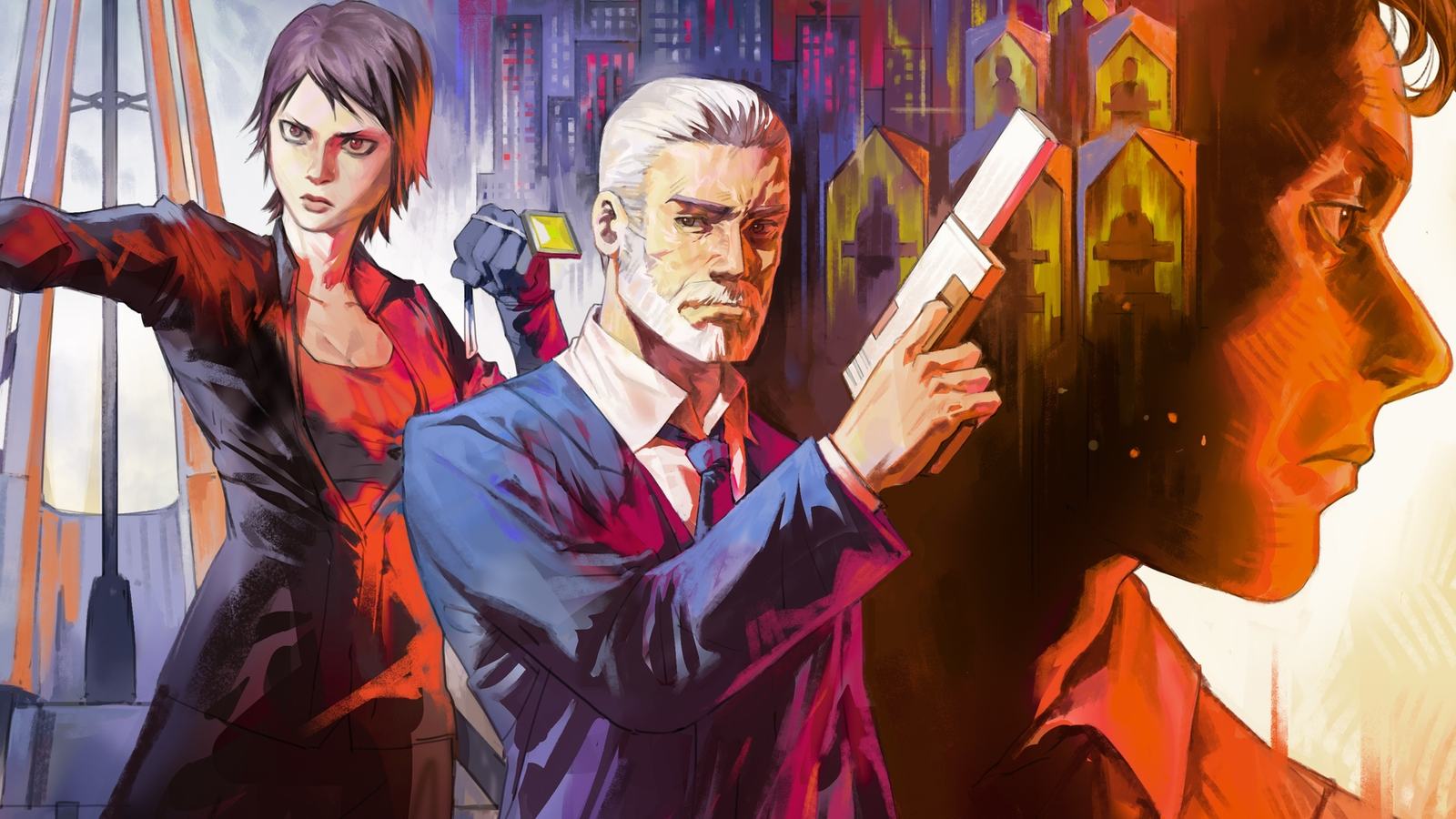
The central character is Gia “Eight-Shot” Randazzo, a freelance smuggler and gun-for-hire in a New York radically changed by “aether”-based anti-gravity technology. The city has split into several floating islands, home to various factions enmeshed in complex relations ranging from mutual suspicion to street warfare. After taking the proverbial easy job transporting nervy scientist Nellie, Gia becomes dragged into a conflict centring on “the well”, a vast aether storm.
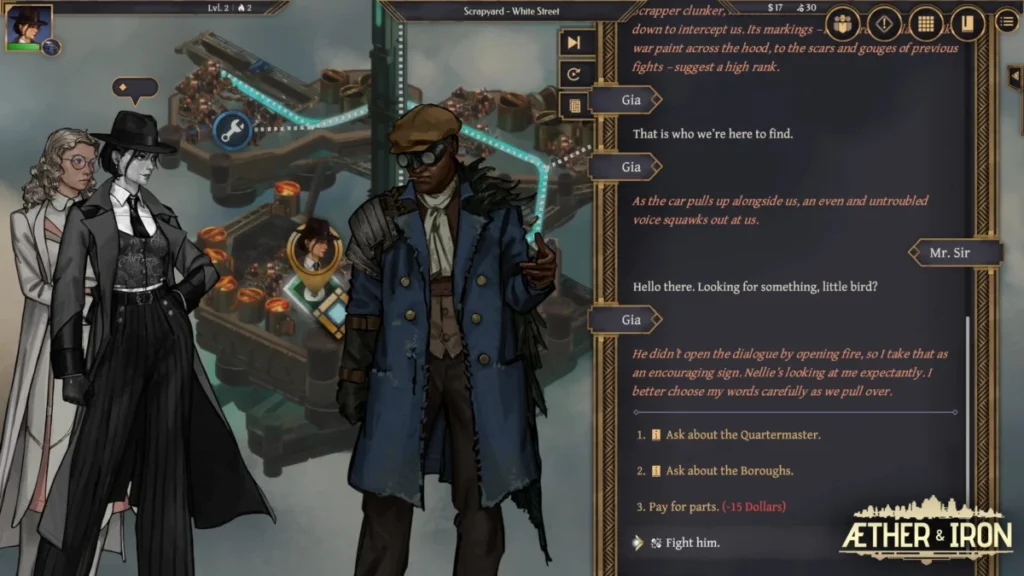
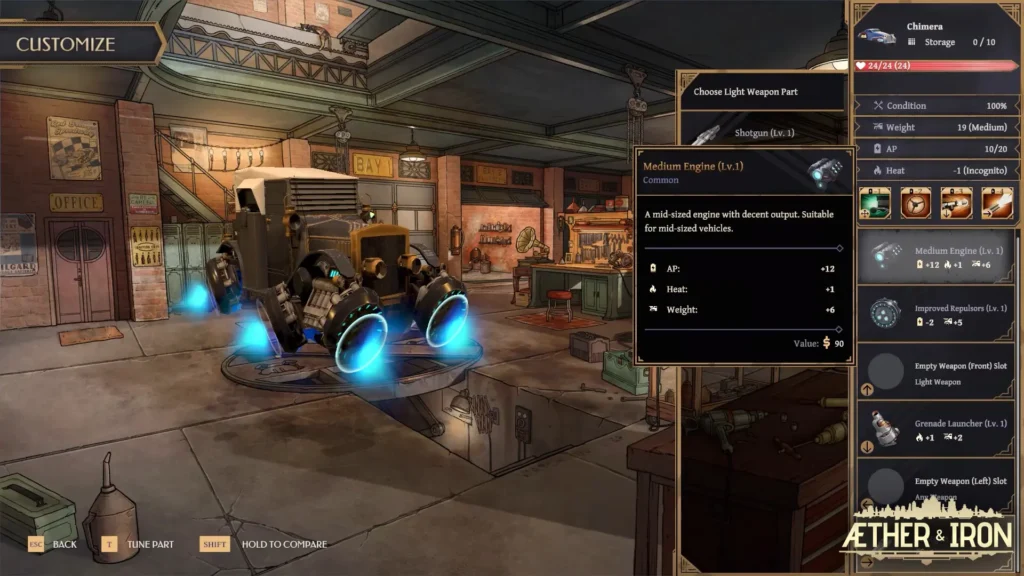
Aether & Iron is, in part, a turn-based tactical RPG. Gia gathers a party of allies and embarks on various missions across the city, earning experience, gaining new skills, and upgrading vehicles and equipment. The mission structure is broadly linear, but individual tasks do afford Gia and friends a variety of approaches. Some violent encounters, for example, can be avoided through bribery, misdirection, or dialogue.
The game employs a dice-based skill check system, vaguely reminiscent of Disco Elysium, which makes some of these options possible. When characters level up, points can be used which enhance these skills and improve skill check chances in future. Unfortunately, the skill tree is rather unintuitive, and it feels like an uphill struggle to unlock genuinely game-changing abilities, the use of which is confined to combat encounters.
Occasionally – and certainly at key junctures in the story – combat is unavoidable. Unusually, all battles in Aether & Iron take the form of gun-toting car chases. This puts an interesting spin on the turn-based encounters, at least at first. Often, success requires either eliminating all enemy vehicles or surviving for a specific number of rounds. Different vehicle types, weapon loadouts, and character skills all have a bearing on the outcome.
The issue with the combat in Aether & Iron is that it tends to feel rigid and claustrophobic. New York’s art deco streets may be flying rapidly by – in a way that some may find a bit nauseating – but in gameplay terms the room to maneuver is very limited. Especially because ramming is such a large factor, these scraps can feel like idly crashing toy cars into each other, rather than anything genuinely tactical. Despite some patches intended to nerf them, some encounters are also brutal in difficulty, which adds to the frustration.
For better or worse, combat is a strictly secondary focus of Aether & Iron and even most of the RPG mechanics tend to fade into the background. This is because in reality, Seismic Squirrel have primarily developed a visual novel. There are towering masses of conversation here, all approached through the prism of the ‘30s noir form. While some will revel in this approach, others will find it grating from an early point. Gia is like a gender-swapped old-timey gumshoe, complete with jaded drawl and a dark past. Nellie is worse, an exceptionally annoying menace of the gee-whiz, aw-shucks school.
The extent to which Aether & Iron will be enjoyed is largely also the extent to which players are enamoured with visual novels. Much of the development effort here, and the overwhelming majority of player time, is spent on dialogue trees. For those who enjoy visual novels, and find that this “decopunk” setting chimes with them, there will be a lot to enjoy in Aether & Iron. Those looking for what it first appears to be – which is to say, a tactical RPG – are best advised to search elsewhere.