Back in 2022, developer Bad Viking released Strange Horticulture, a game where you ran an occult flower and plant shop, asking you to identify a variety of mythological and magical plants. This year, they’re back with Strange Antiquities, and it follows essentially the same formula, but with a new twist. You’re the protege for a thaumaturge who leaves you in charge of his magical items and artefacts emporium. A variety of customers come by the shop, asking for a wide assortment of talismans, tokens and trinkets. The trouble is, none of the items in the shop are labelled, and you need to use your deduction skills and a variety of books, as well as examining the items to try to work out the correct object the customer needs.
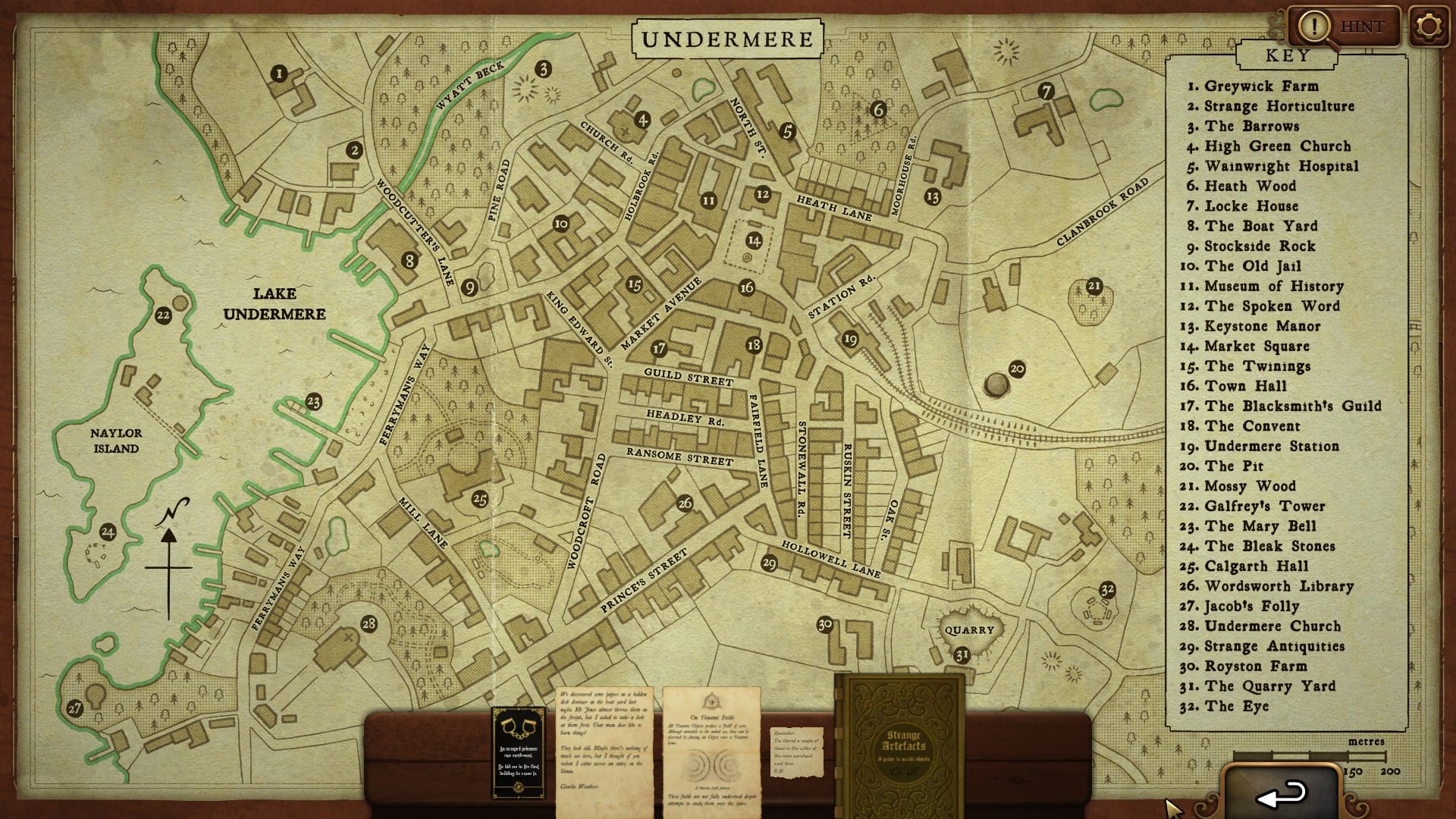
This is the central puzzle of Strange Antiquities, but it is far from the only puzzle. Indeed, the game doesn’t have a traditional tutorial, simply throwing you in without explaining anything up front. This is a brave decision but a rewarding one as the game doesn’t want to punish you, but simply let you explore the shop and the town of Undermere in your own way. The shop has a variety of drawers containing other objects as well as an initially locked section, and you’ll quickly discover a map of the town. Every day you’ll receive notes in the post as well as tarot cards which will hint at a location on the map. Visit, and you might uncover another artefact for the shop, and soon the cupboards will be overflowing with items.
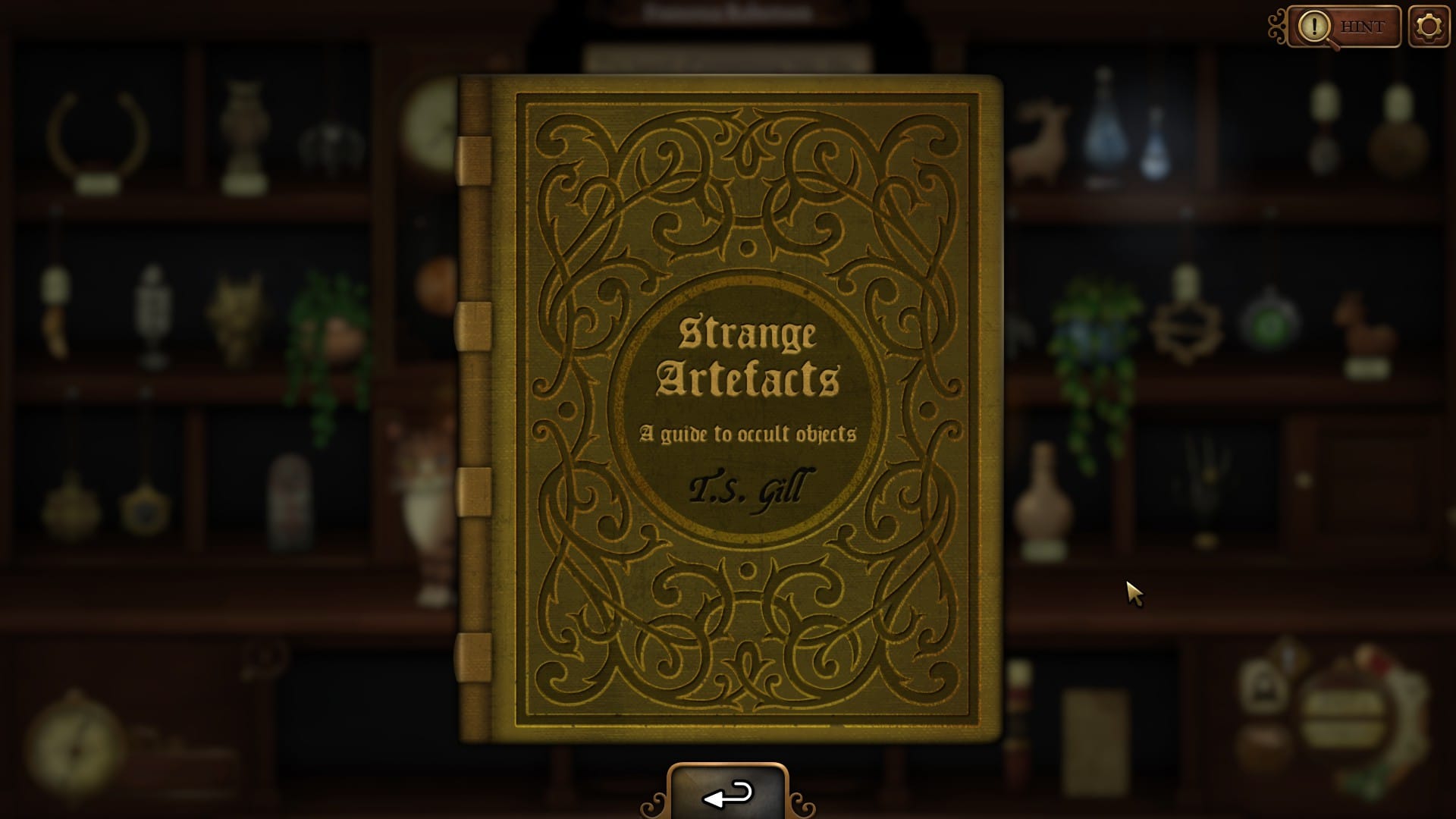
How do you work out which object is which? It depends on a variety of factors. Say a customer asks for a binding seed (a kind of punishment which amplifies feelings of guilt and shame). Your copy of “Strange Artefacts” by T.S. Gill might explain that it’s made out of two different materials, accompanied by some kind of spiral representing the mind, surrounding a core representing the body. You’ll then need to look through your cupboards before examining a potential item, feeling the texture of the surface, whether it’s making any noise and so on. You can also ask for a hint if you’d like, which will often guide you in the right direction without saying exactly what you need to do. Your text books will never outright show you the correct object, but will hopefully give you a clue which you can use to identify it.
Gradually tasks become a bit more complicated; some objects might require weighing, or interacting with other items to determine their properties. Additional puzzles also unearth themselves, including unlocking additional areas of the shop. There’s no time limit, but failing to identify objects correctly raises your existential creeping dread. If this maxes out, you have a last chance dice game to try and soothe yourself, otherwise you must restart your current day. It’s not really that stressful of a punishment, and Strange Antiquities absolutely wants you to just relax and enjoy, rather than stressing about the correct solution.
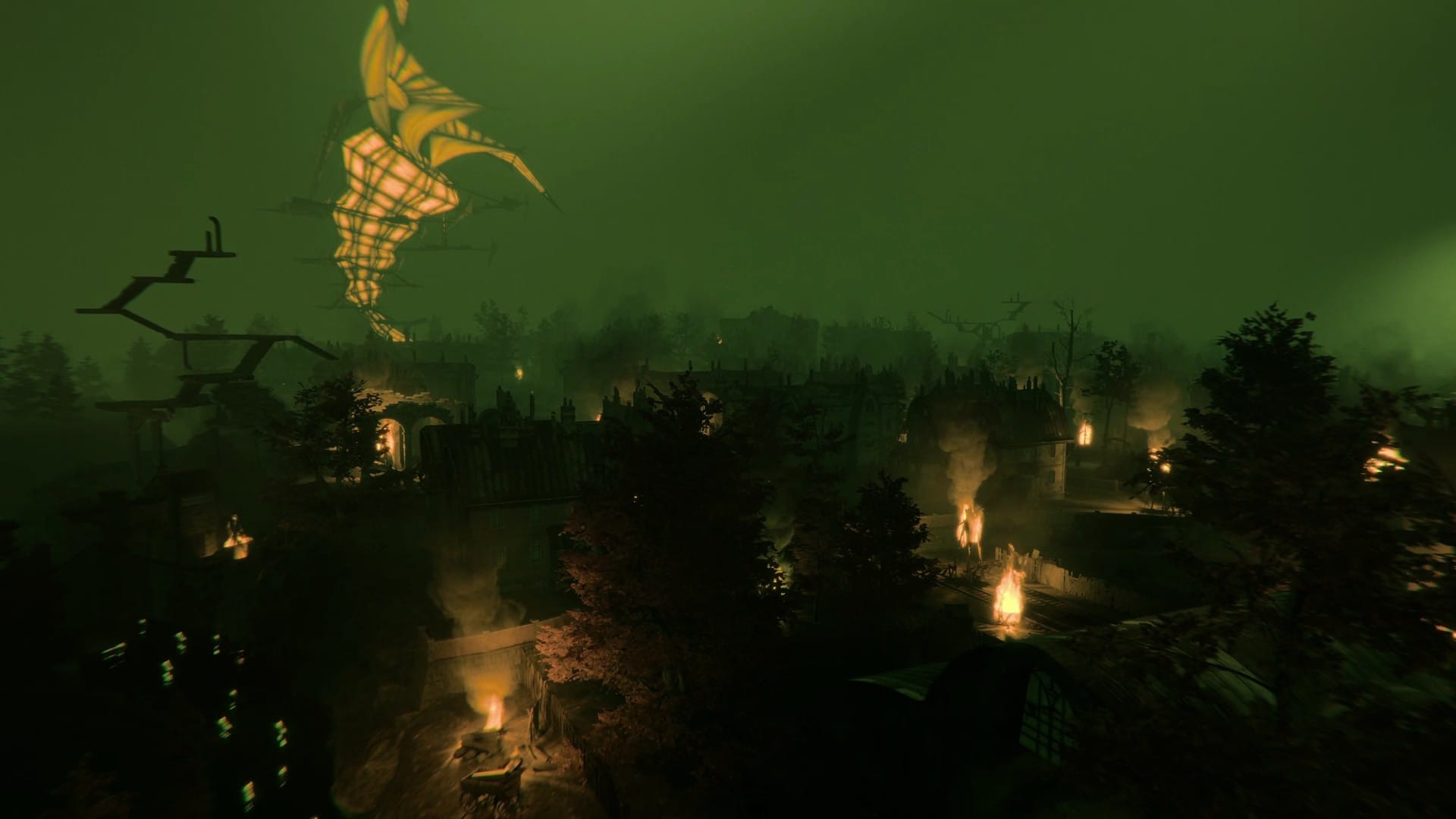
There is actually a larger overarching plot across the town of Undermere, but the nature of this only gradually reveals itself to be rather apocalyptic. The writing is fine but learning about all of the occult items was my favourite aspect, rather than following the whims of the townsfolk. There are also several moments where you’ll need to make a decision about which object to give a customer, which will influence the game’s ending. As you identify items and gather new ones the store grows until it is crammed with items, making part of the challenge also sorting through them. I tried to position similar types of items next to each other; all of the horrible haunted hands clutching cursed items I placed far away for example.
Strange Antiquities takes the same blueprint of Strange Horticulture and nicely amends it to selling magical items instead of plants, nicely fitting within the same spooky, gothic universe where mysticism is real and commonplace. It’s obviously optimized to play well on mobile phones, but the straightforward UI still allows for environments to have plenty of hidden detail, reminding me rather of The Room game series by Fireproof Games in the way something which on the surface looked simple contained surprising depth. If you’re yet to jump into the series, Strange Horticulture is a better starting point, but fans of the original will find much to appreciate in the sequel.