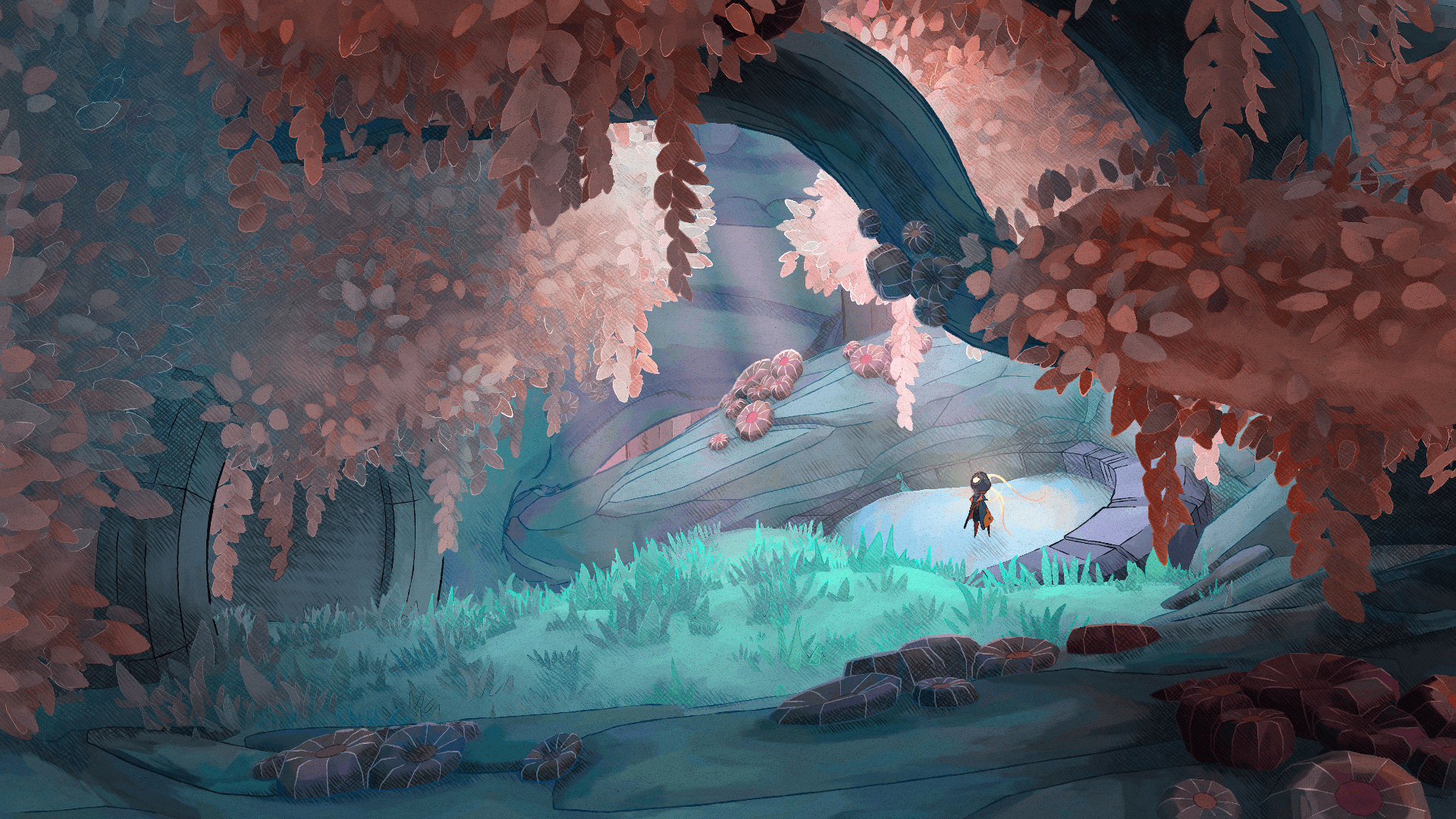
One of the core aspects of any good metroidvania is to make moving through the world feel good. If you’re going to be crossing back and forth across a large map constantly, the act of movement has to be good enough to make travel enjoyable. MIO: Memories in Orbit nails this, creating challenges that can stand among the best of the genre while making movement itself a joy.
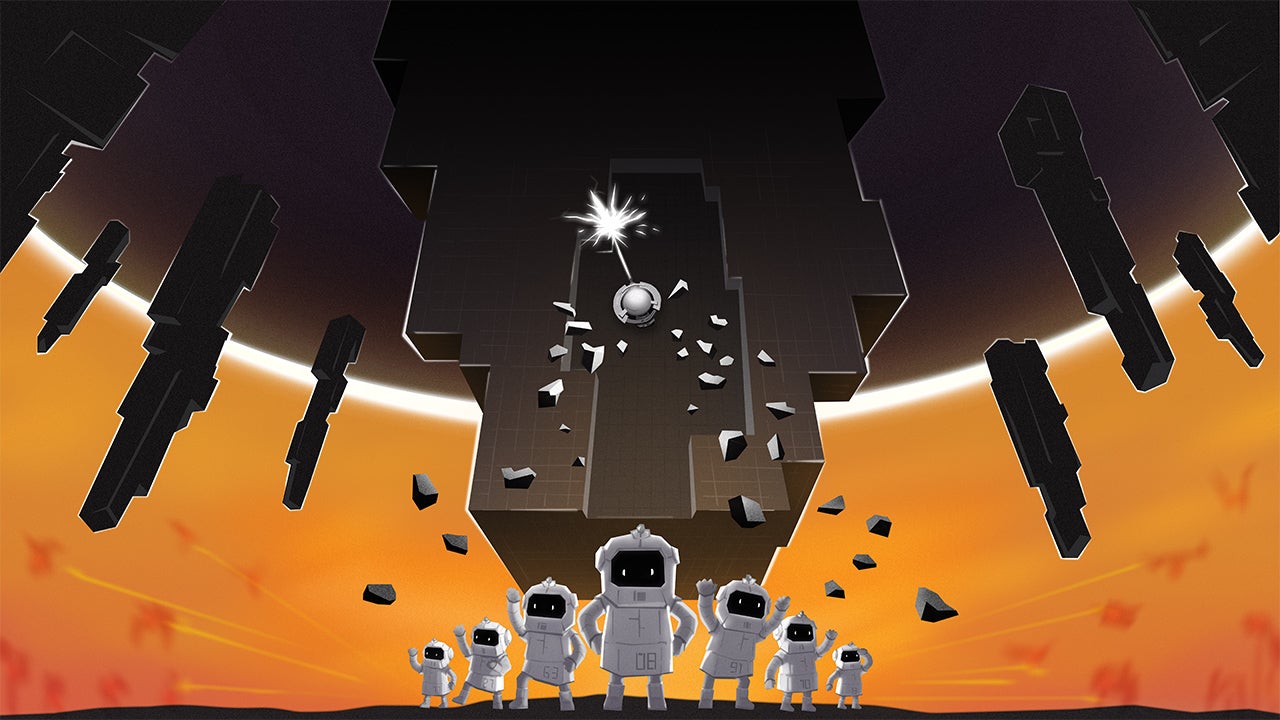
MIO follows the story of the Vessel, a massive ship made to transport humans to a new world. It’s populated by countless mechanical beings responsible for maintaining the ship and tending to the needs of the humans on board. Some years ago, however, all the humans vanished and the ship began to fail as all its stewards began to erode. You play as Mio, an android who suddenly wakes one day as the ship’s condition worsens. Tremors from the Heart are slowly killing more and more of the robotic denizens still remaining and threatening to take the entire craft offline in due time.
Worse still, the stewards of The Vessel have become withdrawn. No one can communicate with them, nor will they fulfill their roles in keeping the ship operational. Everything and everyone has effectively been in stasis and no one knows what to do other than wait for the end. Mio, being one of the very few Keepers who remain operational, is in a unique position to do attempt to fix things. By collecting the Voices of each of the ship’s core components — the Eye, the Breath, the Blood, the Hand, and the Spine — she might be able to mend the heart and allow everyone aboard the ship to continue living.
The tremors aren’t just a narrative device. They inflict actual harm on Mio. Every time one occurs, you permanently lose one of your hit-points. This means that even though you’re regularly expanding your hit-point pool, it’s ultimately a process of mitigating the slowly encroaching death that’s coming for everyone rather than becoming increasingly stronger. Crucially, Mio isn’t the only one affected. Enemies you’ve fought previously and friendly robots you’ve met in passing will both be lying dead, broken beyond repair.
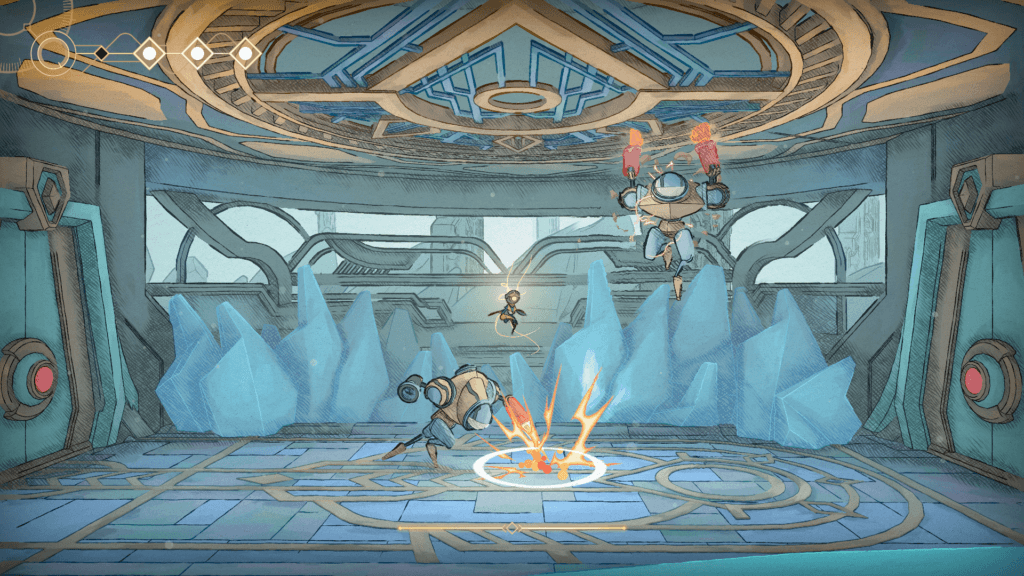
The tremors occur at set points of the story, but also seemingly at random in at least one instance during my playthrough where I was wandering around an area I’d previously explored while trying to figure out my next move. Regardless, it’s highly effective. It pushes the urgency of the situation by including you in the effects rather than merely have you observe them. If it was just background characters dying or growing weaker as the sole consequence, it would work, sure, but nowhere near as memorable as an actual physical cost.
It also has the side-effect of getting you comfortable with equipping mods that reduce your maximum health in exchange for additional mod slots. Mods are a spread of buffs, skills, and tweaks that allow you to customize your build, so to speak. It’s like the charm system from Hollow Knight. The extra wrinkle of weakening yourself in exchange for strengthening yourself elsewhere is a good hook for MIO when paired with the mandatory health reductions since it removes any reluctance from using them. Usually when I’m presented with a trade-off like losing one hit-point or reduced defense in exchange for buffs elsewhere, it doesn’t feel like a great deal because the benefits tend not to outweigh the costs. But with MIO already forcing you to lose health, it’s easier to consider the trade-offs since you’re already conditioned to work under difficult circumstances.
Outside of some platforming gauntlets, however, MIO isn’t too difficult. Bosses can be tricky, but they’re relatively simple to understand. They follow set patterns and have few attacks, that can be avoided without too much trouble as long as you’re willing to use your dodge and not over commit to a combo. It’s at its hardest usually during the first leg of the game before you start finding damage upgrades that lead to fights being cleared much faster. Combat on the whole is fine, elevated primarily through the strength of Mio’s movement abilities. Chasing airborne foes down by grappling onto them and slicing through them and into a full combo feels great and looks cool too. Combat often takes to the skies, which could be annoying in lesser hands, but is executed well here because of how fluid Mio’s movements are.
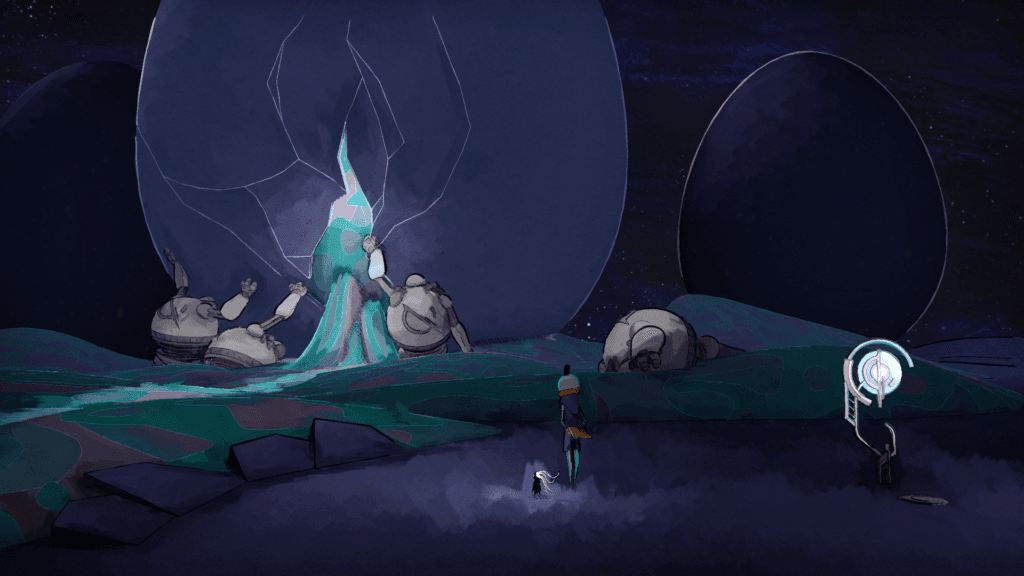
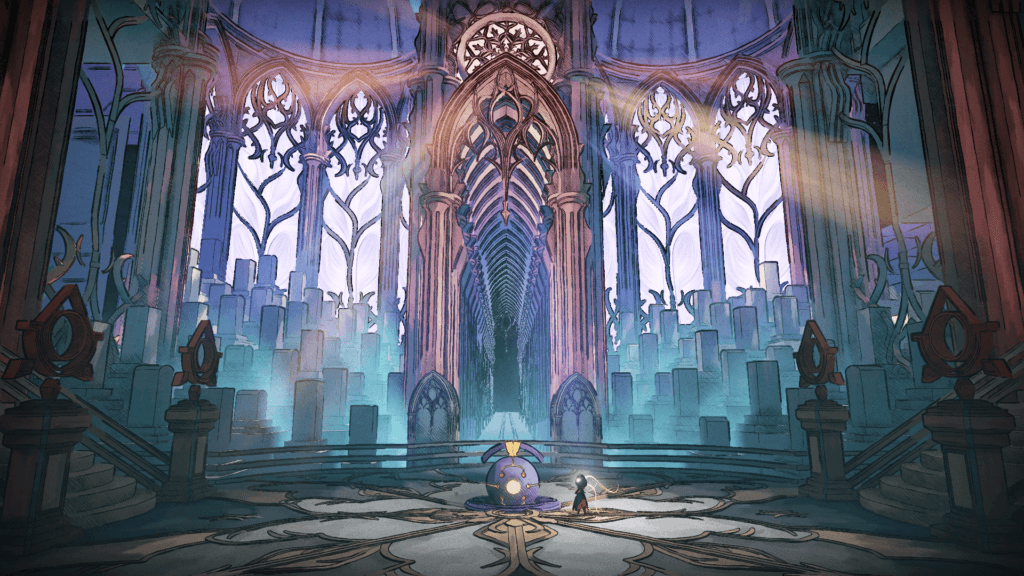
I never struggled with becoming and staying airborne. Air actions being restored on a successful hit or dodge made it easy plot my next move to keep the pressure on. If I was falling back to the ground, it was either due to me overextending or because the fight reached a phase where I couldn’t attack anymore. It never really felt like an issue of the task itself feeling unfeasible, the exact feeling that can make aerial combat frustrating in games like this.
Platforming, on the other hand, is consistently hard. MIO demands precision. While most of its exploration leans on the easygoing side, MIO is quick to force you to be quick and precise. Mio’s moveset revolves around energy usage. Her abilities all either steadily drain or immediately consume energy, which dictates whether she can glide, walk along walls and ceilings, or grapple onto gems or enemies. Keeping your energy filled to reach the next point you can land or enemy to strike to refill and continue is the crux of MIO‘s level design.
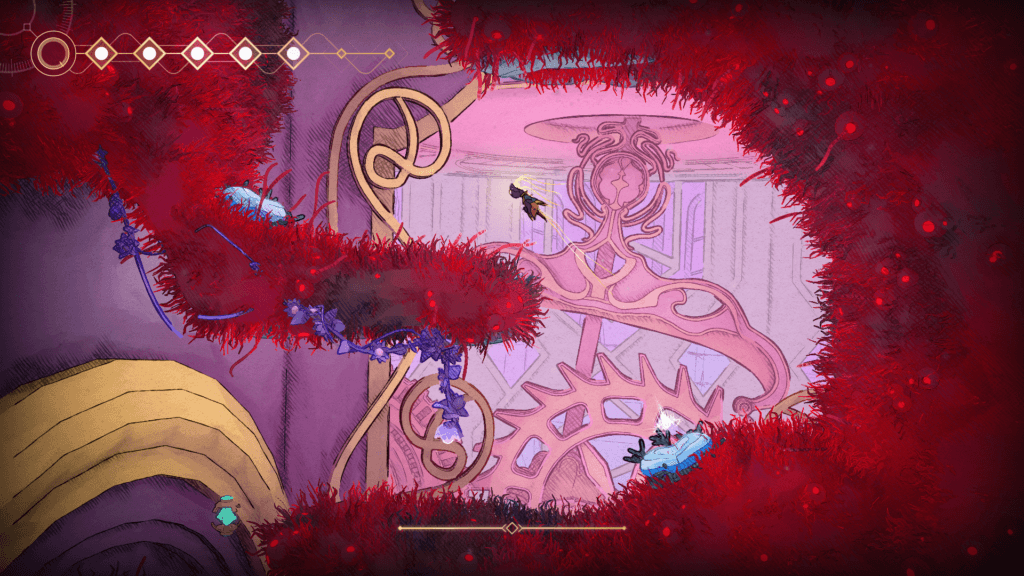
Constantly chaining actions together in one smooth motion, sometimes with little time to react to what’s next, is tricky but extremely gratifying. The longest and most challenging sequences have you moving through winding tunnels lined with deep red foliage, tendrils slowly reaching toward you as you pass by, without ever being able to set foot on solid ground, every corner adding some new complication to the road ahead. MIO‘s platforming is at its strongest and most demanding in these moments. Every single one of her abilities are put to use, the game constantly making you walk a knife’s edge with each new maneuver.
MIO never quite crosses the threshold into the hardest sections of something like Hollow Knight, but it comes close in the optional late-game areas. In one instance I was moving through a maintenance tunnel and having to strike the center of twin-bladed fans to rotate them, careful to move in the direction the blades would spin with each movement to avoid getting sliced. A difficult task when moving between each one without anywhere to land. In another I had to outrun a rising tide of water while dashing through a series of pipes, every action needing to be performed quickly and without delay lest the watch catch up. They’re the kind of scenarios that provide a strong challenge without going overboard, a delicate balance MIO walks carefully.
MIO‘s biggest misstep, however, is in how it flows. For the first handful of hours I was constantly going back and forth between opposite sides of the map making a little bit of forward progress each time. I’d get somewhere on one side only to hit a gate of some sort then have to run back to other area until it happened again. Backtracking is part and parcel with the metroidvania form, but the way MIO goes about it early on is disruptive and unintuitive because it happens so often and abruptly. That it happens with areas on opposite sides of the map doesn’t help either since it means you’re not getting too far into new zones before having to abandon them. It slows the story from gaining any momentum because you’re effectively spinning your wheels for a while before anything of consequence happens or you get deep enough into the world to feel like your task is properly underway. The rest of the game isn’t nearly so jarring in its progression, but it only makes the initial impression that much stranger.
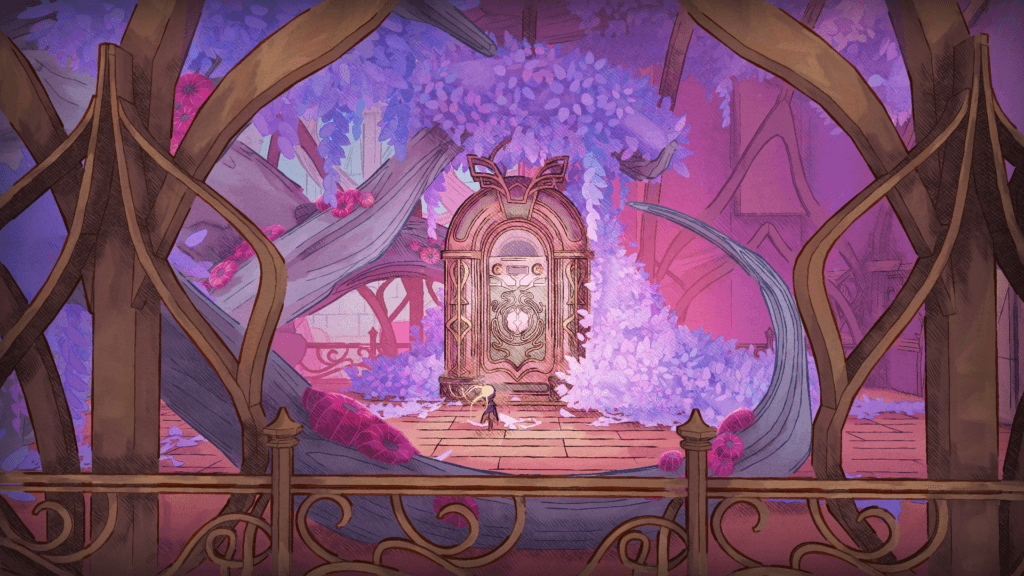
Everything after those first handful of hours flows more smoothly such that you can easily miss the plentiful secrets and optional ares MIO contains. Not a bad thing by any means — I appreciate any game that trusts its players enough to seek such things out on their own. One of Mio’s moves in particular, the Striders, which allows her to scale any wall and cross any ceiling (even some structures in the background), opens up so much avenues for exploration that I would check literally anywhere I could. Many entrances to optional areas required that exact obsessive style of search and were always worthwhile.
It all comes down to how good it feels to move around. MIO‘s best moments are always those where you’re forced to use all your abilities in concert, whether that be in combat or just passive exploration. Metroidvanias have taken a greater combat focus in recent years, and while MIO doesn’t stray from that trend exactly, platforming is its greatest strength and is all the better for it.
Callum Rakestraw (he/him) is the Reviews Editor at Entertainium. You can find him on Bluesky, Mastodon, and his blog.