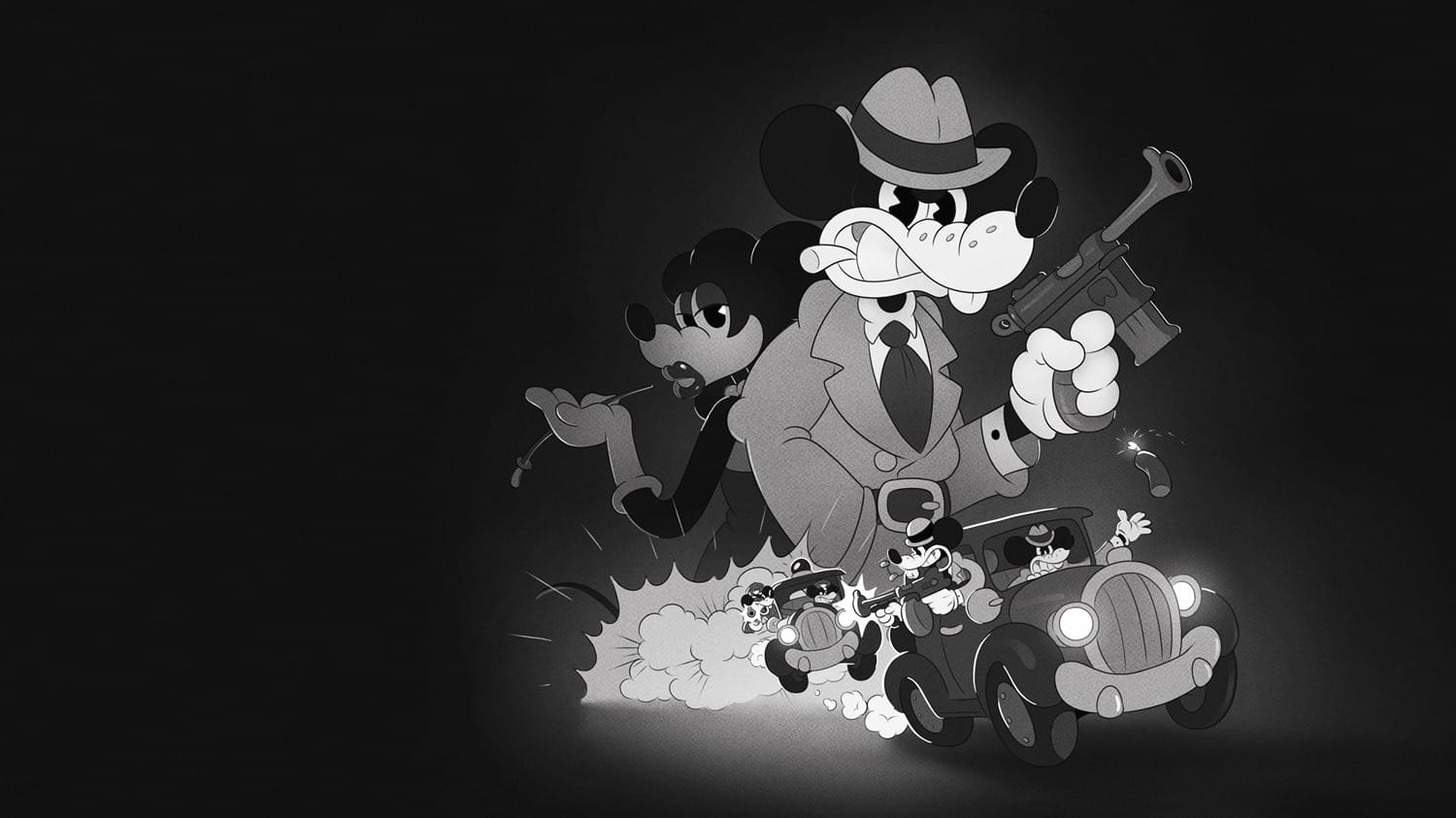
Developed in Poland by Fumi Games, Mouse P.I For Hire is sure to be one of the most visually striking games of 2026. Like ultra-tough platformer Cuphead before it, the Polish studio’s first project is steeped in the style of 1930s “rubber hose” animation. Here, the commitment to the bit is so total that the game is rendered entirely in black and white. The team’s execution of this aesthetic is nothing short of extraordinary – and that is why it is such a shame that the shooter gameplay is so ordinary.
Mouse P.I. For Hire welcomes players to the mean streets of Mouseburg, a city populated by anthropomorphic mice and shrews. In this venue inspired by the United States of the 1930s, there are gangsters, crooked cops, mysterious dames, sleazy politicians, and deranged cultists galore. Ranged against these underworld elements is the player character Jack Pepper, the archetypal world-weary private dick.
As has been pointed out elsewhere, there is an obvious dissonance between the theme of Mouse P.I. and its gameplay. There is no real investigative element to the design here; the gestures in this direction are no more than that: mere empty gestures. White he wears the clothes and jaded attitude of the classic noir gumshoe, Jack Pepper is really a reskinned analogue for ‘90s FPS protagonists like Duke Nukem or Lo Wang. He shoots first, and seldom asks questions at all.
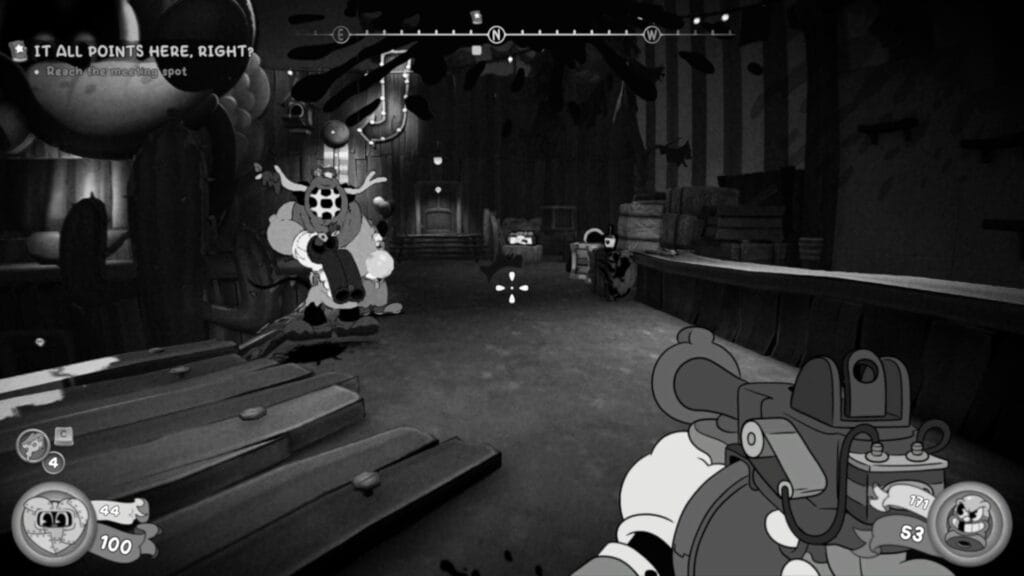
Few are likely to take issue with this – Mouse P.I. is, first and foremost, a retro-style shooter dealing in the same currency as Duke Nukem 3D and Shadow Warrior. The issue is that the retro-style shooter wave has been ongoing for over a decade now, and outside of their impeccable old-timey visuals, Fumi Games are bringing very little to the table that is new or distinctive.
In gameplay terms, almost everything about Mouse P.I. feels like standard, boilerplate stuff. Both the arsenal of weapons and the bestiary of foes is eminently predictable, with few if any surprises. The fists, pistol, shotgun, SMG, and other guns behave exactly as expected. Upgrades, while available, are uniformly uninteresting, mostly providing straight boosts to damage or ammo capacity. The combat encounters are thoroughly telegraphed, with specific doors actually labelled to indicate that they are enemy spawn points. This makes it easy to anticipate threats, which is one reason why Mouse P.I. feels so straightforward. Shooter veterans will breeze through these shootouts, barely impeded by the various armies of crooks and mooks.
Gradually, Fumi Games introduce half-hearted attempts at novel mechanics like double-jumping, a grappling hook, and wall-running. None of these are implemented particularly well or with any real purpose; typically they are relevant only in a few isolated situations. The contrast with a slicker, more movement-oriented shooter like Shadow Warrior 3 could not be more stark. Elsewhere there are those threadbare, self-resolving investigations, and a baseball-themed, card-based mini-game which in no way justifies the time it takes to obtain any rewards.
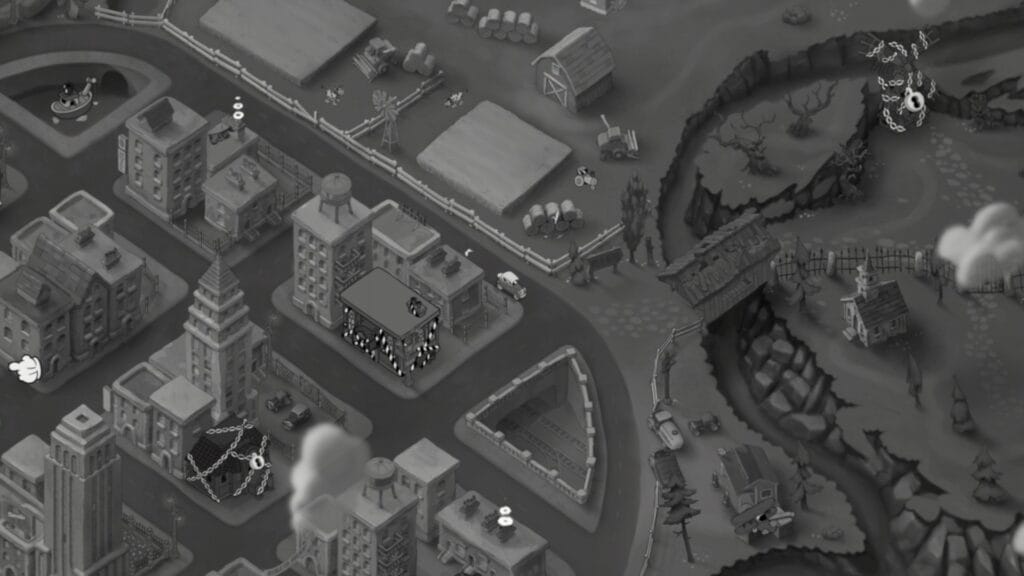
To be clear, nothing about Mouse P.I. is in any way bad – it is just deeply familiar and uninspired in a way that it is genuinely disappointing. The saving grace, which makes the game easy to recommend with reservations, is the stellar aesthetic.
It is difficult to overstate how exceptionally well Fumi Games have executed their vision for how Mouse P.I. should look. The team’s knowledge and love of 1930s animation is evident in every element of the graphics, interface, sound, and music. The sprite work is fantastic, summoning up varied and expressive characters from sultry femme fatales to fascist street thugs. Clever details are everywhere, like the appropriately wacky reloading animations to the anthropomorphic bullets by the ammo counter, grinning devilishly as Pepper blasts his foes. Crucially, the game is always visually comprehensible despite the lack of colour: an achievement in itself.
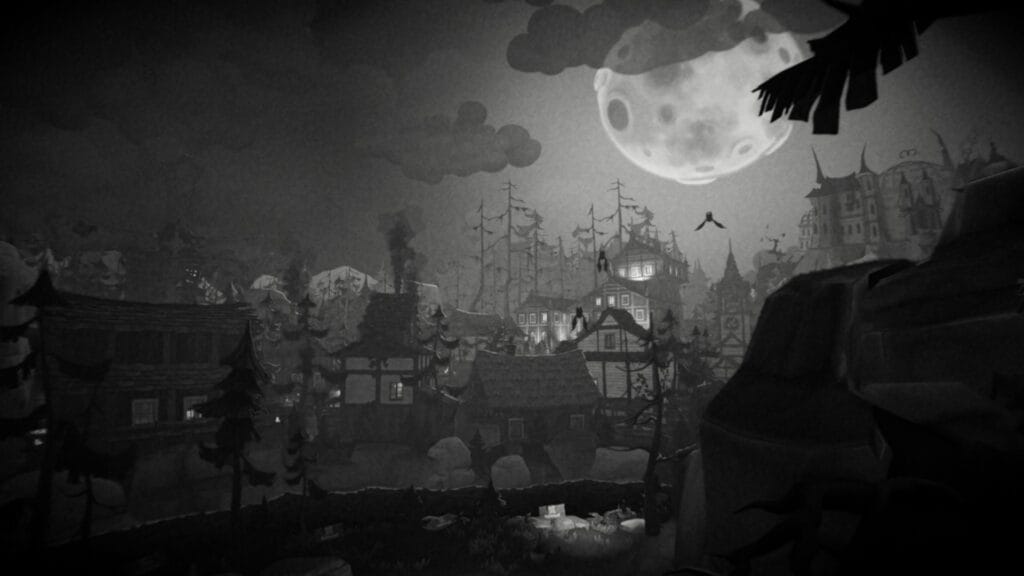
The settings are wonderfully diverse, taking in influences from real locations like Los Angeles, New York, and Louisiana. Jack Pepper explores a movie studio, a plush opera house, a riverboat, dank caves, a haunted graveyard, and many more besides. While the game is arguably too long, there is always a sense of anticipation ahead of finding out which lovingly rendered locale comes next. The dialogue is rather cliched and the cheese-based humour gets old quickly, but the voice acting is period-appropriate and consistently high quality.
Ultimately, the superb aesthetic achievements of Mouse P.I. For Hire are undermined by its overly familiar, uninspired gameplay choices. Relative newcomers to retro-style shooters are likely to get more from it than the jaded veterans among us, who have seen every gameplay element done to a higher standard many times before. At its best though, Mouse P.I. For Hire is a stunning-looking playable cartoon – and while it could have been so much more, that is enough.